
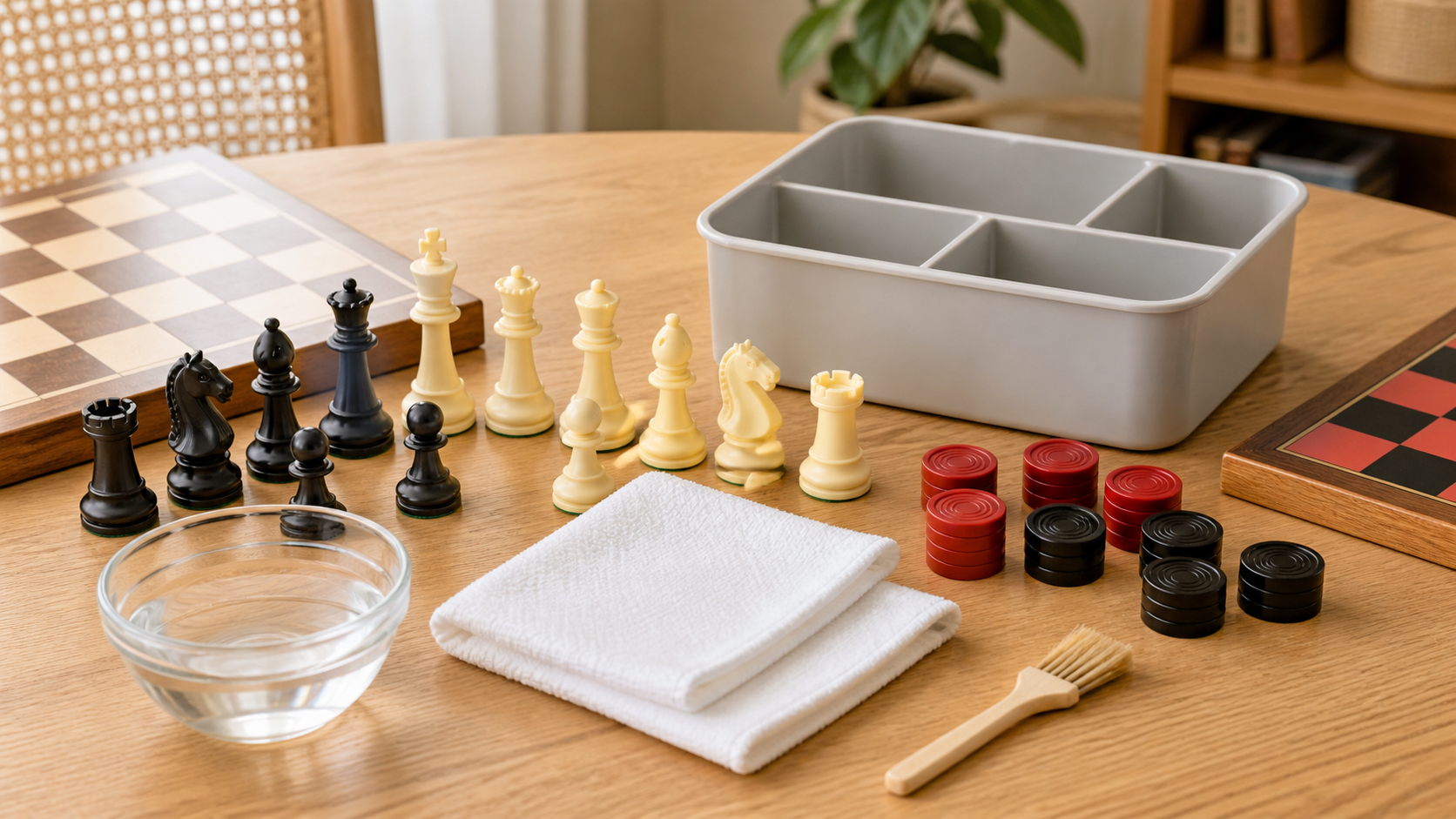
The best cleaning kit is usually a small, material-appropriate set of tools—not a powerful bottle marketed for every chessman and checker. For ordinary plastic or sealed wooden playing pieces, start with soft microfiber cloths, a gentle brush, a small water container, and a caddy that keeps the supplies away from the game pieces between cleanings.
This is a category comparison, not a ranking of named kits or a claim that one method suits every finish. Always check the set maker's current care directions first, especially for unfinished wood, felt bases, weighted pieces, painted details, antiques, or collectible sets.
As an Amazon Associate, The Good Chess & Checkers may earn from qualifying purchases.
Product-category guide
Start with gentle, separate tools
Compare lint-free cloths, very soft brushes, small bowls, drying towels, and closing caddies. Buy only what fits the piece material and its maker's instructions.
Choose the method before the kit
- Identify the material and finish: molded plastic, sealed wood, unfinished wood, painted resin, felt bases, and metal-weighted pieces can require different care.
- Read the maker's directions: use those instructions over generic cleaning advice. If the material or finish is unknown, begin with dry dusting and seek guidance before adding moisture.
- Use the least moisture needed: a damp cloth is different from soaking. Water can reach seams, weights, felt, paint, or unfinished grain.
- Avoid residue: fragranced wipes, furniture polish, abrasive pads, and strong household cleaners may leave films or change a finish.
- Dry pieces separately: do not return damp pieces to a pouch, drawer, or closed board.
Best for routine dust: a dry microfiber and soft-brush kit
A pair of clean, light-colored microfiber cloths and a very soft brush handles ordinary surface dust without introducing liquid. A second cloth gives you a clean fallback if the first picks up grit. Choose a brush small enough to reach around chess crowns and checker ridges without stiff bristles scraping painted details.
Best for: regular upkeep, unknown finishes, lightly dusty display pieces, and cleaning before dirt becomes sticky.
Skip it if: the pieces have tacky residue, flaking paint, loose felt, cracks, or signs of moisture damage that need material-specific advice.
Best for ordinary washable plastic: a cloth, bowl, and drying set
When the manufacturer permits damp cleaning, a small bowl, separate damp microfiber cloth, soft detail brush, and dry towel make a practical kit. Work on one or a few pieces at a time so nothing sits in water. Keep the felt or weighted base dry unless the maker explicitly says otherwise, then air-dry every piece fully before storage.
Best for: frequently handled molded plastic pieces with straightforward maker-approved care.
Skip it if: water can enter a seam or base, a weight rattles, decorative paint looks fragile, or the care instructions prohibit moisture.
Best for sealed wooden pieces: separate, finish-safe tools
Sealed wood may tolerate careful wiping when its maker allows it, but “wood cleaner” is not a universal answer. A dedicated clean cloth and soft brush reduce the chance of transferring residue from furniture products. Do not assume a shiny or smooth surface reveals the exact coating.
Best for: modern sealed playing pieces with clear care instructions.
Skip it if: the wood is unfinished, the finish is unknown, there is lifting veneer or paint, or the pieces are collectible. Dry dusting or specialist guidance is safer.
Best for clubs and classrooms: a labeled caddy with washable basics
Shared sets benefit from a simple caddy containing color-coded cloths, a soft brush, a small bowl, and a drying towel. Keep cleaning supplies separate from loose game pieces, count the pieces before and after, and follow the set maker's care rules rather than creating a one-method routine for mixed materials.
Best for: several ordinary plastic practice sets cleaned by a responsible adult or organizer.
Skip it if: the caddy encourages players to use unlabeled liquids, multiple set materials are mixed together, or staff cannot allow complete drying time.
Quick comparison framework
- Choose a dry kit when the finish is unknown or the problem is only dust.
- Choose a damp-cleaning kit only when the maker permits moisture and the bases can be protected.
- Choose separate wood-care tools to avoid transferring residue from unrelated household products.
- Choose a labeled group caddy when several ordinary practice sets share one repeatable care routine.
Pre-purchase checklist
- Inventory the piece materials, finishes, felt bases, seams, weights, and painted details.
- Find the current manufacturer's cleaning and drying instructions.
- Choose white or light lint-free cloths so transferred dirt or color is easy to notice.
- Check that brush bristles are soft and that no exposed metal edge can touch a piece.
- Use separate containers for cleaning supplies and game-piece storage.
- Test any permitted damp method on one inconspicuous ordinary piece, then stop if color, texture, or finish changes.
Who should skip a dedicated cleaning kit?
Skip a specialized purchase if two clean cloths and a soft brush already cover routine dusting. The caddy and packaging add little value unless they prevent cross-use, lost tools, or messy group storage.
Also skip generic kits for antique, artisan, unfinished, cracked, flaking, or high-value collectible pieces. Those pieces need guidance tied to their exact material and finish, not a broad product-category recommendation. If ordinary play pieces are damaged beyond sensible cleaning, use the replacement-piece guide to match dimensions and board fit.
Bottom line
For most ordinary plastic or sealed wooden chess and checkers pieces, the useful “kit” is modest: clean microfiber cloths, a very soft brush, a small bowl when damp cleaning is allowed, a drying towel, and a separate caddy. Match every method to the maker's care guidance, keep moisture away from vulnerable bases and seams, and avoid promising that one cleaner can safely restore every material.