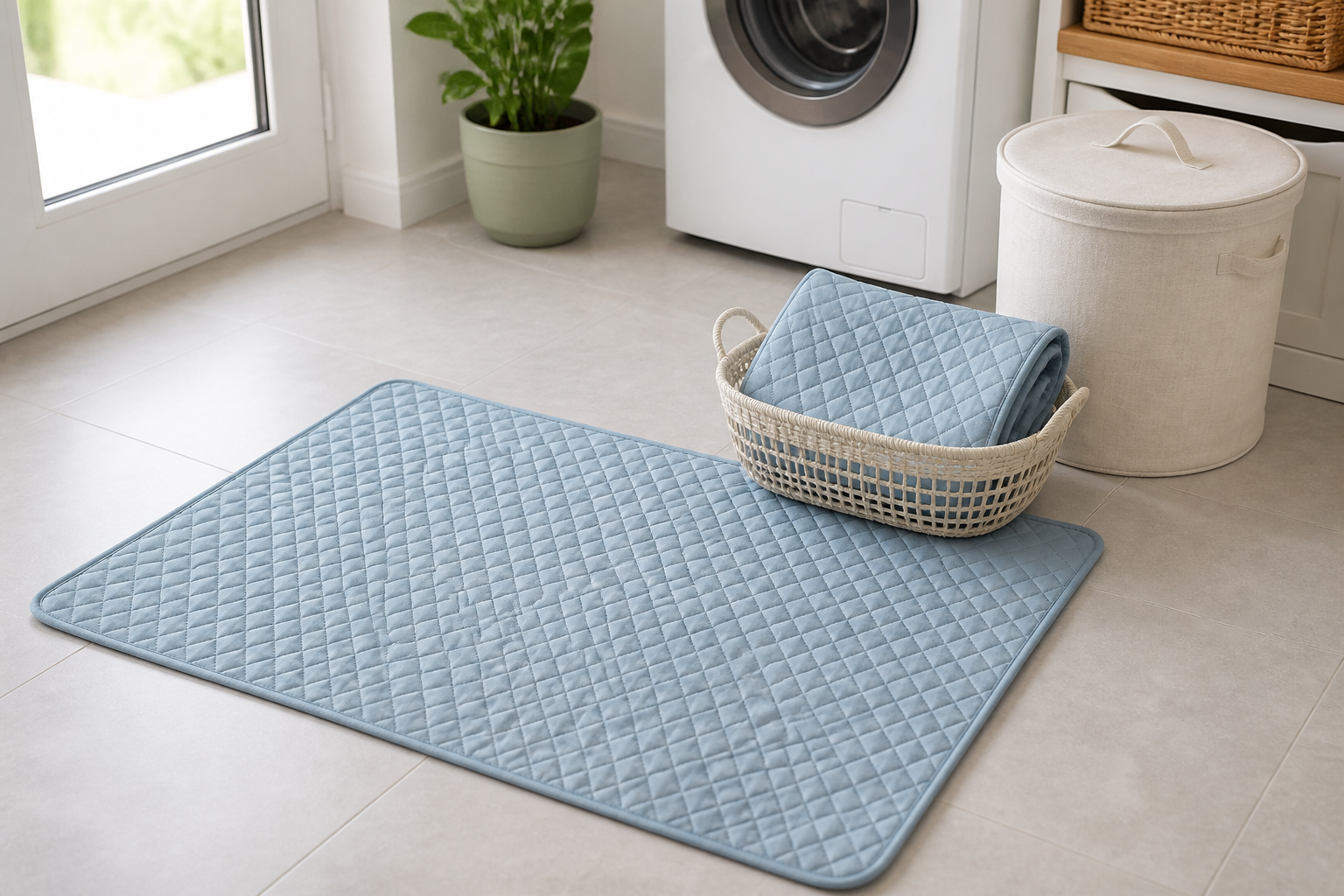
This is a cleanup-product decision guide, not a housetraining plan or medical recommendation. A pad can protect a surface and simplify cleanup; it cannot explain why a dog is having accidents or guarantee where a dog will eliminate.
Quick decision: buy, skip, delay, choose an alternative, or escalate
Buy when the same protected area is used repeatedly, you can launder pads promptly, and two or more pads make rotation easier than continually replacing disposables.
Skip when accidents are rare, your dog shreds fabric, you lack a reliable wash-and-dry setup, or disposable pads are needed only for a brief and clearly defined situation.
Delay until you have measured the full stance and turn-around area, checked the flooring underneath, and confirmed where used pads will wait before washing.
Choose an alternative when a washable floor mat, crate-tray protector, temporary disposable pad, outdoor routine adjustment, or easier-to-clean room solves the actual problem with less laundry.
Escalate new or frequent accidents, straining, blood, pain, unusual urine or stool, major thirst or appetite changes, vomiting, diarrhea, weakness, or other signs of illness to a licensed veterinarian. Ask a qualified trainer for help with persistent housetraining confusion, marking, fear, or routine problems after medical concerns have been addressed.
Practical criteria before you buy
- Usable size: Measure the whole target area, including room for the dog to turn and place every paw without stepping off an edge.
- Backing: Look for specific waterproof or water-resistant wording and inspect the layer regularly. Neither term means leaks are impossible.
- Edge shape and grip: Flat finished edges and suitable backing help reduce curling and bunching on smooth floors.
- Wash routine: Confirm water temperature, detergent guidance, dryer limits, and whether the pad needs separate washing.
- Drying time: Thick pads may need more time and space to dry. Plan enough spares for the slowest part of the routine.
- Floor compatibility: Lift the pad regularly, clean underneath, and do not let moisture remain trapped against vulnerable flooring.
- Chewing and digging: Remove damaged pads and skip soft fabric formats for dogs likely to tear or swallow pieces.
- Storage: Keep clean pads dry and used pads contained away from pets and household laundry until washing.
Cost, maintenance, and setup tradeoffs
Upfront cost: Washable pads usually require buying a rotation rather than a single pad. Value depends on repeated use, not a guaranteed payback date.
Ongoing cost: Washing uses detergent, water, energy, and time. Disposable pads create repeat purchases and more trash but may suit infrequent or short-term needs better.
Maintenance: Used pads need prompt handling according to their care instructions. Odor control comes from a workable cleaning and drying routine, not simply from reusable construction.
Setup: One oversized pad can cover more floor but may be awkward in a washer. Several smaller pads add seams and movement but are easier to rotate and place.
Expectations: A pad is a surface-management tool. It does not treat incontinence, illness, anxiety, or housetraining difficulties.
Who should skip washable pee pads
Skip them if fabric becomes a chewing or swallowing risk, if used pads cannot be stored and washed promptly, or if the pad will sit over a floor that cannot tolerate trapped moisture. They may also be unnecessary when a dog reliably toilets outdoors and accidents are genuinely rare.
Do not buy more pads to avoid investigating a sudden change. If an adult or previously reliable dog starts having accidents, or elimination looks uncomfortable or unusual, contact a veterinarian.
Red flags in a pad or listing
- No measured dimensions, backing description, or usable care instructions.
- Promises that a pad cannot leak, eliminates all odor, or will train every dog.
- Edges that curl, stitching that opens, or backing that cracks or separates after care.
- A surface that slides, bunches, or creates a trip point in the intended location.
- Claims about health, incontinence, anxiety, or behavior that turn a cleanup product into a supposed treatment.
- A pad so large or thick that it cannot be washed and dried as directed in your home.
When disposable pads or another setup make more sense
Disposable pads can be simpler for rare travel, a short planned period, or households without dependable laundry access. An ordinary washable mat may be enough for minor drips around a crate or feeding area, while a different room layout may protect floors without creating a permanent potty zone.
For broader choices across food, litter, crate, and cleanup areas, use the washable pet mat guide. The site's cleanup and odor-control pillar connects floor protection, stain cleanup, entryway routines, and product decisions without treating products as health solutions.
Bottom line
Washable pee pads are worth it when the need repeats, the floor area is measured, fabric is safe for the dog, and laundering fits the household. Buy enough for rotation rather than expecting one pad to cover use, washing, and drying.
Skip them for rare accidents or destructive chewers. Delay until the laundry and storage plan is clear. Escalate new, painful-looking, frequent, or otherwise concerning accidents instead of using more pads to hide a care problem.