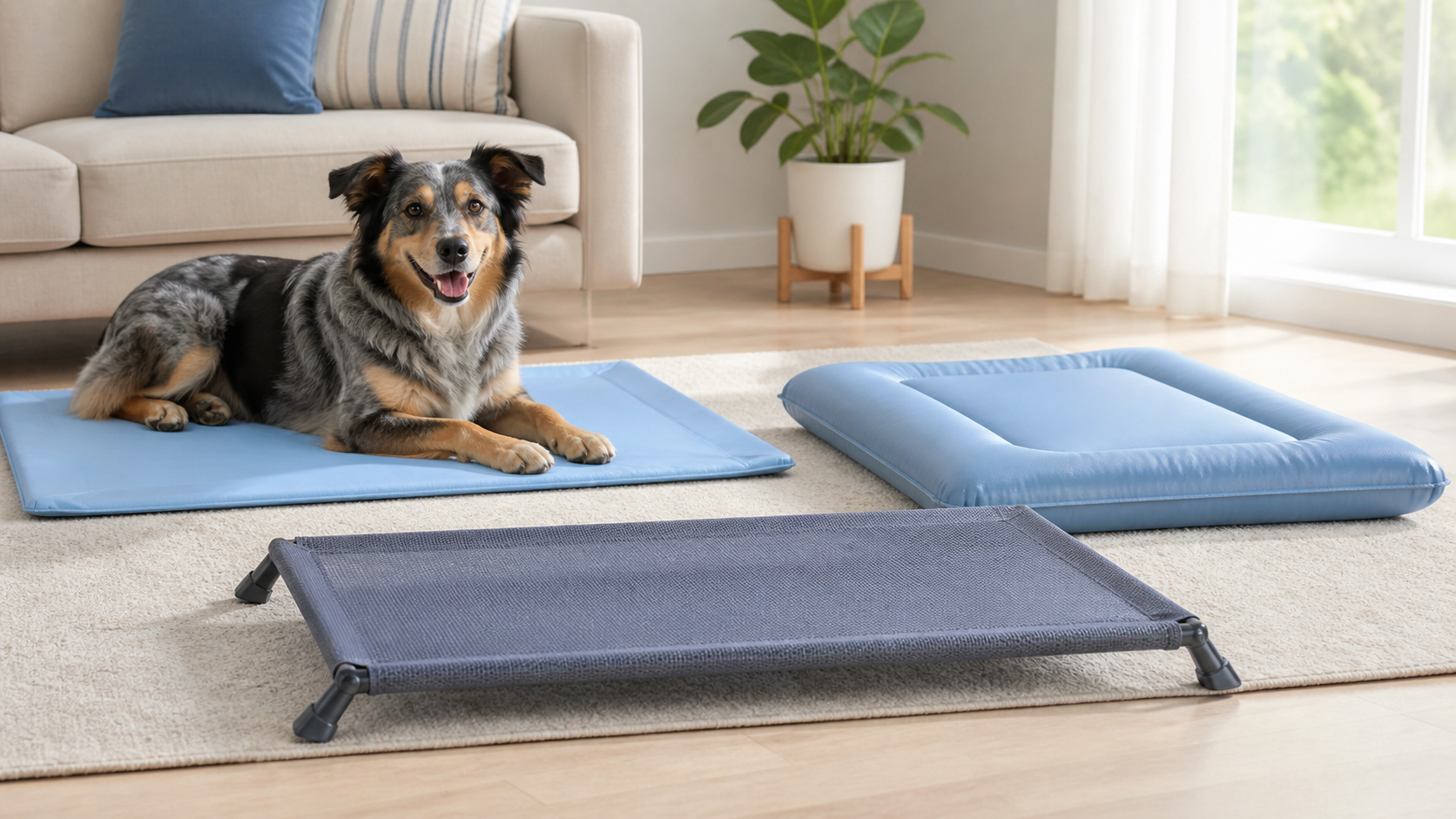
This is a product-category buying framework, not a named-product ranking or hands-on test. “Cooling” describes how these products are marketed and constructed; it is not a promise of a specific temperature change. Always provide fresh water and a safely ventilated or climate-controlled room, and let your dog move off the mat freely.
Quick Comparison: Which Format Fits?
Gel-style mats: best for simple floor placement
These thin mats require little setup and may fold for storage if the maker allows it. Their smooth surface can be easy to wipe, but seams and punctures need regular inspection. Skip this style for dogs that chew, dig, or pull at bedding, and remove any damaged mat immediately.
Water-fill pads: best for owners comfortable with upkeep
A water-fill pad lets the owner follow a specified fill level and may feel more cushioned than a thin mat. The tradeoffs are filled weight, moving difficulty, drying time, valve care, and leak risk. Place it where a leak will not damage flooring and do not improvise additives or filling instructions.
Raised mesh cots: best for airflow beneath the deck
A cot creates clearance below a breathable fabric deck. It is bulkier and may not suit a dog that dislikes stepping onto a raised or springy surface. Measure both the sleeping deck and the full frame, confirm the listed weight limit, and check feet and frame joints for stability.
Selection Criteria That Matter
- Usable resting area: Measure your dog while lying in a normal relaxed position; border seams and frames reduce usable space.
- Surface preference: Some dogs avoid slick, crinkly, wobbly, or raised surfaces. A familiar washable bed may be a better purchase.
- Chew and digging behavior: Soft filled mats are a poor fit for dogs likely to puncture or ingest material. No mat is chew-proof.
- Cleaning: Check whether the surface wipes clean, has a removable cover, or needs disassembly. Dry folds, valves, and fabric fully.
- Floor fit: Look for stable, non-damaging contact points and enough clear space that the mat does not block a doorway or walkway.
- Storage: Confirm whether the mat can fold or roll, how water is drained, or how much room a cot frame takes when stored.
- Inspection: Check seams, valves, decks, fasteners, feet, and frames before use. Follow the maker's replacement guidance.
- Supervision: Introduce the surface while you can observe your dog's response, particularly with filled mats and raised frames.
Set Up the Room, Not Just the Mat
Place the mat in a shaded, dry indoor area where your dog already chooses to rest. Keep an ordinary resting option nearby and never confine a dog to the cooling surface. A mat belongs alongside fresh water, appropriate ventilation or climate control, and access to a comfortable room—not in place of them.
Check the product directions for room-temperature limits, activation or refill instructions, direct-sun warnings, and storage. Do not freeze, refrigerate, add ice, or alter a product unless its manufacturer specifically instructs you to do so.
Who Should Skip a Cooling Mat?
Skip a filled mat for a dog that chews, tears, digs intensely, or eats non-food material. Skip a raised cot when the dog cannot comfortably step onto it, the frame shifts, or the deck is too small. Dogs with mobility limitations, recent surgery, skin problems, pain, or medical needs should have their resting setup discussed with a veterinarian.
You can also skip the purchase if your dog already rests comfortably on a clean hard floor or washable bed in a safely temperature-controlled room. A fan, shade management, or room cooling may matter more than another bedding surface, provided cords and equipment are safely arranged.
When a Mat Is Not the Answer
A cooling mat is not first aid and cannot make a hot car, poorly ventilated room, or dangerous outdoor temperature safe. Heavy or distressed panting, excessive drooling, weakness, vomiting, confusion, collapse, seizures, or abnormal gum color can signal an emergency. Move the dog away from heat, contact a veterinarian or emergency veterinary clinic immediately, and follow their instructions rather than relying on a product.
Build a Practical Comfort Setup
For a broader bedding decision, use the small-space pet bed guide. If cleaning access is the main constraint, the elevated dog bed guide compares frame and deck features without making cooling or health claims.
The Bottom Line
Choose a gel-style mat for thin no-setup placement, a water-fill pad when you can manage filling and leak checks, or a raised mesh cot for airflow beneath a stable deck. Size it for relaxed rest, match it to your dog's behavior and surface preference, inspect it often, and treat it only as an optional indoor comfort surface.