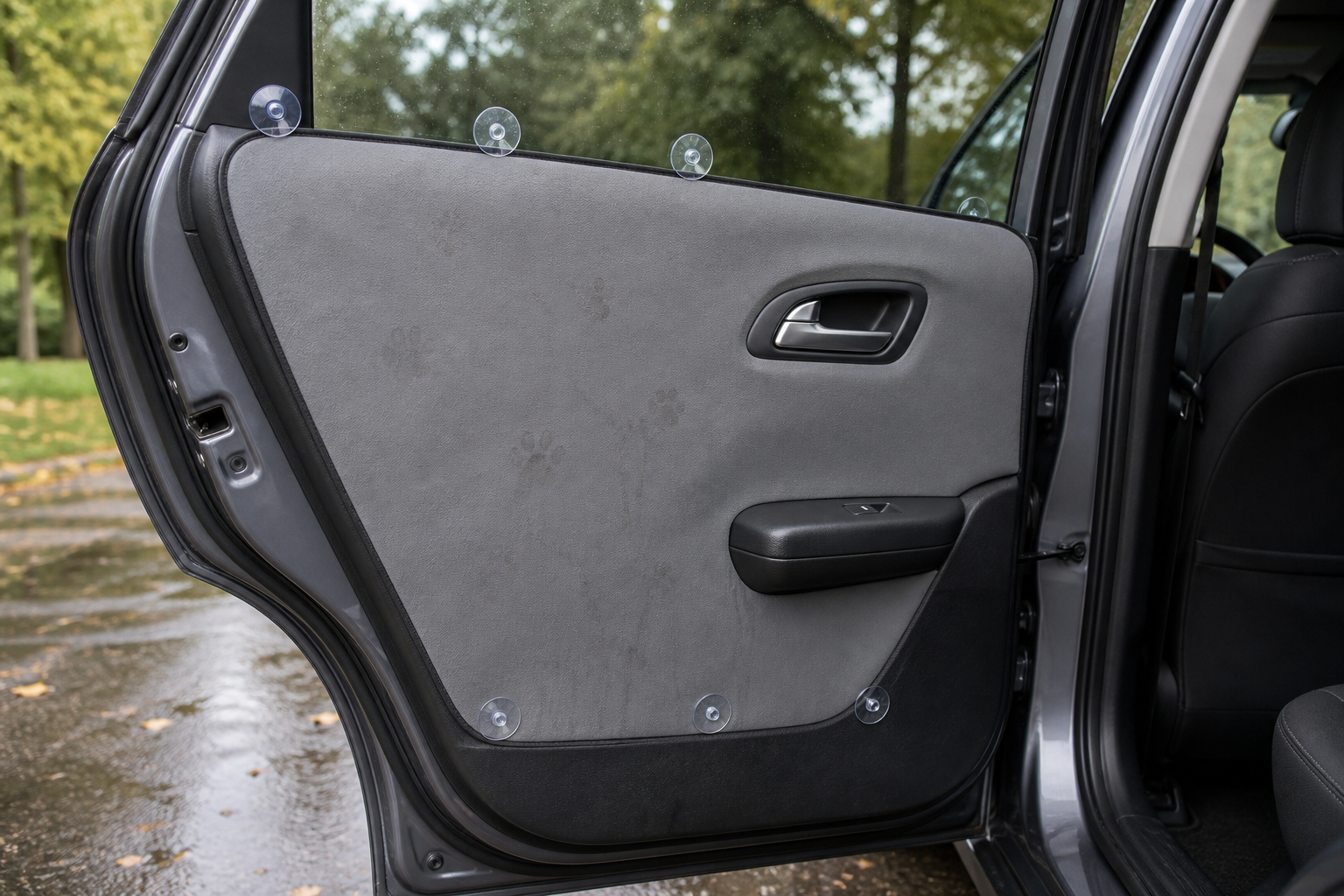
 Suction-cup protectors
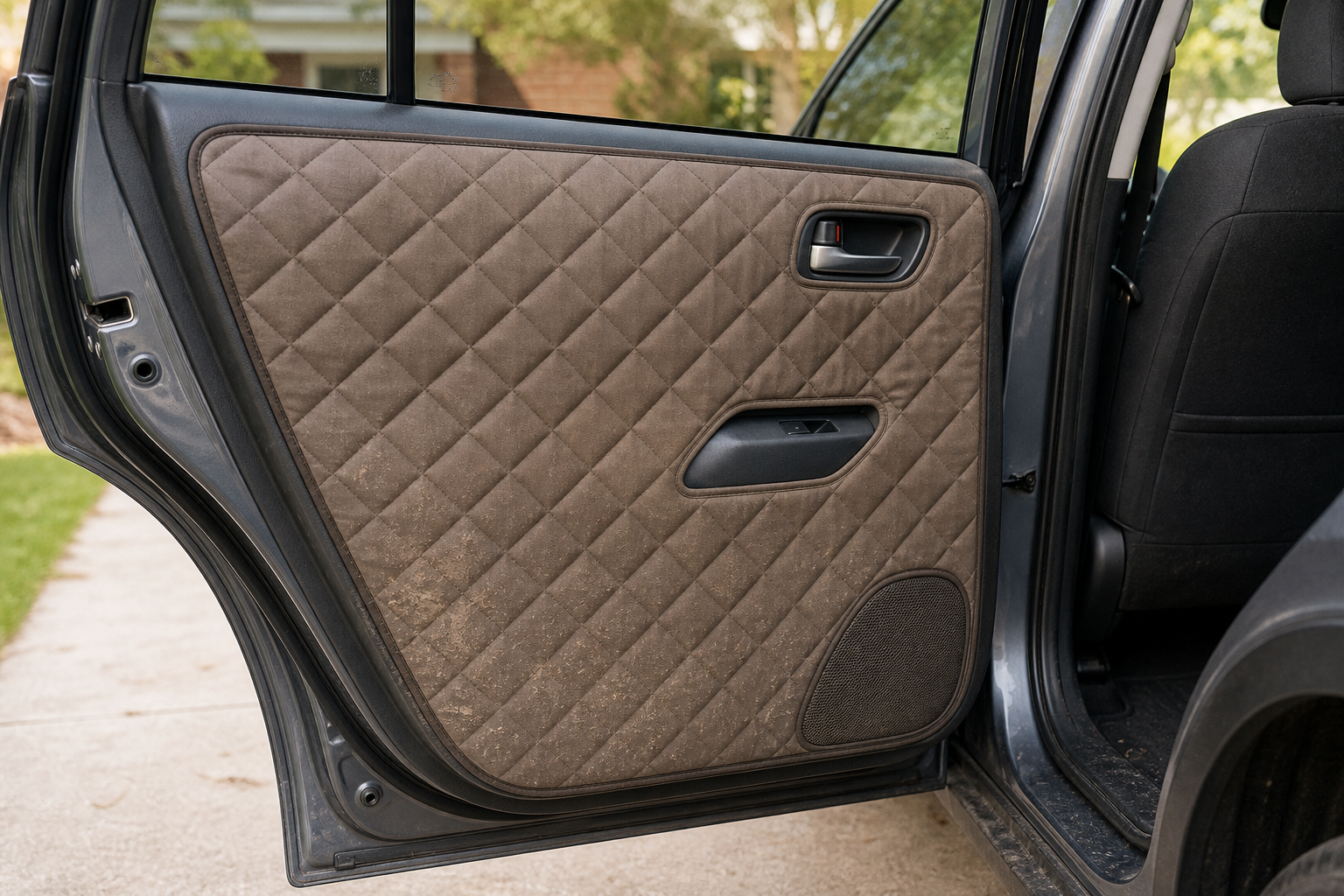 Fitted washable protectors
A door protector is a cleanup and wear-management accessory, not a restraint system and not a guarantee against scratches, moisture, or damage. Use a vehicle-appropriate pet restraint separately, follow its manufacturer instructions, and never let a loose cover interfere with the door latch, controls, glass, seat belt hardware, or your view.
Choose the attachment before the fabric
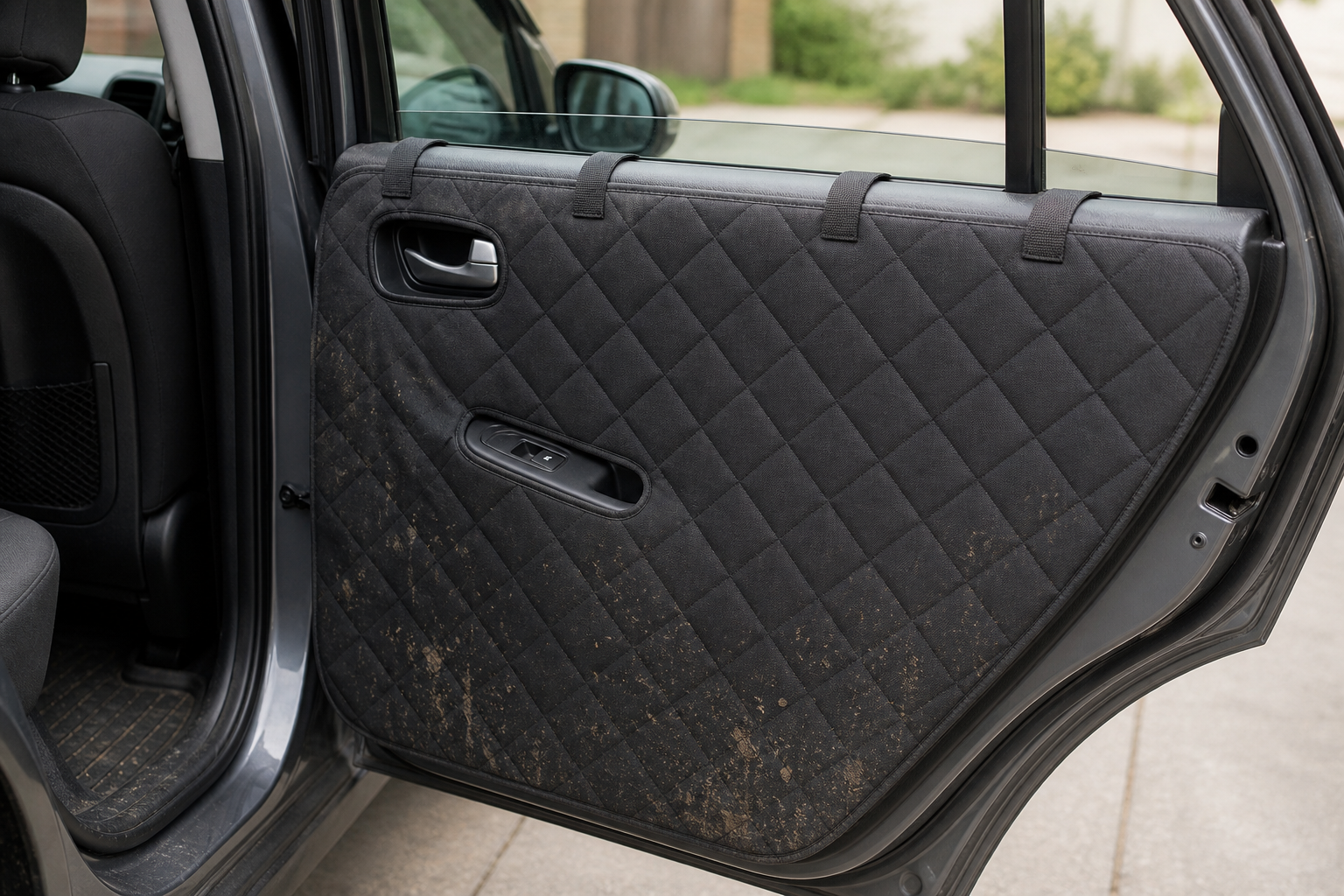
Attachment determines whether the protector stays positioned and whether the window can operate normally. Tab-mounted covers place slim anchors at the window channel. They can be tidy and easy to remove, but they are a poor match when the seal is unusually tight, the manufacturer warns against inserting accessories, or a tab rubs the moving glass.
Suction-cup styles avoid the channel and make removal obvious. They need clean smooth glass, and the cup layout can limit how far you lower the window. A fitted cover gives the cleanest-looking coverage only when the door contour and openings truly match. Generic hook-and-loop or adhesive patches deserve extra caution because residue and interior-surface compatibility vary.
Measure the usable panel, not the whole door
Close the door and measure the flat area from beneath the window ledge to above the lower pocket or speaker, then measure the width between the edges that the cover can occupy. Note the handle, lock, switch, armrest, speaker, storage pocket, and any side-airbag markings. Compare those measurements with the listing diagram rather than relying on “car,” “SUV,” or “universal.”
Coverage that is too narrow leaves the main muddy contact area exposed. Coverage that is too large can bunch at the latch edge, cover controls, or create loose corners. If your dog rests a paw high on the window ledge, check whether the protector covers that ledge or only the vertical panel.
Quick comparison framework
- Tab-mounted universal cover: Start here for broad removable coverage when measurements fit and the window seal can accept the listed tabs.
- Suction-cup cover: Choose for easy removal and visible attachment, provided you can keep the cups on clean glass without compromising window use.
- Fitted washable cover: Choose when a listing explicitly matches the vehicle, door position, controls, and panel contour.
- Adhesive-assisted cover: Consider only after checking the vehicle surface, adhesive instructions, heat exposure, and residue risk.
- No separate door cover: Skip one when your dog remains centered on a suitable seat setup and does not contact the side panel.
Selection criteria that matter
- Panel dimensions: Compare both width and height with the usable door area and every control opening.
- Attachment method: Check the number and position of tabs, cups, straps, or patches and how each behaves when the door closes.
- Window compatibility: Test glass movement slowly after installation. Remove the protector if it binds, rubs, pulls, or shifts.
- Door access: The interior handle, lock, child-lock procedure, speaker, pocket, and switch should remain usable as intended.
- Material and backing: Look for clearly stated face fabric, backing, edge binding, and care guidance. “Waterproof” marketing does not mean every seam or edge contains a spill.
- Cleaning: Wipe-clean sheets handle quick mud removal; machine-washable fabric can suit larger messes but needs enough drying time before the next ride.
- Pair count: Confirm whether the package covers one door or both rear doors.
- Loose-edge risk: Skip covers your dog paws, mouths, or pulls. Inspect attachments and seams before every use.
- Storage: A flexible cover that folds into the trunk is easier to remove when passengers need the door.
A practical muddy-ride setup
Use the door protector for the vertical side panel and a correctly fitted dog car seat cover for the seat or hammock area; neither replaces appropriate restraint. Keep a towel and ordinary cleanup supplies in a secured car organizer so wet gear cannot roll near pedals or become loose cargo.
After the ride, remove loose grit before wiping to reduce rubbing it across the panel. Follow the protector's care label, dry it fully, and check the vehicle surface for trapped moisture. Clean the underlying door periodically rather than assuming the cover has sealed every edge.
Who should skip a dog car door protector
Skip it if the attachment conflicts with your window seal, side-airbag markings, latch, controls, seat belt hardware, or manufacturer guidance. It is also the wrong purchase when the real problem is seat coverage, cargo-area containment, or a dog moving freely around the cabin. Solve the restraint and seating setup first.
Remove any cover your dog chews or pulls, or that shifts when the glass moves. If your dog is distressed, frantic, or difficult to secure during car travel, a fabric panel is not a behavior solution; ask a veterinarian or qualified trainer for situation-specific guidance.
The bottom line
Choose a dog car door protector by measured panel coverage and attachment compatibility, not by a universal-fit promise. Tab-mounted styles are the sensible first comparison for many ordinary rear doors, suction cups suit quick removal, and fitted washable covers make sense only with verified vehicle compatibility. The right option stays clear of every control, cleans predictably, and comes out when it cannot sit securely.