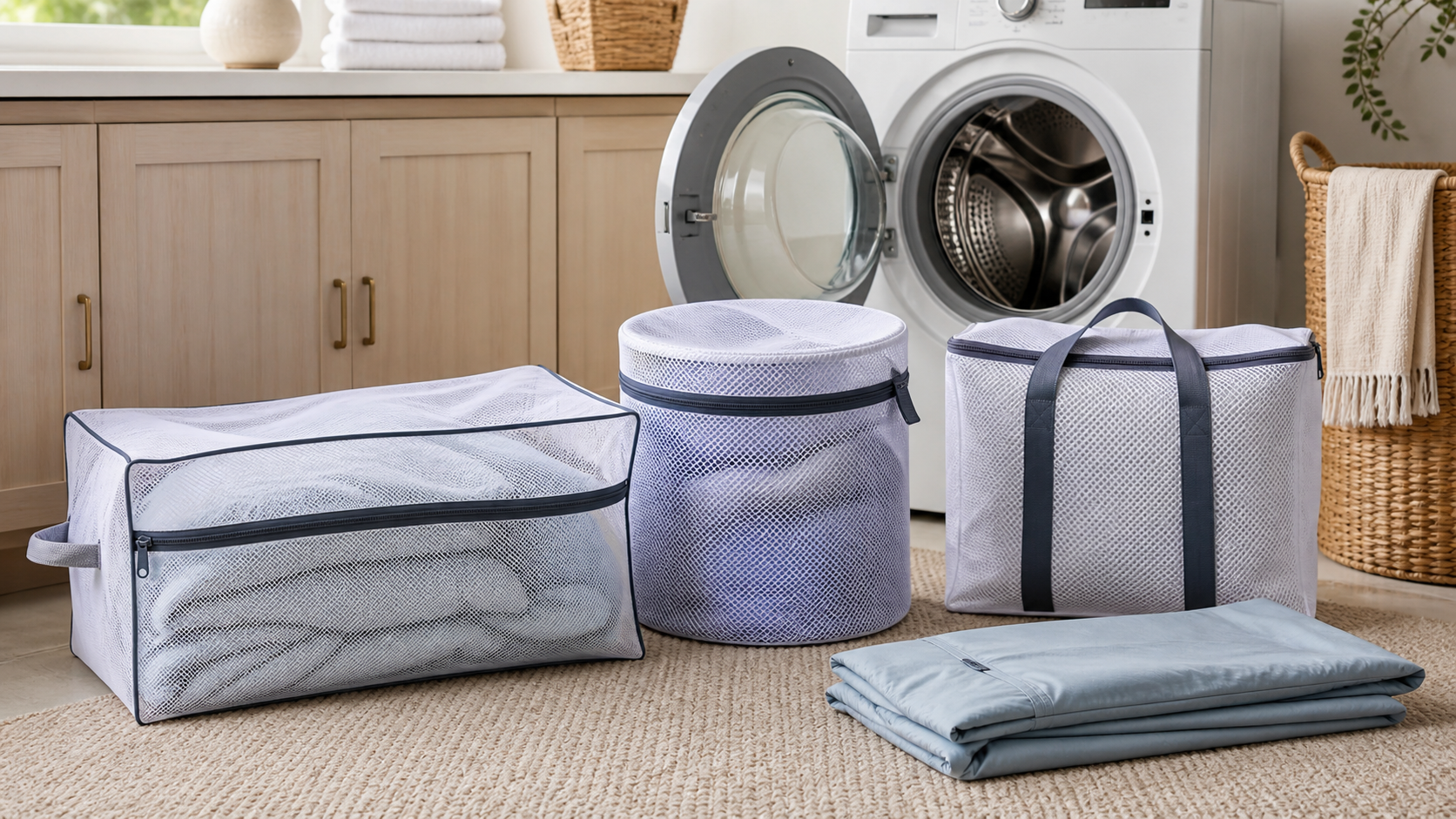
This is a category comparison, not a named-product ranking or a report of hands-on testing. A wash bag is only appropriate when both the bedding label and washing-machine instructions allow machine washing. Remove foam, rigid inserts, electrical parts, and any other component the manufacturer says not to wash.
Quick Comparison: Which Format Fits?
Roomy rectangular mesh bags: best for broad covers
A wide rectangular bag gives a removable cover or thin flexible mat more room to spread out. That can be easier to load than a narrow opening, especially when the item has corner straps or a long zipper. The tradeoff is washer fit: a very large bag may invite overfilling, and a broad bundle can remain unbalanced if the drum is too small.
Cylindrical mesh bags: best for rolled soft items
A cylindrical shape can suit soft, flexible bedding that rolls without forcing or creasing rigid parts. Look for an opening large enough to load the item without dragging its zipper across the mesh. A packed-tight cylinder is a poor choice because water and detergent still need to move through the contents.
Reinforced wash bags: best for frequent routines
Reinforced seams and a protected zipper are useful when washable covers are part of a regular cleanup routine. Handles can help carry the dry bag, but loose handles or straps may need to be secured according to the product directions before the wash cycle. Heavier construction also takes longer to dry and should be checked for trapped fur along bindings.
Selection Criteria That Matter
- Usable size: Compare the bag's internal dimensions with the cover or mat when loosely folded. Do not treat a stretched-flat measurement as usable packed space.
- Washer capacity: The filled bag must fit without wedging against the door or filling the drum. Follow the machine maker's load and balance guidance.
- Mesh density: Finer mesh may contain more loose fur; more open mesh may rinse readily. Neither replaces brushing or vacuuming heavy fur before washing.
- Closure protection: Prefer a zipper that can be secured under a flap or elastic cover so the pull does not swing freely against the drum.
- Seams and handles: Check reinforced areas for loose threads and make sure any handles are designed for the wash process, not just carrying.
- Item compatibility: A removable textile cover is a different load from a whole stuffed bed. Follow the bedding label and remove non-washable inserts.
- Cleaning and drying: The bag itself collects fur and detergent residue. Empty it, clean it as directed, and dry it fully before storage.
- Damage checks: Retire a bag with torn mesh, opening seams, or a damaged closure that could release hardware or fabric into the machine.
Check the Washer and Bedding Before Buying
Start with the bedding care label. If only the removable cover is machine washable, a bag does not change that instruction. Shake or vacuum loose fur first, close the cover's own fasteners as directed, and inspect for tears that may worsen in the wash.
Then check the washing-machine manual for capacity, bulky-item, and balance guidance. Large soft items can become much heavier when wet. A commercial machine or professional cleaner may be the better route when the load cannot move freely, remains off balance, or exceeds the household machine's instructions.
Who Should Skip a Pet Bed Wash Bag?
Skip one if the bed is labeled hand-wash or spot-clean only, contains foam or a rigid insert that cannot be removed, has electrical warming or cooling components, or cannot fit loosely in the machine. Also skip the bag if it encourages you to force an oversized item into the drum.
An ordinary pillowcase or duvet cover may be enough for a small, lightweight removable cover if it closes securely and the fabric's care instructions suit the wash. For bedding contaminated with substances that need special handling, follow professional or veterinary guidance rather than relying on a laundry accessory.
Build a Calmer Pet-Bedding Laundry Routine
Keep one washable replacement cover ready so the bed stays usable while laundry dries. The replacement pet bed cover guide explains fit and closure choices, while the washable dog bed guide covers the larger bed decision.
After the cycle, check the washer gasket or lint area according to the machine instructions and remove collected fur. Let both the bag and bedding dry completely before reassembly. A wash bag is a containment and hardware-management tool—not a promise that every bed, washer, or mess is compatible.
The Bottom Line
Choose a roomy rectangular bag for broad removable covers, a cylindrical bag for compatible rolled soft bedding, or a reinforced bag for frequent routines. The correct choice leaves room for movement, protects closures, matches the care labels, and stays comfortably within your washer's capacity.