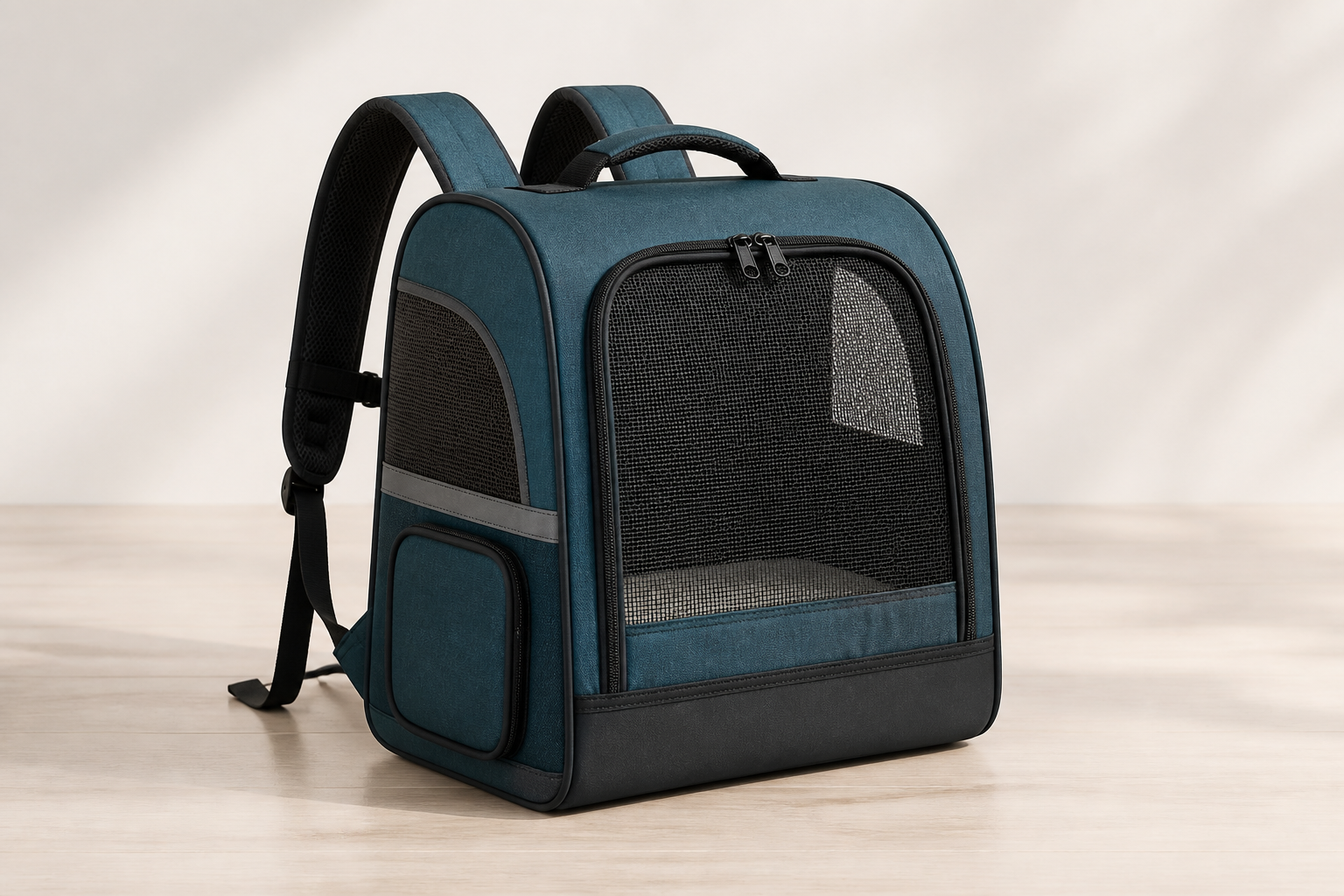
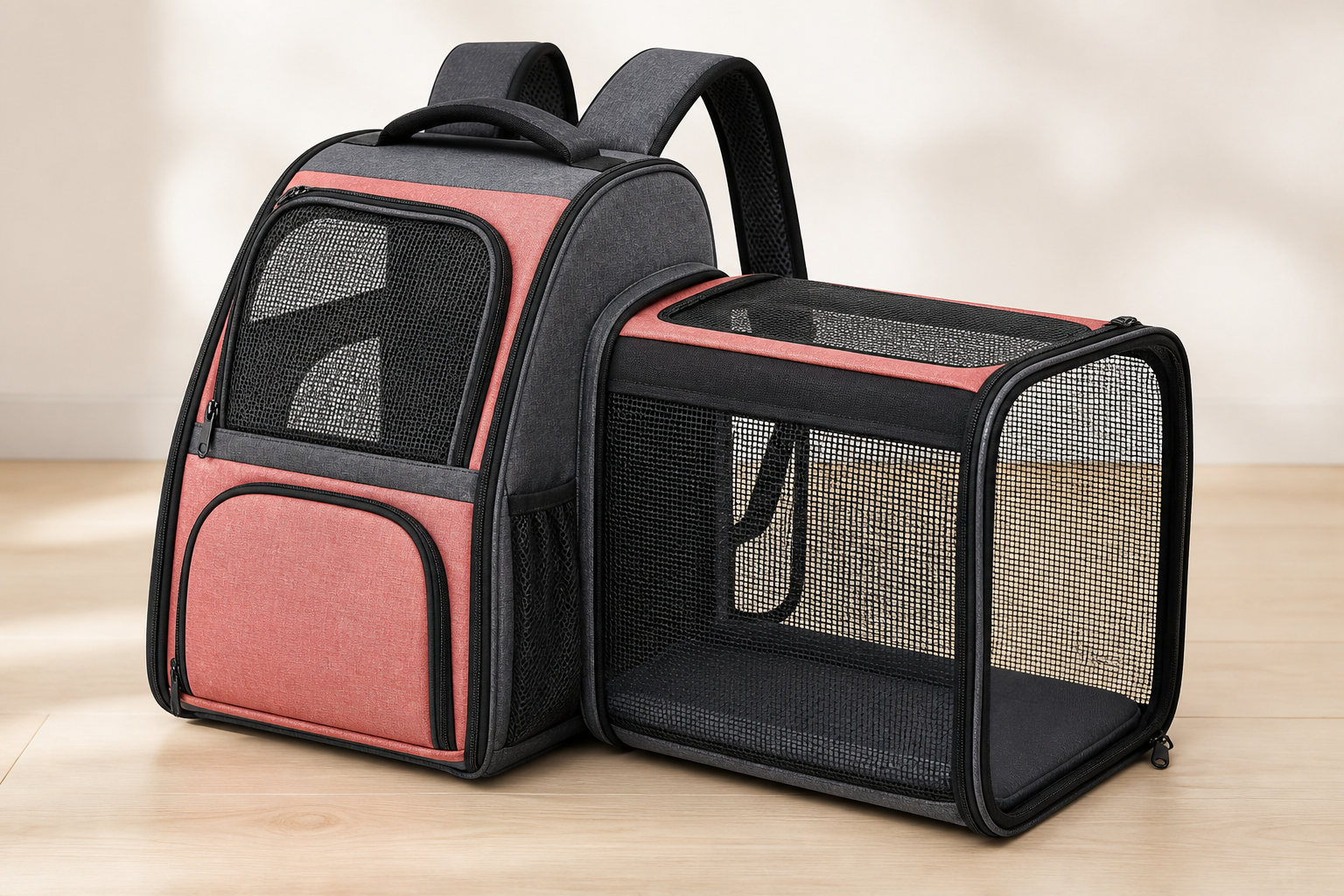
 Expandable backpacks
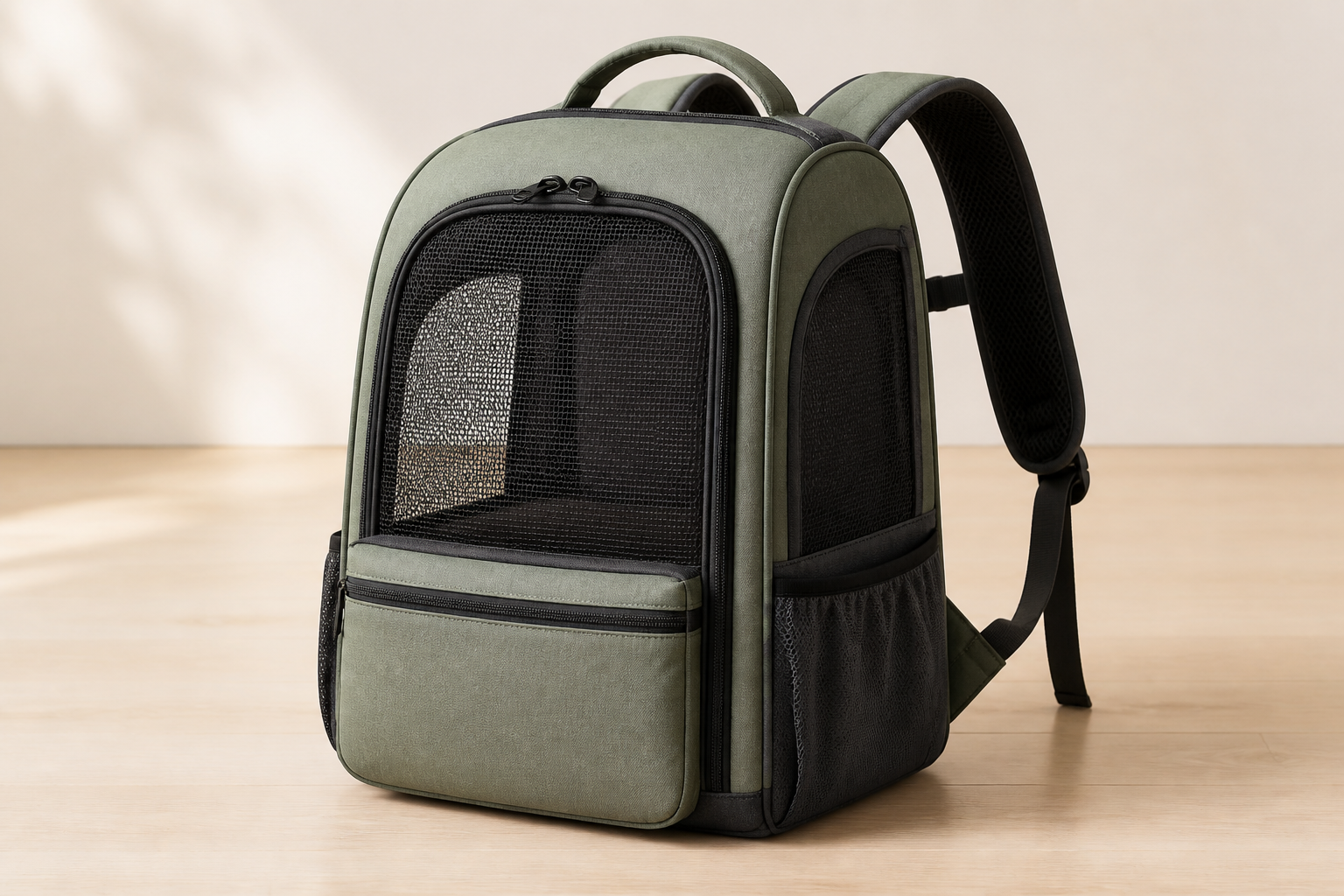 Compact lightweight backpacks
A carrier backpack is transportation gear, not a substitute for veterinary advice, training, temperature judgment, or close supervision. It is not automatically suitable for hiking, cycling, air travel, long trips, hot weather, or every pet. Follow the carrier maker's instructions and the rules of any transit provider or destination.
Fit the pet before fitting the wearer
Measure your pet as the manufacturer directs and compare those numbers with the usable interior length, width, and height. Exterior dimensions can overstate the space available after padding, curved walls, pockets, and the base insert are counted. The pet should not be forced into a hunched or tightly curled posture merely because its weight falls below a listing limit.
Weight limits still matter because the seams, zippers, base, and shoulder system carry the complete load. Treat the lower of the size fit and stated weight limit as the boundary. If your pet cannot settle comfortably, tries to force through mesh, pants unusually, becomes distressed, or has mobility or breathing concerns, stop and ask a veterinarian about an appropriate transport plan.
Quick comparison framework
- Structured ventilated backpack: Start here for short ordinary carries when the dimensions fit and you want a stable base and shape.
- Expandable backpack: Choose only when you have space to set it down and open the expansion securely; do not carry it while expanded unless the maker explicitly permits that use.
- Compact lightweight backpack: Choose for a smaller pet and brief route when storage and carry weight matter more than extra pockets.
- Hand-carried soft carrier: Prefer this when backpack motion, upright orientation, or wearer fit is uncomfortable. See our short-trip carrier guide.
- Hard-sided carrier: Consider it when rigid protection or easy wipe-down matters more than hands-free walking.
Selection criteria that matter
- Interior dimensions: Use the current maker diagram and account for the liner, curved roof, and expansion being closed during carrying.
- Stated weight limit: Count the pet and anything placed inside. Never exceed the manufacturer's limit.
- Base support: Look for a level insert that stays seated and does not fold sharply under the pet's weight.
- Ventilation: Compare the size and placement of mesh panels without assuming mesh alone makes warm conditions safe.
- Openings and closures: Check zipper tracks, clips, seams, and how you will load the pet without creating an escape gap.
- Wearer fit: Padded adjustable shoulder straps, a stable back panel, and appropriate torso fit matter more than decorative pockets.
- Cleaning: Prefer a removable washable liner or base cover and clear instructions. Dry every part fully.
- Empty weight: Add the carrier's weight to the pet's weight before judging whether stairs or transit transfers will be manageable.
- Storage: Collapsible construction helps only if the carrier returns to a stable shape and the base inserts correctly.
Plan the short urban route
Walk the route without the pet first when possible. Note stairs, narrow gates, crowded platforms, elevators, weather exposure, and places where you could set the carrier down securely. Pack only essentials in exterior pockets so the load remains balanced and ventilation panels stay clear. A small pet outing kit can help separate water and cleanup supplies from the occupied carrier.
Before leaving, inspect mesh, seams, zippers, clips, straps, and the base. Keep the backpack upright, avoid swinging it by one strap, and monitor the pet throughout the trip. A built-in tether is not automatically appropriate for every pet and must never create an entanglement or choking risk; follow the maker's instructions and use a setup suited to the individual animal.
Who should skip a carrier backpack
Skip one when your pet does not fit the measured interior, exceeds the stated limit, struggles with the upright shape or movement, chews mesh, or becomes distressed in enclosed carriers. Also skip it when the wearer cannot keep the combined load stable, the route involves prolonged heat or exertion, or a vehicle or transit policy requires a different format.
Pets with breathing, mobility, pain, recovery, or temperature-regulation concerns need individual veterinary guidance before transport. A carrier is a convenience and containment tool, not a treatment or guarantee of comfortable travel.
The bottom line
For most short urban trips, compare a structured ventilated backpack first, using verified interior measurements and the manufacturer's weight limit as non-negotiable filters. Expansion can add useful stationary space, while compact construction can reduce storage bulk, but neither feature fixes poor pet fit or an unstable carry. Choose the format that suits both bodies, the route, and the cleaning routine—and use a conventional carrier when that is the calmer option.