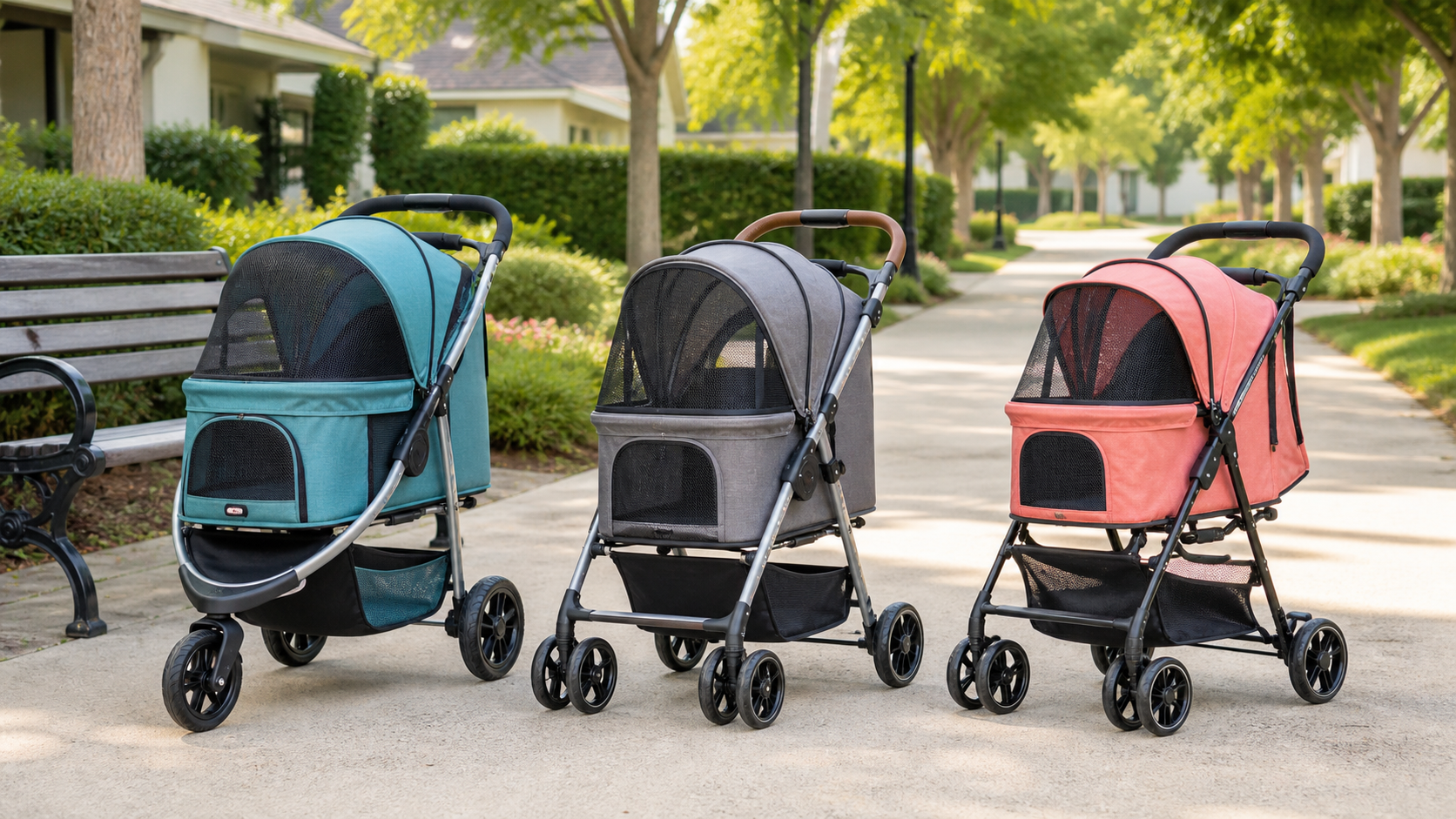
A stroller is a transport convenience for an appropriately sized pet, not a treatment for pain, breathing trouble, weakness, injury, anxiety, or reduced mobility. If a change in your pet's movement or tolerance is new, painful, or unexplained, ask a licensed veterinarian before planning outings around a product.
Best for Simple Steering: A Lightweight Three-Wheel Stroller
A three-wheel layout can feel easy to guide around gentle turns on an uncrowded paved route. Compare the front wheel's diameter, swivel lock if present, rear track width, and brake controls. A narrow-looking frame is not automatically stable, and a swiveling wheel is not suitable for every surface.
Choose this format only after checking the full cabin interior and the manufacturer's limit. The pet should be able to sit, turn, and lie naturally without pressing into the canopy. Test steering, brakes, and closures at home with the stroller empty before introducing the pet calmly.
Best for a Broad Base: A Compact Four-Wheel Stroller
Four-wheel designs often use a rectangular frame that makes cabin and doorway measurements straightforward. They can take more space to turn, so compare the full wheelbase—not only cabin width—with narrow sidewalks, lifts, shop aisles, and your home entry.
Look for brakes you can reach without putting a foot near a pet-access opening. Confirm whether the front wheels swivel or lock, and inspect every wheel attachment according to the maker's instructions. No wheel count guarantees stability or prevents tipping.
Best for Tight Storage: A Compact-Fold Stroller With a Basket
A short errand stroller still needs somewhere to live between outings. Measure the folded frame in every dimension and check whether the manufacturer describes a fold latch or standing position. Include protruding wheels, handle, cup tray, and other removable parts in your storage plan.
An under-cabin basket is useful for a small water bottle, wipes, and waste bags, but advertised basket capacity is not the same as usable access. Check whether axles, brakes, or the cabin floor obstruct the opening, and keep heavy or loose items from changing handling.
Selection Criteria That Matter
- Usable cabin dimensions: Compare interior length, width, and canopy height with your pet's natural positions; do not rely on weight alone.
- Manufacturer limit: Stay within the stated pet weight and occupancy guidance, including any rules for more than one pet.
- Entry height and opening: A lower, wider entry can reduce awkward lifting, but closures must still fasten fully and stay out of chewing reach.
- Mesh and canopy: Check ventilation area, visibility, zipper or latch access, and whether fabric can be cleaned according to the care label.
- Wheels and route: Small wheels suit smooth paving better than broken sidewalks, curbs, gravel, grass, or steep slopes. Follow the maker's terrain limits.
- Brakes: Confirm which wheels lock, how the controls operate, and whether you can engage them before opening the cabin.
- Fold and lift: Measure the folded frame and check total stroller weight before assuming you can lift it into a car or carry it upstairs.
- Storage: Compare basket opening, usable clearance, and the effect of supplies on balance. Never hang heavy bags from the handle unless expressly allowed.
- Cleaning: Prefer removable pads and reachable seams. Follow material-specific care and dry every part before folding.
- Inspection: Before each outing, check wheels, fasteners, brakes, frame locks, mesh, seams, zippers, and any manufacturer-approved internal restraint point.
A Quick Comparison Framework
First, measure your pet and reject any cabin that is too short, narrow, low, or close to the manufacturer's limit. Next, map the actual route: note doorway widths, curbs, uneven sections, slopes, stairs, crowded areas, and places where strollers are not allowed.
Then measure home and vehicle storage with the stroller folded. Compare frame weight with the lift you can manage. Finally, look at daily handling: which brakes you can reach, how the cabin opens, where supplies go, what removes for cleaning, and whether your pet accepts the enclosed space without force.
Who Should Skip a Pet Stroller
Skip one if an appropriately fitted hand carrier already works for the short trip, if your route includes repeated stairs or rough surfaces, or if the folded frame will not fit your storage. A stroller also adds little if destinations prohibit it or sidewalks are too crowded to maneuver without blocking others.
Do not use a stroller to push a fearful pet into busy outings. Skip the purchase if your pet persistently claws, chews, pants, vocalizes, tries to escape, or cannot settle during a slow home introduction. Ask a veterinarian about possible medical concerns; for non-medical fear or handling issues, a qualified reward-based trainer may help you plan a gentler approach.
Plan the Rest of the Outing
If you need a smaller carried format for a building entrance or vet visit, our pet carrier guide covers measured fit, access, structure, and cleaning. A travel water bottle can fit the stroller basket when its lock and dimensions suit the available space.
For waste bags, wipes, a towel, and familiar comfort items, use the everyday outing-kit checklist. Keep supplies light, contained, and away from moving parts, and never leave a pet unattended in a stroller or parked vehicle.
The Bottom Line
Choose a lightweight three-wheel stroller for simple steering on smooth routes, a compact four-wheel format when a broad rectangular base fits your space, or a compact-fold model when home and car storage drive the decision. The useful choice is the one whose measured cabin, closures, wheels, brakes, fold, cleaning routine, and route limits all fit your real errand—without making medical or safety promises a stroller cannot keep.