LED Sign Cable-Management Guide
Best cord covers for wall-mounted LED signs.
A wall-mounted LED sign can look carefully placed while its power cord still reads as an afterthought. The best cord cover is the smallest surface-mounted channel that fits the complete listed cable route, follows the wall without awkward gaps, and remains accessible according to the sign and cord-cover makers' instructions.
Disclosure: As an Amazon Associate, we may earn from qualifying purchases and approved partner referrals.
Category route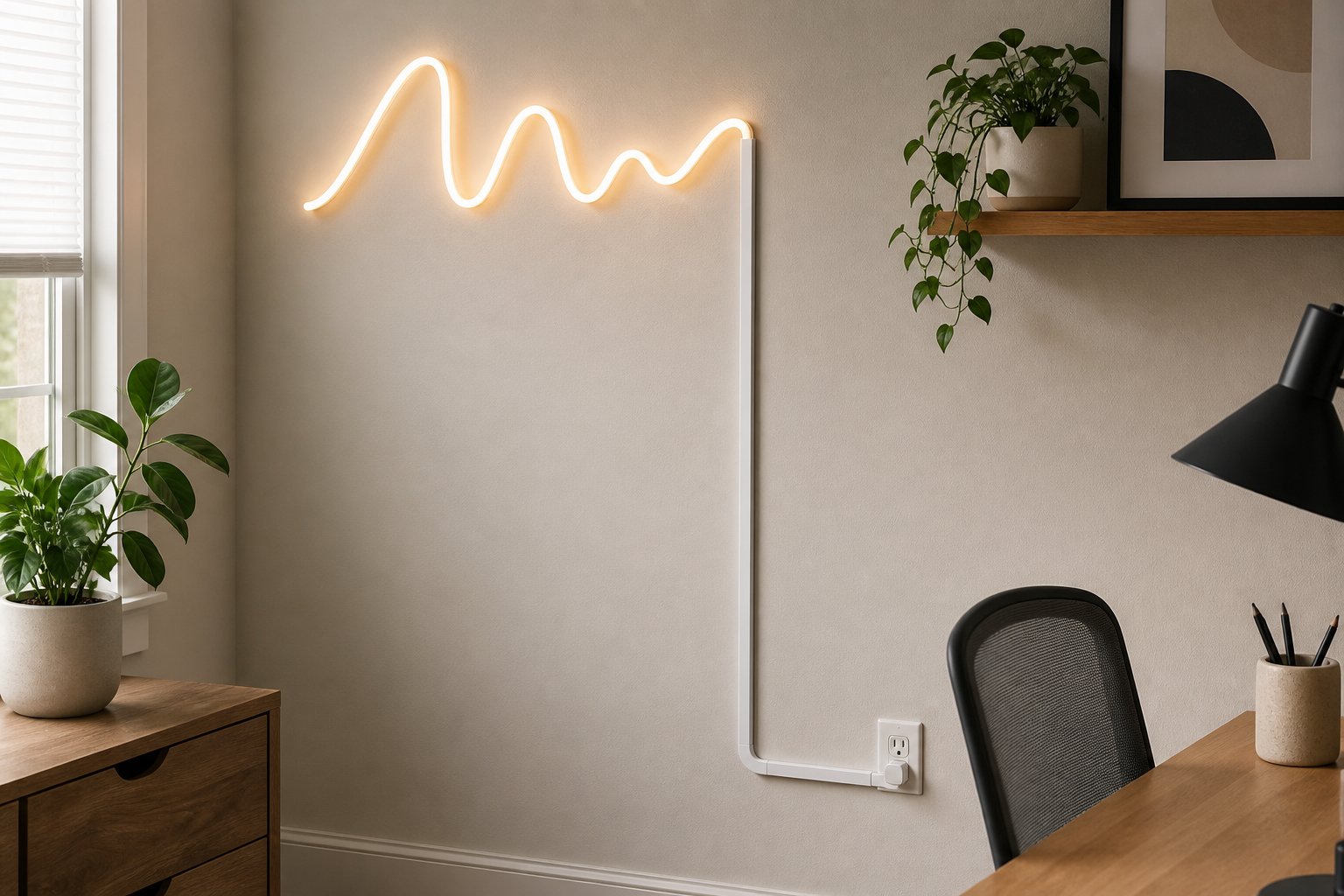
Best starting route
Compare complete raceway kits after measuring the actual cord.
Use current listings and instructions to verify the channel's internal dimensions, total length, fittings, attachment method, wall-surface guidance, paint instructions, and access requirements. Do not select from exterior width or a staged photo alone.
Plan the whole setup: start with the sign mounting supplies guide, or revisit plug-in versus battery-powered signs if no clean route reaches an outlet.
How we compare cord covers for LED signs
This is a category framework, not hands-on testing or a ranking of named products. Measure your sign's supplied cable and route, then verify every candidate against its current listing and instructions.
- Usable internal capacity: compare stated inside dimensions with the widest cable component intended to pass through the channel. A plug, controller, or connector may be wider than the cord.
- Route and fittings: count straight runs, inside or outside corners, flat elbows, joints, and end pieces before choosing a kit.
- Surface instructions: check whether the maker describes the intended wall finish and preparation. Adhesive compatibility is not universal.
- Access: prefer a format that opens or removes as described when the cable, controller, or adapter must remain inspectable.
- Finish: verify whether the cover is sold in a useful color or explicitly described as paintable, including preparation directions.
- Removal plan: renters and frequent redecorators should weigh possible wall repair against a freestanding sign or route behind furniture.
Best cord-cover format by wall route
Straight paintable channel: best for one visible vertical drop
A low-profile straight run can visually merge with the wall when its stated capacity fits the cable and its paint instructions suit the finish. Confirm the required length and end treatment.
Fitting-rich kit: best for trim and corner changes
Choose a kit with the specific elbows and joints your paper route requires. Extra generic pieces do not help if the needed corner orientation is absent.
Removable route: best when wall impact matters most
A maker-described removable option may suit temporary rooms, but removal can still affect paint or finish. Follow both surface and removal instructions and keep expectations cautious.
Measure the complete path before ordering
Mark the sign's mounting position and intended outlet, then trace the proposed channel with painter's tape suitable for the wall. Add vertical and horizontal segments separately and account for the space taken by fittings. Keep the route away from doors, drawers, moving chairs, heat sources, and places where furniture could pinch the cable.
Identify the adapter, inline controller, connectors, and any component the sign maker says must stay accessible. A cord cover is surface cable management, not permission to alter wiring, run a cable inside a wall, bury an adapter, or disregard product instructions. If the specified setup is unclear or the route involves fixed electrical work, stop and use an appropriately qualified professional.
Compare wall fit, finish, and future removal
- Smooth painted drywall: check cure-time and surface guidance for both paint and adhesive; recently painted walls may not be suitable.
- Textured walls: a narrow adhesive strip may not make the contact the product requires. Use only a method the maker supports for the surface.
- Rental walls: photograph the starting condition, follow housing rules, and assume some touch-up could be necessary rather than promising damage-free removal.
- Bold wall colors: a maker-described paintable cover can reduce contrast, but follow its preparation and coating directions.
- Busy walls: rerouting behind furniture may look calmer than adding several visible elbows.
Who should skip a cord cover?
- Skip it when the route crosses a walkway, door, moving furniture, wet area, or another place the sign maker's instructions do not support.
- Skip an undersized channel that pinches the cable or forces connectors into the run.
- Skip adhesive mounting when the product does not identify your wall finish as suitable.
- Skip a complex multi-corner route when moving the sign closer to the outlet creates a cleaner result.
- Skip powered wall decor if the cord, controller, and adapter cannot be placed according to their instructions.
- Skip this general decor guidance for fixed wiring, exterior installations, emergency signs, or code-sensitive business signage.
The practical bottom line
Start with the real cord, not the cover's advertised outer size. Map every straight segment and corner, keep required components accessible, and verify surface, paint, and removal directions in the current listing. The cleanest result is often a short, simple route in a wall-matching finish—not the kit with the most pieces.
If the sign itself is still undecided, use the room decor sign guide to compare scale and placement before buying setup supplies.
 The Good Sign Company