Portable Market Booth Sign Guide
Best hanging signs for market booths: get the brand above the display.
A hanging sign can identify a booth before shoppers reach the table, but only when the venue provides an approved support and the sign is light, balanced, readable, and practical to transport. Start with the event’s display rules and your real booth frame. Then compare formats by viewing distance, packed size, attachment points, setup time, and whether the message will remain useful.
Disclosure: As an Amazon Associate, we may earn from qualifying purchases and approved partner referrals.
Category route
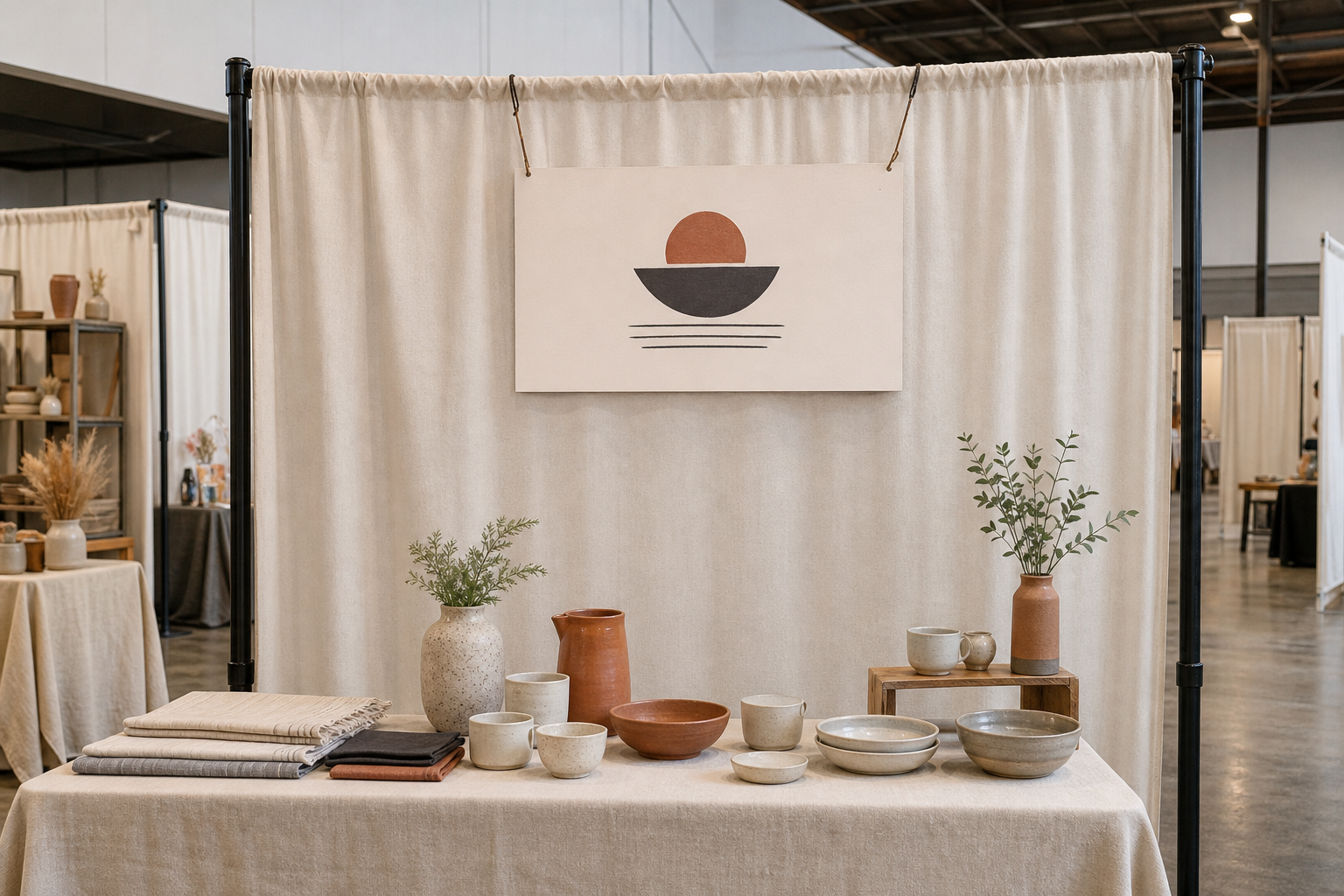
Best general starting format
Use a lightweight rigid panel when the venue confirms a suitable support.
A matte, shallow panel gives a stable outline and keeps a short brand message readable. Compare listed weight, outer dimensions, attachment points, finish, edge treatment, and intended use. The support and hardware must suit the actual booth system and event rules; a product photo alone cannot establish that fit.
Need a permanent logo panel made to your booth dimensions? Share the measured indoor project with DaNite Sign Company and confirm current project fit, artwork, dimensions, material, attachment details, and terms directly.
How we compare hanging booth signs
This is a best-fit format framework, not hands-on testing or an unsupported ranking of individual products. Compare candidates in this order:
- Venue permission and support: ask what may carry the sign, whether attachments to drape or venue property are prohibited, and what height or setback limits apply.
- Complete installed weight: count the panel, cords, hooks, rails, lights, and every connector—not just the printed face.
- Two-point balance: two separated attachment points usually help a rectangular panel remain level. Use only the configuration approved by the sign, support, hardware, and venue providers.
- Aisle readability: test a full-size paper mockup from the direction shoppers approach, with neighboring displays and people represented.
- Packed size: confirm the sign fits the vehicle, bin, or protective sleeve used for every event and can move through doors without bending.
- Backdrop compatibility: the sign should not pull on fabric, block a neighbor, cross an aisle boundary, or depend on a frame the organizer does not provide.
- Repeatable setup: favor few labeled parts, obvious attachment points, and a photographed setup sequence that a helper can reproduce.
Best hanging format by booth setup
Category route
Lightweight rigid panel: best for a stable brand mark
Choose this when the logo and short descriptor will not change. A matte face and simple silhouette can read cleanly, but verify total weight and compatible attachment points.
Browse category: Compare rigid hanging sign formats
Category route
Fabric banner: best for compact packing
Fabric can roll or fold into a smaller kit, though wrinkles, edge curl, tension, and print contrast affect the result. Confirm the maker’s hanging method and care guidance.
Browse category: Compare fabric booth banners
Category route
Freestanding banner: best when overhead attachment is unavailable
It is not a hanging sign, but it can preserve high visibility without loading a booth frame. Check base footprint, sightlines, booth boundaries, stability, and packed length.
Browse category: Compare freestanding banner alternatives
A practical comparison framework
- Provided pipe-and-drape frame: do not assume the crossbar may support a sign. Ask the organizer what attachments and loads are allowed before choosing hardware.
- Vendor-owned backdrop frame: use its maker’s load and setup guidance, count the complete sign assembly, and keep the support footprint inside the booth.
- No approved overhead support: choose a freestanding banner, tall rear table riser, or tabletop sign instead of improvising an attachment.
- Changing product line: keep the brand panel permanent and put prices, product names, and availability on replaceable lower signs.
- Outdoor market: treat wind, weather, anchoring, public access, and event rules as a separate site-specific decision. An indoor hanging format should not be assumed suitable outdoors.
Make the message work from the aisle
A hanging sign earns its height with a short message: usually the brand name, a simple mark, and perhaps a few words that say what the booth sells. Prices, QR codes, social handles, and product details generally belong closer to the shopper. Before production, print the artwork at full size or tape up a plain paper rectangle. View it from both aisle approaches while the full display is assembled.
Check contrast under event-like overhead light. A subtle logo that looks refined on a laptop may disappear against a cream drape, and a glossy face may reflect fixtures. Keep essential lettering away from hanging holes and top-edge hardware.
Plan attachment and transport together
- Get the organizer’s current display rules and the dimensions of the booth structure you will actually use.
- Mock up the proposed face at full size and choose the smallest format that reads from the target approach.
- Ask the sign and support providers how the complete assembly is intended to attach; do not substitute improvised fasteners.
- Pack the panel, suspension parts, and protective sleeve with the rest of the booth kit. Label paired hardware and carry any provider instructions.
- Set up once before the event, photograph each connection and the finished height, and record the order in which parts come down.
Use the small-business sign planning guide to simplify the message. Compare lower display options in the tabletop vendor-booth sign guide, and review the mounting supplies guide without treating general-purpose hardware as automatic approval for an event structure.
Who should skip a hanging booth sign?
- Skip it when the organizer cannot confirm an approved support or attachment method.
- Skip a rigid panel when its packed dimensions do not fit the vehicle or protective storage available for every event.
- Skip overhead placement when the sign would project outside the booth, conflict with a neighbor, or sit below a required clearance.
- Skip permanent production while the name, logo, or core product category is still changing; test a printed banner first.
- Skip dense copy, prices, and small QR codes overhead. Put changing or action-oriented information closer to eye level.
- Skip any indoor-only sign or support for outdoor use unless the relevant providers and organizer confirm the complete setup for those conditions.
The practical bottom line
For repeat indoor markets with an approved support, a lightweight matte panel with two designed attachment points is the clearest starting format. A fabric banner packs smaller, while a freestanding banner is the better alternative when overhead attachment is unavailable. Keep the message short, test it from the aisle, count every component in the installed weight, and confirm the complete setup with the venue and product providers.
For a measured logo panel, ask DaNite Sign Company whether the custom indoor project fits its current offering. Confirm material, size, artwork, attachment details, timing, and terms directly.
 The Good Sign Company