 The Good Sign Company
Renter-Friendly Door Sign Guide
Best no-drill door signs for dorms and rentals: choose the mount before the message.
A temporary-home door sign has to suit the door before it suits the room. Check the door material, top and jamb clearance, sign weight, swing, shared-hallway exposure, and housing rules first. “Removable” is a product instruction to verify—not a promise that every finish will come away unchanged.
Disclosure: As an Amazon Associate, we may earn from qualifying purchases and approved partner referrals.
Best category-shopping route
Compare lightweight signs and mounting methods together.
Use the category to compare current dimensions, complete weight, hook or hanger style, surface guidance, removal instructions, and included parts. Confirm that the chosen setup clears the frame and moves quietly with the actual door.
Best No-Drill Door Sign Types by Door
These are fit-based categories, not named winners or hands-on product rankings.
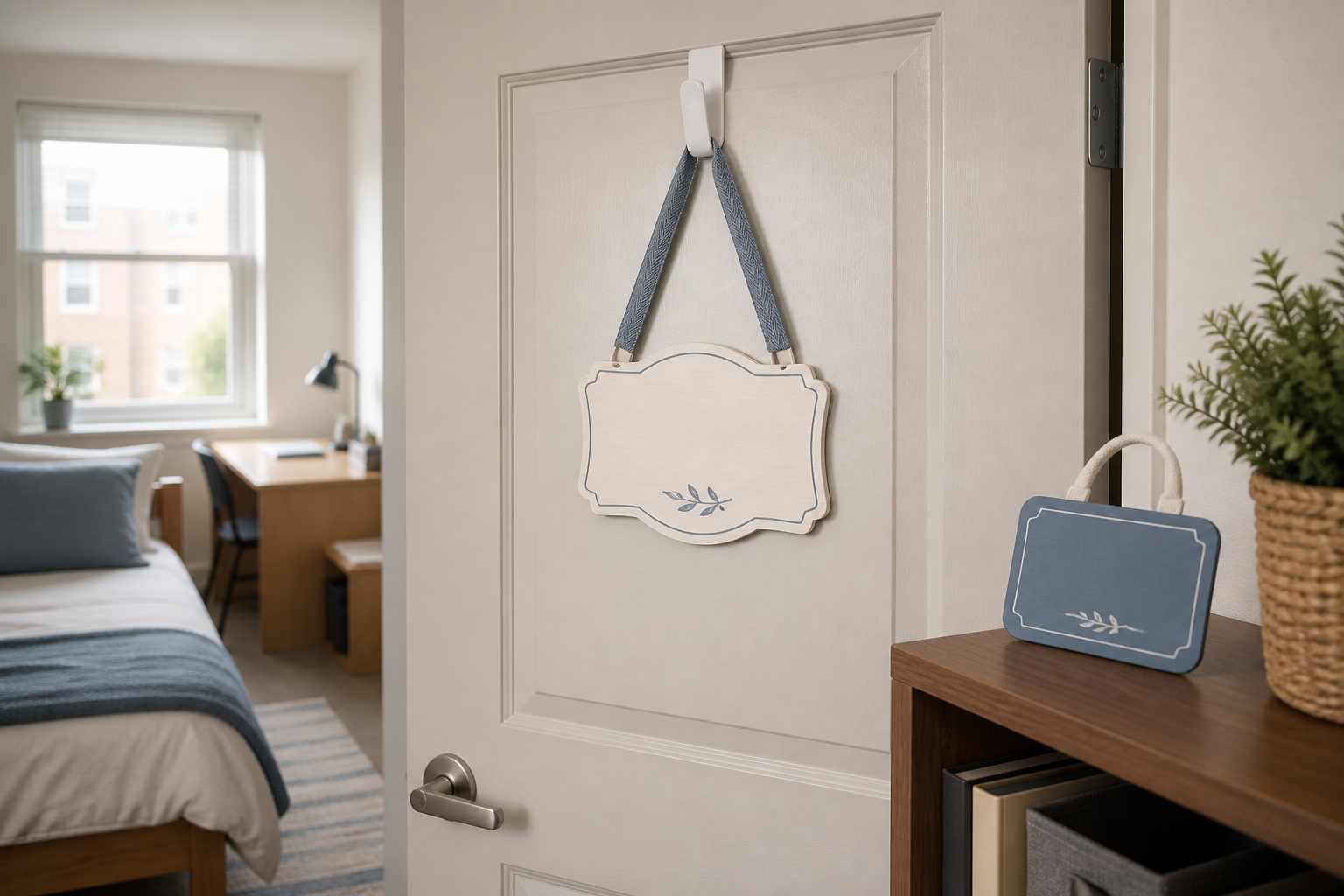
- Over-door hook with a soft strap: best when top clearance allows it. The sign stays independent of the painted face, but the hook must fit without scraping the frame or stopping the door from closing. Add soft contact points only as directed for the product.
- Magnetic sign or magnetic hanger: best for a verified magnetic door. Test the real door before buying; metal appearance does not guarantee useful magnetic attraction. Keep magnets away from hardware they could interfere with.
- Suction-mounted sign: best for smooth glass or another listed nonporous surface. Confirm the product's surface guidance and inspect the hold regularly. It is a poor match for textured, dusty, or porous door faces.
- Removable-adhesive lightweight plaque: best when face mounting is permitted. Match the adhesive's listed surface, weight, preparation, and removal directions. Avoid assuming that “removable” means risk-free on old, weak, or freshly painted finishes.
- Door-handle hanger: best for short-lived messages. It requires no face attachment and is easy to swap, but it can turn, rattle, or interfere with normal handle use. Reserve it for lightweight, compact cards.
- Freestanding sign beside the door: best when nothing may touch the door. A small stand or shelf sign avoids door movement entirely, provided it does not narrow a walkway or create a trip hazard.
How We Compare No-Drill Door Signs
- Door material: identify painted wood, veneer, metal, glass, laminate, or another surface before choosing magnets, suction, or adhesive.
- Top and jamb clearance: test a paper or thin-card mockup where an over-door hook would sit, then close the door gently without forcing it.
- Complete hanging weight: count the plaque, frame, cord, decorations, and hanger. Follow the lowest applicable listed limit in the setup.
- Movement and noise: a rigid plaque may knock against the door whenever it opens. Shorter straps, soft backing, or a different format can reduce movement when used according to instructions.
- Message privacy: do not put a full name, schedule, phone number, class details, or absence status on a door visible to a shared or public hallway.
- Removal process: keep the instructions and any required pull tab accessible. Never bury a removal tab behind the sign.
- Housing rules: dorm, lease, landlord, fire-door, and shared-hallway policies can be more restrictive than the mounting method itself. Confirm the current rules with the responsible office or property contact.
A Quick Comparison Framework
- The door is magnetic and rules allow a sign: begin with a lightweight magnet-backed format because it avoids adhesive and top-clearance questions.
- The door has generous top clearance: compare slim over-door hooks and soft hanging straps, then test closing and noise before decorating the plaque.
- The only smooth surface is glass: compare suction options specifically listed for that surface and keep the sign small enough that a dropped piece is manageable.
- The finish is unknown or delicate: do not experiment with adhesive; use an allowed over-door, handle-hanging, or freestanding option.
- The message changes often: choose a replaceable insert, dry-erase face, or sleeve instead of buying several permanent plaques.
- No hallway-facing decor is allowed: place a freestanding renter-friendly sign inside the room rather than trying to disguise a prohibited door display.
Measure and Test Before Buying
- Confirm which side of the door may display a sign and whether housing or property rules restrict attachments or hallway-facing decor.
- Identify the door surface and test magnetic attraction only with a small household magnet held securely.
- Measure the sign area, top clearance, handle clearance, and distance to the frame through the full swing.
- Make a full-size paper mockup and attach it temporarily using an already permitted method; check readability, privacy, movement, and noise.
- Compare the complete sign weight and surface with the current mounting instructions before ordering.
- Install exactly as directed, close the door gently, and inspect the setup after routine use rather than assuming the first hold is permanent.
Who Should Skip These Options
- Skip an over-door hook when it rubs the frame, changes how the door latches, or requires force to close.
- Skip a rigid hanging plaque when normal door movement makes it strike the surface or disturb nearby residents.
- Skip adhesive on peeling, powdery, freshly painted, wallpapered, or otherwise unverified finishes.
- Skip magnets until you confirm the door is magnetic and the setup stays clear of the latch, closer, and other hardware.
- Skip suction mounting on textured or porous surfaces, or anywhere a falling sign could create a hazard.
- Skip any exterior-facing display that conflicts with current dorm, lease, landlord, building, or fire-door rules. This buying guide is not approval or compliance advice.
The Practical Bottom Line
For most dorms and rentals, the safest buying sequence is rules, door material, clearance, weight, then style. A lightweight magnetic or over-door format can be a practical starting point when the real door supports it. If the finish or policy is uncertain, keep the sign freestanding inside the room rather than gambling on the door.