 The Good Sign Company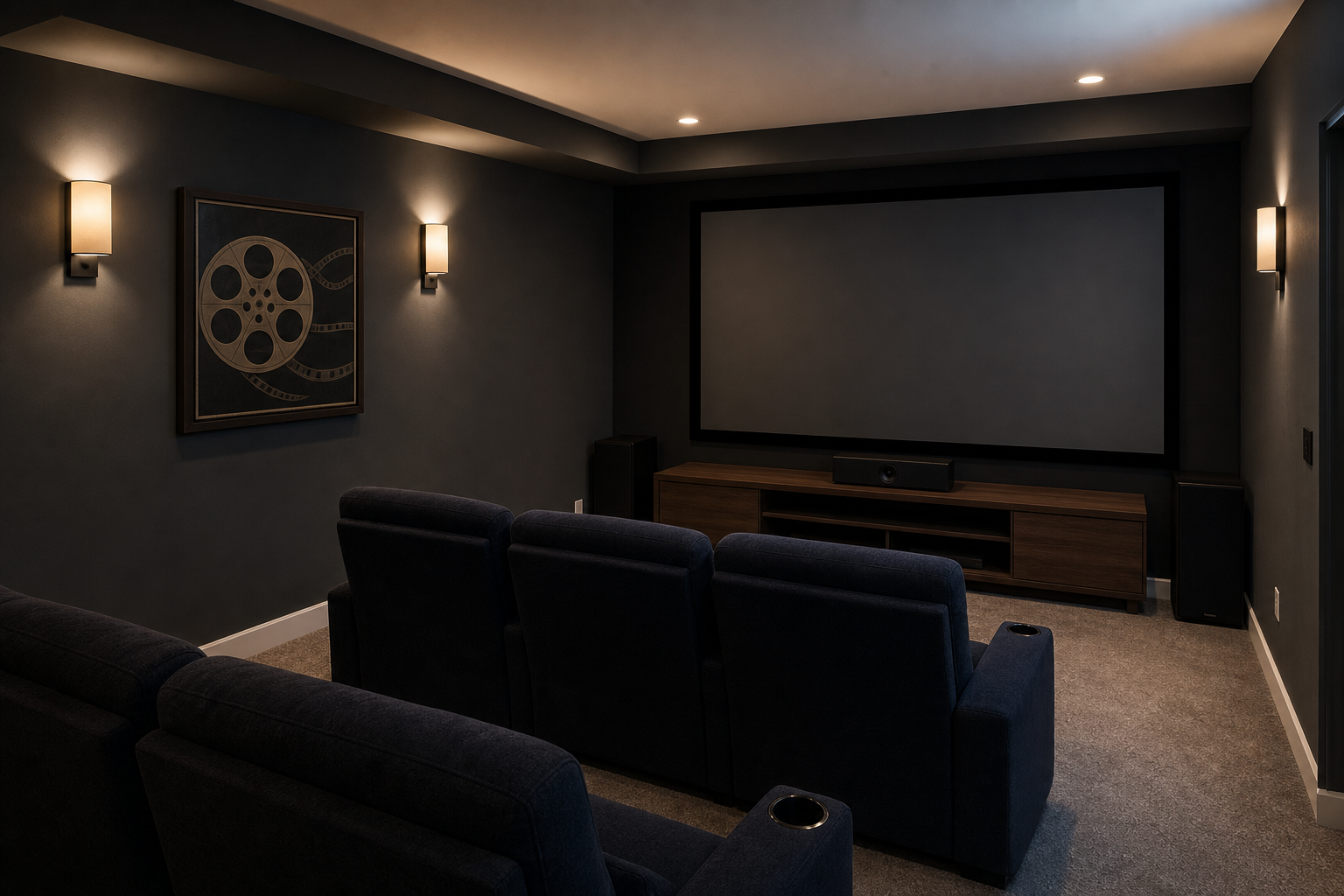
Low-reflection framed art: best overall
It adds a theater theme without adding glow or a cord. Check whether the face is open, acrylic, or glass and consider how that finish behaves from each seat.
Browse category: Compare framed theater decorHome Theater Sign Guide
A home-theater sign should make the room feel intentional without pulling attention from the screen. Start with the seated sightline, reflections, speaker locations, and low-light behavior. Then choose the quietest sign that gives the room the character you want.
Disclosure: As an Amazon Associate, we may earn from qualifying purchases and approved partner referrals.
Best overall starting route
A non-lighted framed print adds a theater cue without another bright source or power cable. Compare the listed outer dimensions, frame and face material, surface sheen, weight, hardware, and care guidance before buying.
This is a category-level best-fit framework, not hands-on testing or an unsupported ranking of individual products. Compare candidates in this order:
It adds a theater theme without adding glow or a cord. Check whether the face is open, acrylic, or glass and consider how that finish behaves from each seat.
Browse category: Compare framed theater decor
A shallow piece can fit near an entrance or snack counter. Verify the exact item’s size, edge finish, mounting holes, weight, sheen, and indoor-use guidance.
Browse category: Compare metal theater signs
Use it as ambient decor before the movie, not as a permanent bright point beside the screen. Verify the listed controls, dimensions, power method, mounting, cord length, and intended use.
Browse category: Compare dimmable cinema signsTurn on the normal viewing setup and photograph the room from every seat. Mark the screen or projection boundary, speaker locations, doors, recliner movement, equipment panels, and wall lights. A sign belongs outside those working zones. Side walls usually offer better decor space than the front wall because the sign stays out of the strongest sightline.
Next, tape a paper rectangle to the intended location using the seller’s listed outer dimensions. Watch several minutes of bright and dark scenes and check the mockup from each seat. This simple test reveals whether the sign feels oversized, catches light, or creates a distracting shape near the screen.
Use the room decor signs guide to compare materials and style. If a powered sign is still in the running, compare plug-in and battery-powered signs before planning the cable route.
A custom sign is useful for an original room name, a difficult narrow wall, or a compact light box whose dimensions and contrast need to coordinate with the room. Prepare the exact wording, a measured wall photo, viewing distance, nearby lighting, preferred finish, mounting constraints, and planned cable route. Use artwork and names you control.
For a small custom sign or light-box idea, ask DaNite Sign Company about the measured concept. Confirm current capabilities, artwork requirements, materials, installation approach, timing, and pricing directly.
For most home theaters, one medium, low-reflection framed sign on a side or rear wall is the best starting category. It creates a cinema cue without adding another light source. Choose metal for a small shallow placement, or a dimmable neon-style sign only when pre-show glow is the goal and the viewing-time brightness and cord path are solved.
Continue with the room decor sign framework, review sign mounting supplies, or browse Browse category: home-theater sign categories on Amazon.