Music Room Sign Guide
Best signs for music rooms.
A music room already has a visual rhythm: instruments, stands, cases, cables, speakers, shelves, and sometimes acoustic treatment. The best sign supports that arrangement instead of competing with it. Begin with the room’s working walls and normal sightlines, then choose a sign type that fits the open space, light, mounting limits, and the way the room is actually used.
Disclosure: As an Amazon Associate, we may earn from qualifying purchases and approved partner referrals.
Category route
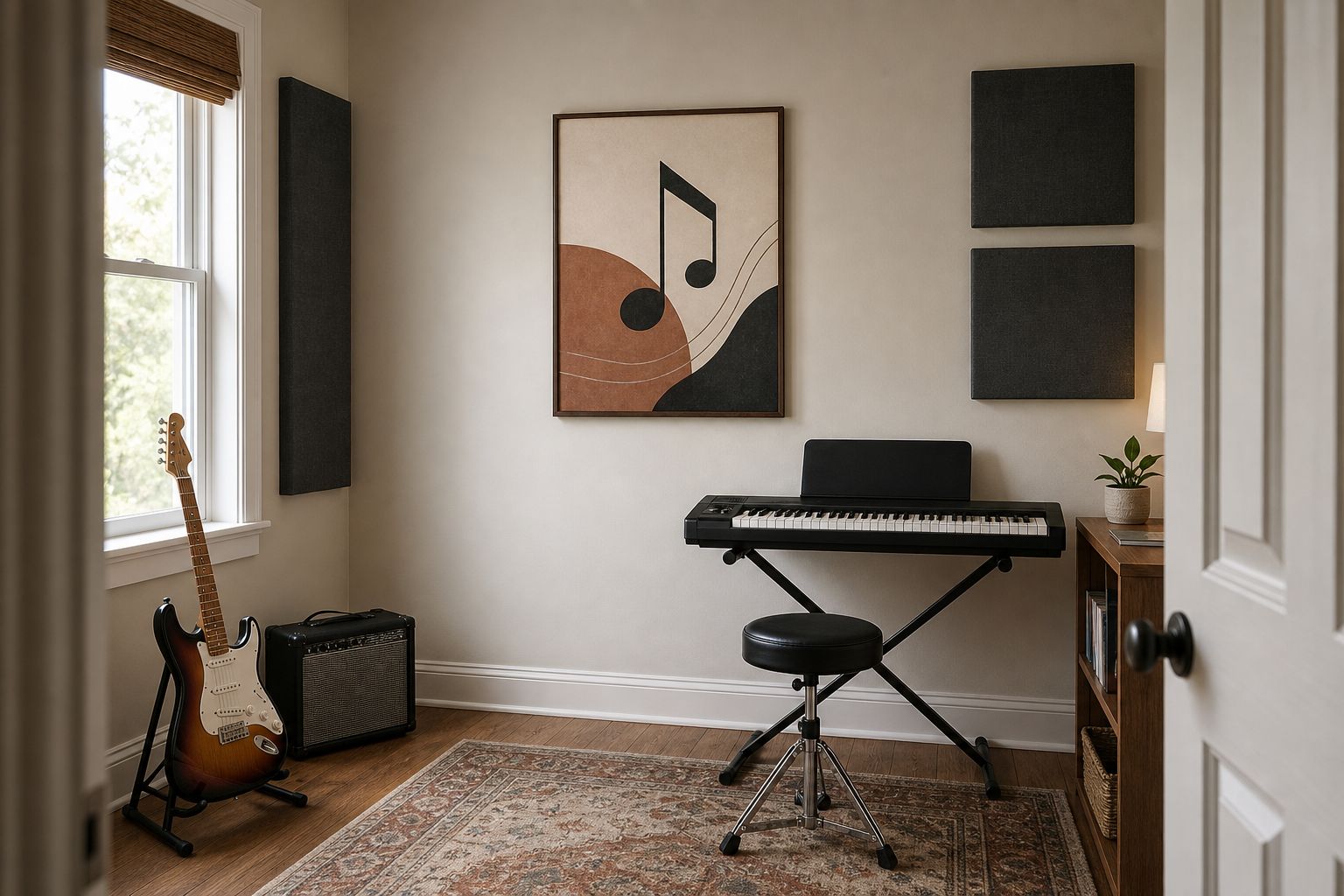
Best starting route
Use one medium framed sign when the room is already equipment-heavy.
A framed print is a flexible first choice because it can add a theme without another power cord or a deep wall profile. Compare the listed outer dimensions, frame material, glazing or open-face finish, weight, hardware, and care guidance before ordering.
Need a name, original phrase, or compact light box? Share a measured concept with DaNite Sign Company and confirm current project fit, artwork, dimensions, mounting, and terms directly.
How we compare music-room signs
This is a best-fit category framework, not hands-on product testing or a claim that one unverified item is best for every musician. Compare candidates in this order:
- Working wall space: measure around instrument hangers, stands, lids, doors, shelving, acoustic panels, and any path used to move equipment.
- Visual hierarchy: decide whether the instruments or the sign should be the focal point. In most practice rooms, the sign should be the quieter layer.
- Readability and message: favor a short phrase, studio name, simple note graphic, or restrained artwork that reads from the doorway.
- Glare: check the sightline from the main chair or bench. Glossy glazing, polished metal, acrylic, and lighted faces may reflect windows or task lights.
- Mounting: confirm the sign weight, hardware, wall construction, and clearance from instruments. Do not treat acoustic panels as general-purpose mounting surfaces.
- Power and cable route: for a lighted sign, map the outlet and cord before buying. Keep the new cord out of instrument, pedal, and walking paths.
Best sign type by music-room setup
Category route
Framed music art: best overall
It suits a shared family room, lesson space, or practice corner without adding power or strong glow. A matte or low-reflection face may work better where windows sit opposite the wall.
Browse category: Compare framed music art
Category route
Small metal sign: best for a narrow gear wall
A thin sign can fit beside a case rack or above an amplifier. Check the listed edge finish, mounting holes, weight, glare, and indoor-use guidance for the exact item.
Browse category: Compare metal music signs
Category route
Dimmable neon-style sign: best for mood lighting
Consider one when the sign is meant to glow during listening or casual sessions. Verify listed dimensions, controls, power method, mounting, cord length, and intended indoor use.
Browse category: Compare dimmable music signs
Place the sign around the music, not through it
Photograph the room from the doorway and from the main playing position. Mark the wall zones occupied by a raised guitar neck, an open keyboard cover, stands, speakers, cases, and treatment panels. Then tape up a paper rectangle using the seller’s listed outer dimensions. This reveals whether the sign has enough blank wall around it and whether equipment can move without coming close to the frame.
Above a keyboard or low console, align the sign with the furniture rather than the full wall. On a guitar wall, a small sign beside the instrument grouping often works better than one centered over a single instrument. Keep mounting and vibration concerns practical: follow the product and hardware instructions, use suitable wall attachment, and avoid hanging decor where a routine bump could send it toward valuable equipment.
Choose the message before the material
- Simple music graphic: a useful neutral choice for a shared family music room or multi-instrument space.
- Short phrase: easiest to read when it is edited to a few words and uses type that does not mimic a crowded poster.
- Studio or family name: a natural custom route when the room has an established identity and the wording will stay relevant.
- Instrument-specific art: strongest when one instrument genuinely defines the room; otherwise it can make a mixed-use space feel narrower than it is.
- Album-style display: better treated as a coordinated frame arrangement than a large sign collection. Preserve access to records and leave room for additions.
For a broader style and material decision, use the room decor signs guide. If the sign is heavier or the wall is complicated, review the sign mounting supplies guide before ordering hardware.
Who should skip a music-room sign?
- Skip one when instruments, records, posters, and acoustic panels already fill the useful walls.
- Skip a large sign if it forces instrument hangers or treatment into awkward positions.
- Skip glossy or lighted styles when reflections distract from a screen, sheet music, or the normal playing position.
- Skip a powered sign when the only cord route crosses pedals, stands, doorways, or equipment paths.
- Skip long quotes that require small type or compete visually with instrument shapes.
- Skip instrument-specific novelty art when the room serves several players and styles.
When a custom music-room sign makes sense
Custom work is useful for a family name, a band or studio-style mark you control, an unusual narrow wall, or a short original phrase that ready-made products do not cover. Start with a measured outline, wall photo, exact wording, preferred contrast, nearby lighting, mounting constraints, and any cord limitation. Avoid sending artwork or names you do not have permission to use.
For a small custom sign or light-box concept, ask DaNite Sign Company about the measured project. Confirm present capabilities, artwork requirements, materials, installation approach, timing, and pricing directly rather than assuming them.
 The Good Sign Company