 The Good Sign Company
Worth-it decision
Is a personalized name sign worth it for a kids' room?
Usually yes when the name is the lasting part of the design and the sign has a settled, adult-managed display location. Skip it when reusable decor would work just as well, delay while the room is changing, and choose a non-lighted or changeable alternative when simpler setup and reuse matter more than customization.
This is a value decision, not a list of product picks. For the broader product path, use the room decor sign guide; for illuminated options, compare the separate LED name sign guide.
Disclosure: As an Amazon Associate, we may earn from qualifying purchases and approved partner referrals.
Choose the buying route that fits the room
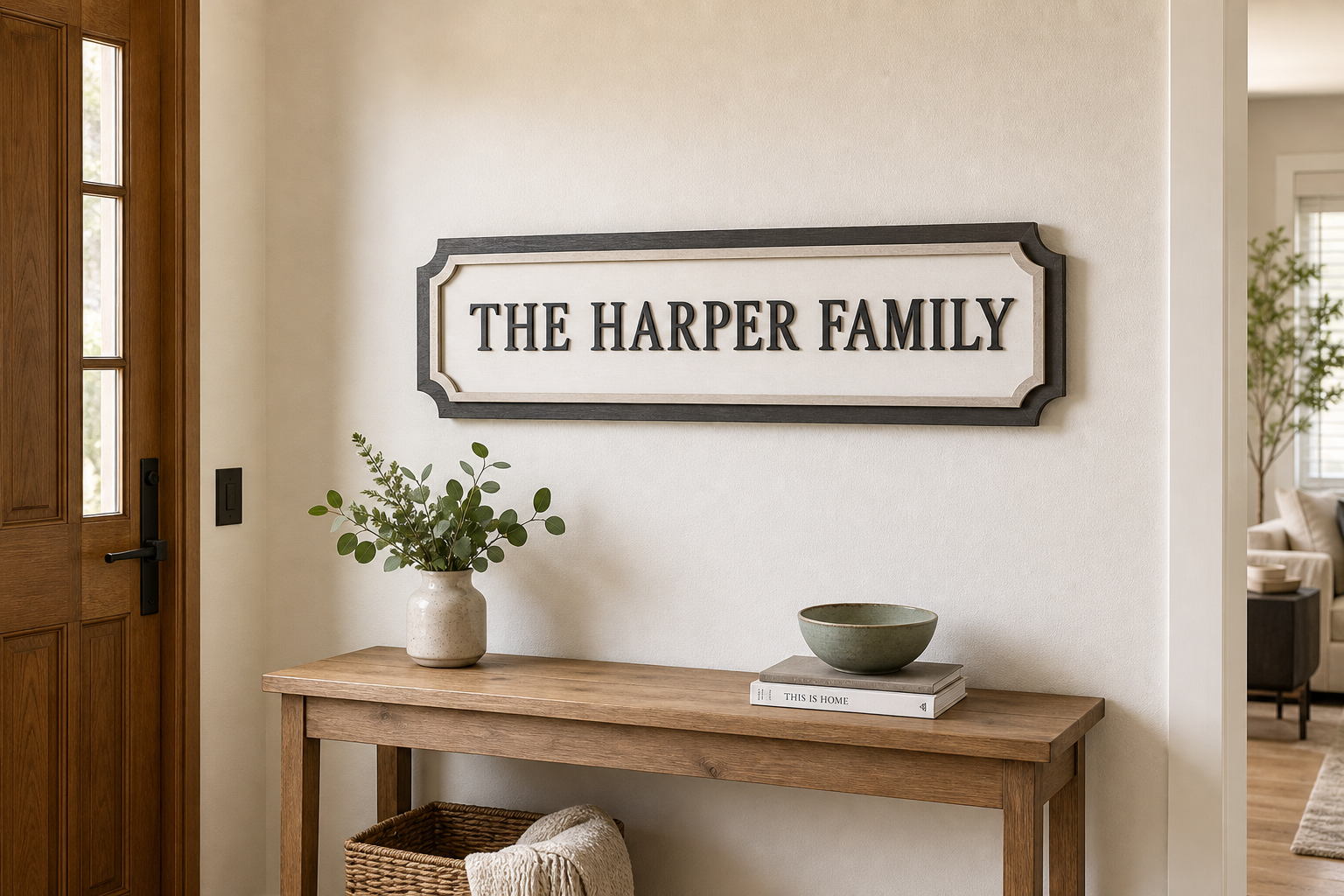
Compare ready-made personalized signs when a standard format works. Use a custom-project conversation when the proportions, short name, or room fit need more specific planning.
The short verdict
- Buy: the name will remain meaningful, the design can outlast the current theme, and the display location is settled.
- Skip: the purchase is mainly filling empty wall space, the recipient's taste is uncertain, or generic artwork does the same job.
- Delay: the room assignment, furniture layout, color scheme, spelling, or mounting plan may change soon.
- Choose an alternative: use framed letter art, a changeable letter board, removable wall art, or a non-lighted name plaque when flexibility matters more than a one-off design.
- Escalate: follow the specific product and hardware instructions, and use an appropriate professional if the plan requires electrical work or installation beyond ordinary decor mounting.
When personalization creates enough value
The sign has a strong case when several of these are true:
- The child or family actually values having the name displayed, rather than the buyer assuming they will.
- The typeface, color, and basic shape can survive the next room theme instead of matching only a short-lived character or trend.
- The intended wall has been measured and the sign will be readable without dominating nearby furniture or artwork.
- The sign could move to a reading corner, homework area, or another room if the current layout changes.
- The exact spelling, capitalization, preview, and personalization terms have been checked before ordering.
Personalization is most worthwhile when the name is the design anchor. If the appeal comes mainly from a theme, a replaceable print may offer more flexibility.
Cost, setup, and maintenance tradeoffs
- Upfront cost: personalized work can cost more than standard wall art, and options may not be directly comparable. Judge the complete size, finish, included parts, and mounting plan—not just the listing photo.
- Return flexibility: made-to-order spelling and design choices may have different cancellation or return terms. Read the current seller policy before approving the preview.
- Mounting: outer dimensions, weight, hanging points, wall surface, and hardware instructions determine whether the sign is practical. Do not assume adhesive products fit every sign or paint finish.
- Lighting: an LED version adds brightness controls, power components, cord routing, and cleaning around more surfaces. A non-lighted plaque is often the lower-maintenance route.
- Upkeep: plan for dusting and occasional inspection as furniture and room use change, following the maker's care instructions.
- Reuse: a named sign usually cannot pass to a sibling or another recipient as easily as changeable letters or generic art.
Who should skip or delay it?
- Gift buyers who have not confirmed the preferred spelling, nickname, colors, or display location with a parent or caregiver.
- Families planning a move, room swap, bunk-bed change, or major furniture rearrangement before the sign would arrive.
- Anyone choosing a strongly age-specific theme that the child is already beginning to outgrow.
- Anyone without a suitable mounting location and a way to follow the sign and hardware makers' instructions.
- Buyers treating personalization as a safety feature or assuming a decor sign is suitable within reach without considering the specific product, parts, cord, wall, and room use.
Red flags before ordering
- The listing does not state full outer dimensions, weight, mounting points, power method if lighted, or included parts.
- The preview shows only a sample name, not the exact spelling and capitalization being purchased.
- The design relies on a long name squeezed into proportions that will be hard to read from the doorway.
- The only planned location creates an awkward cord route or conflicts with changing furniture.
- The seller makes broad safety, durability, or installation claims without product-specific documentation and instructions.
- The order deadline leaves no practical time to check and approve a personalized proof or current terms.
A five-minute worth-it test
- Write the exact name, capitalization, colors, and one style direction that should still feel appropriate in a few years.
- Mark the listed outer width and height on the intended wall with removable paper or painter's tape.
- View that outline from the doorway and normal parts of the room, accounting for furniture and bedding.
- Check the mounting plan and, for a lighted sign, the complete power and control route against current maker instructions.
- Compare the personalized sign with changeable letters, a framed print, and one reusable non-lighted option.
If the name sign still wins on meaning, room fit, and expected display life, buying one is reasonable. If the main advantage disappears when compared with a changeable option, delay or choose the simpler route.
Bottom line
A personalized kids' room sign is worth it when the name and restrained design can outlast the current theme. It is poor value when the room, preferences, or installation plan are still moving targets.