 Bedsure Cat Cave Bed
 B FSOBEIIALEO Cat House Cube
A hideaway bed is a convenience and comfort product, not a treatment for fear, stress, pain, or behavior changes. Some cats enjoy covered beds; others ignore them or prefer an open pad with a clear view. A good buying decision leaves room for that preference instead of assuming every cat wants an enclosed space.
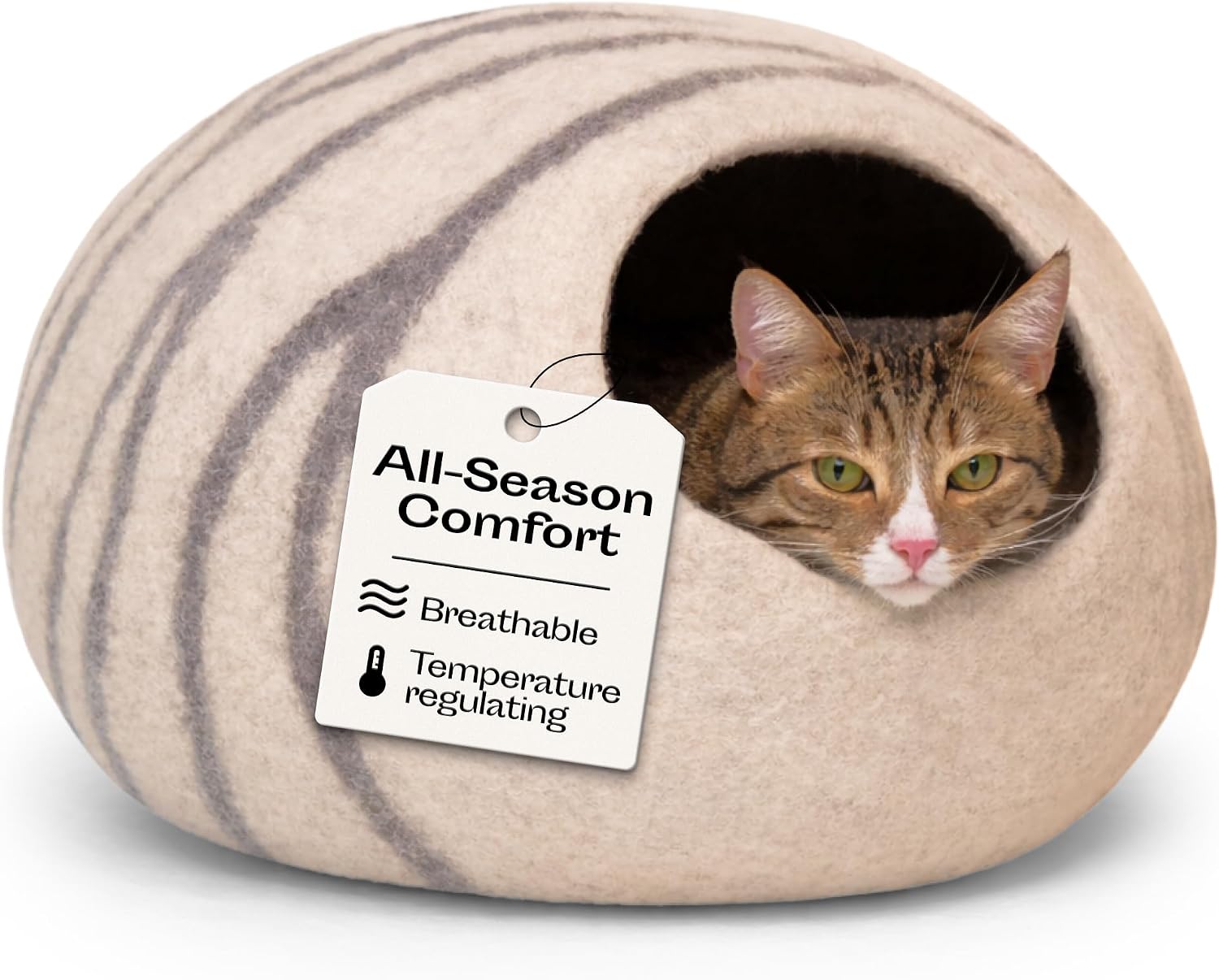
Best Low-Bulk Felt Cave to Compare: MEOWFIA Felt Cat Cave
The MEOWFIA is the first model to compare when the bed will remain visible beside a sofa, bookcase, or desk. Its felt shell forms the cushion and enclosure in one piece, so there is no loose frame or dangling canopy. The listing provides more than one size; use the interior fit and opening, not the outside appearance, to choose.
Felt requires a different cleaning routine from a machine-washable fabric cover. Loose fur can be vacuumed or lifted between deeper cleaning, but spills and frequent accidents make a removable washable insert more practical. The shell can also lose its upright shape if it is crushed or used as an open mat, which may be either a useful convertible feature or a drawback.
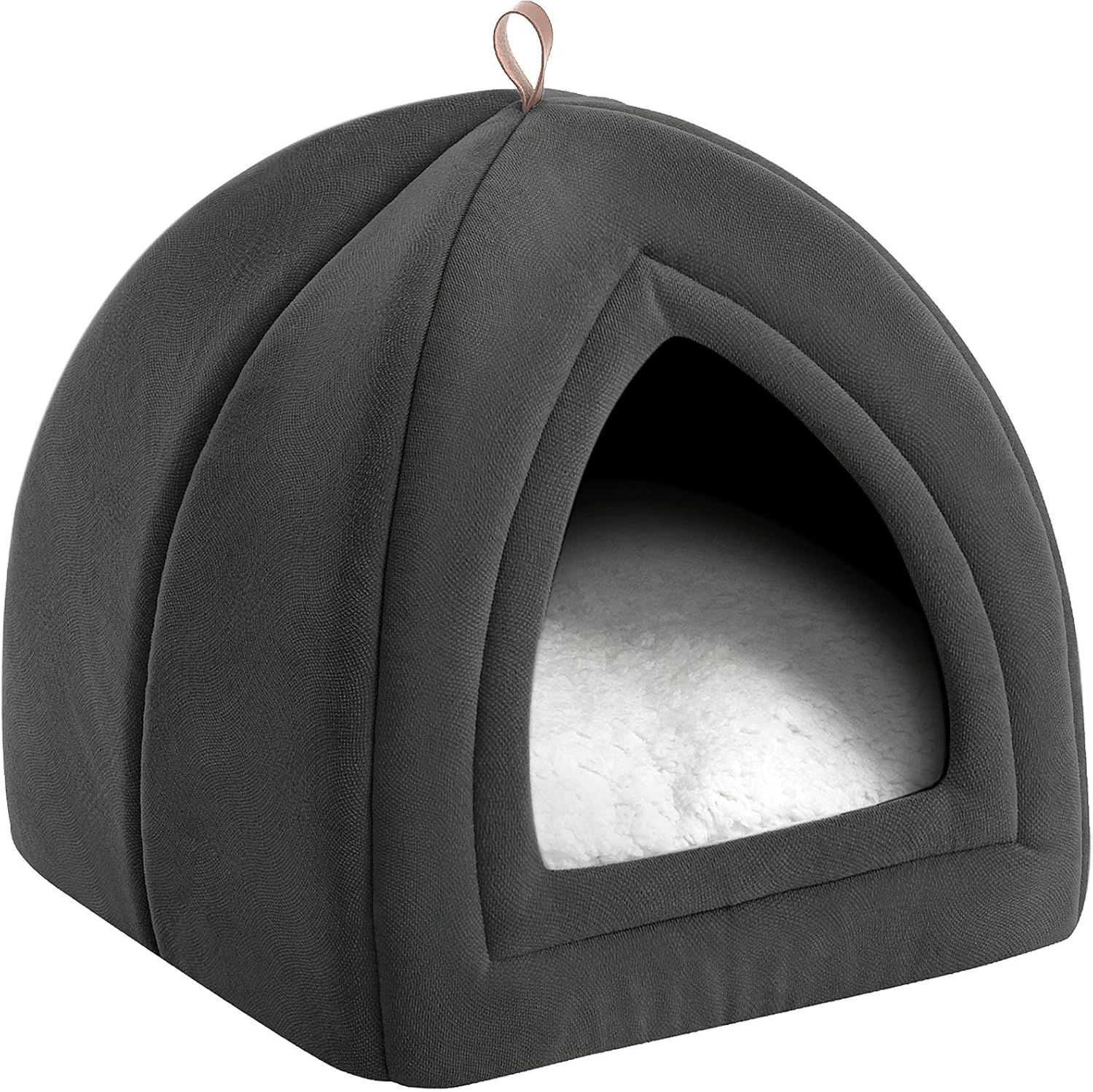
Best Soft Tent With a Removable Cushion to Compare: Bedsure Cat Cave Bed
The Bedsure cave is worth comparing when you want a soft-sided tent and prefer to remove the sleeping cushion for routine cleaning. A soft shell is lighter and easier to move than furniture-style cubes, and it can be a better fit for an owner who shifts the bed between a living room and bedroom.
The compromise is structure. Soft walls and a hood may slump with use, and the exact washable components can vary by model or size. Confirm whether the shell, cushion cover, or whole cushion can be washed, then follow the current label rather than treating “washable” as permission to put every part in the machine.
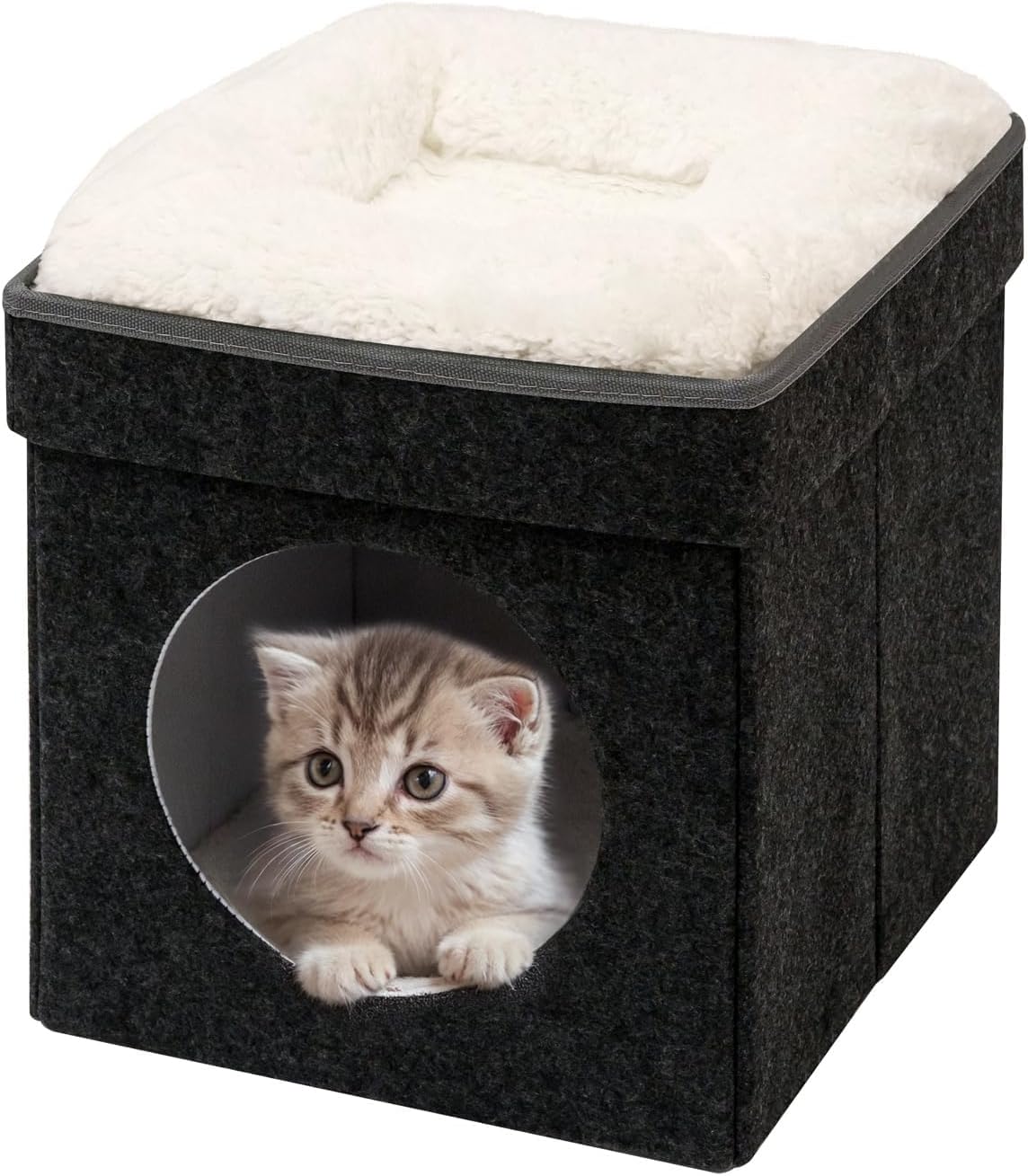
Best Structured Cube to Compare: B FSOBEIIALEO Cat House Cube
This cube is the most furniture-like option of the three. Its upright panels and defined round opening can suit a room where a soft tent would collapse or look untidy. The removable interior bed gives you a separate contact surface to inspect and clean.
A structured cube uses more floor and visual space than a molded cave. Measure the full width, depth, and height, not only the sleeping area. Check the current construction, assembly, stated use, and cleaning instructions, and avoid stacking or loading the top unless the manufacturer explicitly supports that setup.
Selection Criteria That Matter
- Interior fit: Measure your cat while curled comfortably, then compare that space with the usable interior rather than the outside dimensions.
- Opening size: The entrance should allow easy turning and exit. A decorative small opening is not useful if your cat has to squeeze through it.
- Structure: Molded felt holds a pod shape, fabric tents can fold or slump, and cubes keep a more defined footprint. Pick the tradeoff you can maintain.
- Cleaning: Separate “removable cushion,” “washable cover,” and “whole bed washable.” Confirm exactly which part can go in a washer and how it should dry.
- Warmth and airflow: Enclosed beds can feel warmer than open pads. Keep the opening unobstructed and give your cat an open, cooler resting option nearby.
- Floor grip: Test the bed on the actual flooring. A light cave that slides when entered may need a different location or a manufacturer-compatible nonslip base.
- Room placement: A good spot is away from doors, speakers, cords, heaters, food preparation, and the busiest walking line while still allowing clear routes away.
- Chewing and scratching: Inspect seams, loose fibers, hanging toys, exposed foam, and damaged panels. Remove the bed if your cat pulls off or swallows material.
Quick Comparison Framework
- Molded felt cave: Best when a clean-looking, compact shell matters; less convenient for liquid messes and machine washing.
- Soft cave tent: Best when light weight and a removable cushion matter; more likely to flatten or lose its opening shape.
- Structured cube: Best when stable walls and a furniture-like shape matter; takes more room and has more surfaces to inspect.
- Convertible cave-to-mat: Useful for learning whether your cat prefers cover or an open surface; the folded shape may not stay tidy.
- Open washable pad: Better when your cat avoids covered spaces, runs warm, has frequent accidents, or needs easier entry.
Who Should Skip a Hideaway Bed
Skip an enclosed bed if your cat consistently chooses open resting spots, becomes uncomfortable in a covered space, chews bedding, has frequent accidents, or cannot enter and turn without squeezing. An open, low-profile washable pad is simpler for many cats and easier for owners to inspect.
Do not use a hideaway to isolate a cat who suddenly starts hiding, avoids contact, stops eating, changes litter-box habits, seems painful, breathes differently, or has new mobility trouble. Those changes deserve prompt advice from a licensed veterinarian. Bedding cannot explain or treat them.
Place the Bed Without Turning It Into a Trap
Start with a quiet edge of the room rather than the center of foot traffic. Keep the entrance visible and unobstructed, and do not wedge the cave so tightly between furniture that your cat has only one difficult exit. Leave an open resting option nearby and let the cat choose.
Avoid direct heaters, radiator covers, strong sun for long periods, window blind cords, reclining furniture mechanisms, unstable shelves, and places where another pet can block the entrance. Check the inside regularly for dampness, pulled fibers, loose fill, and debris.
How This Guide Is Framed
The picks are based on distinct construction and owner-use cases visible in current manufacturer and retailer information: a molded felt cave, a soft tent with a removable cushion, and a structured cube. The comparison uses measurable fit, opening, structure, cleaning, placement, and skip criteria. It does not rely on personal testing, customer ratings, veterinary endorsement, or claims that one bed changes behavior.
Related Comfort Guides
For the broader room decision, start with how to choose a pet bed for a small space. If your cat prefers a view rather than cover, compare washable low-profile cat beds for stable sills and shelves. If floor space is the main constraint, our small-apartment cat tree guide explains vertical furniture tradeoffs.
The Bottom Line
For a visually simple covered bed, compare the MEOWFIA felt cave first. Choose the Bedsure soft cave when a removable cushion and lighter shell fit your cleaning routine, or the B FSOBEIIALEO cube when upright structure matters most. Measure the interior and opening, keep airflow and exits clear, and treat your cat's actual preference as the deciding factor.