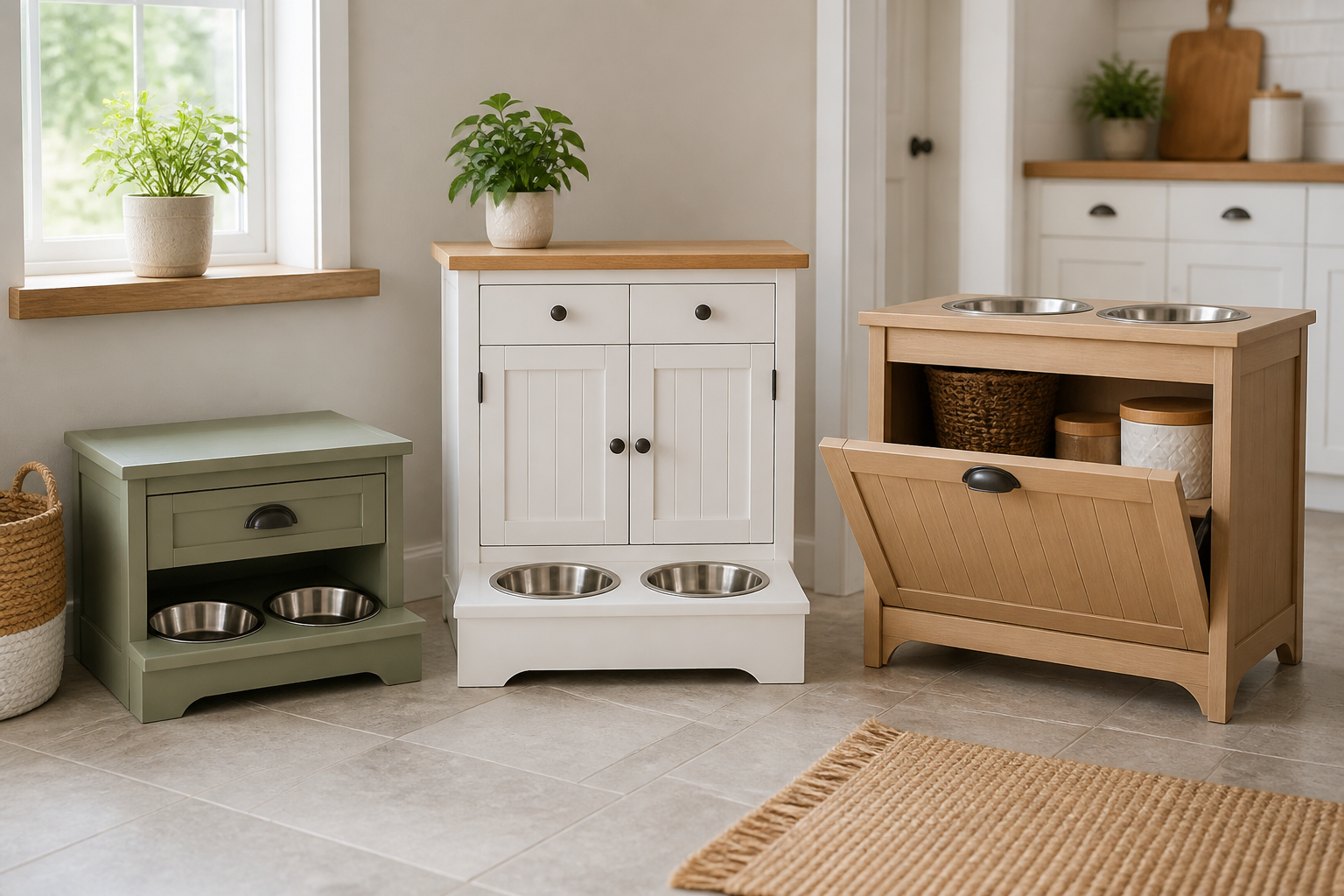
A storage feeding station is furniture and a convenience item. It does not improve digestion, posture, hydration, or health by itself. If your veterinarian has advised a specific bowl height, feeding position, portion plan, or accessibility setup, follow that guidance instead of choosing by furniture style.
Best for Small Daily Supplies: A Station With a Shallow Drawer
A shallow drawer is the least complicated built-in option. It can hold a clean scoop, spare bowl mat, or feeding notes while keeping the footprint modest. Measure the drawer's usable interior, and check whether it can open while the feeding area is occupied.
Look closely at the space between bowls and drawer. Water should not run into the storage cavity, and crumbs should not disappear into an unreachable seam. Removable bowl sleeves or a lift-out top can make wiping easier.
Best for Visual Tidiness: An Enclosed Cabinet Station
A small cabinet hides more supplies and can look calmer in an open kitchen. The tradeoff is bulk: doors need swing clearance, shelves reduce usable height, and deep cabinets collect forgotten items. Measure baseboards, sockets, and the walking path around the station.
Use enclosed space only for items the maker says the unit can store. Keep food in its original bag inside a suitable sealed container when practical, and keep medication, cleaners, first-aid products, and chew hazards securely elsewhere.
Best for Front Access: A Tilt-Out Storage Station
A tilt-out bin offers broad front access without doors swinging sideways. It may suit a narrow wall with open floor space in front. The open bin can shift the furniture's balance, so follow assembly and wall-restraint instructions and keep pets away while it is open.
Do not assume the compartment is airtight, food-safe, moisture-proof, or intended for loose kibble. Confirm its stated use. A separate sealed container may still be necessary, making the integrated station less efficient than it first appears.
Selection Criteria That Matter
- Overall dimensions: Measure width, depth, height, open-door clearance, baseboards, and walking space.
- Bowl fit: Confirm bowl diameter and capacity, removal method, and measurable replacement options.
- Storage layout: Match the drawer, cabinet, or bin to specific supplies instead of choosing the largest cavity.
- Moisture separation: Look for a wipeable barrier plus seams you can inspect and dry.
- Cleaning access: Bowls, corners, tracks, shelves, and the floor beneath should be reachable.
- Materials: Check cleaning instructions and whether exposed edges tolerate expected drips.
- Stability: Follow fastener, leveling, anchoring, and weight guidance; recheck hardware.
- Temperament: Skip accessible doors, knobs, or edges if your pet paws, chews, or opens cabinets.
A Quick Comparison Framework
Mark the station's closed and fully open footprint on the floor with removable tape. Place the current bowls within it and confirm your pet can approach without being crowded against a wall, appliance, doorway, or another pet.
List exactly what belongs in storage. A drawer works for a few flat items; a cabinet suits contained supplies; a tilt-out bin prioritizes front access. Compare bowl, shelf, seam, hinge, and floor cleaning. Finally, ask whether separate bowls plus a nearby sealed container would be cheaper and easier to replace.
Who Should Skip a Storage Feeding Station
Skip this category if you only need splash control, already have suitable storage, move bowls between rooms, or cannot clean beneath a furniture-sized unit. Separate bowls on a washable mat are more flexible.
Also skip a station that places pets too close together, blocks an exit, invites chewing, or forces an uncomfortable feeding height. Sudden changes in eating, drinking, swallowing, posture, or appetite belong with a licensed veterinarian—not a furniture purchase.
Build the Rest of the Feeding Area
For placement and spill control without new furniture, start with the low-mess feeding-station guide. Add a feeding mat only if its edges, grip, and cleaning routine fit beneath the measured unit.
If storage matters more than combined furniture, compare pet food containers for small kitchens. First-time owners may prefer the simpler choices in our starter bowl-set guide.
The Bottom Line
Choose a shallow drawer for a few daily supplies, an enclosed cabinet for contained storage, or a tilt-out format when front access fits the room. Measure every open and closed dimension, confirm bowl removal and the maker's storage instructions, and prioritize moisture separation and cleaning access. If separate pieces solve the problem more simply, skip the furniture.