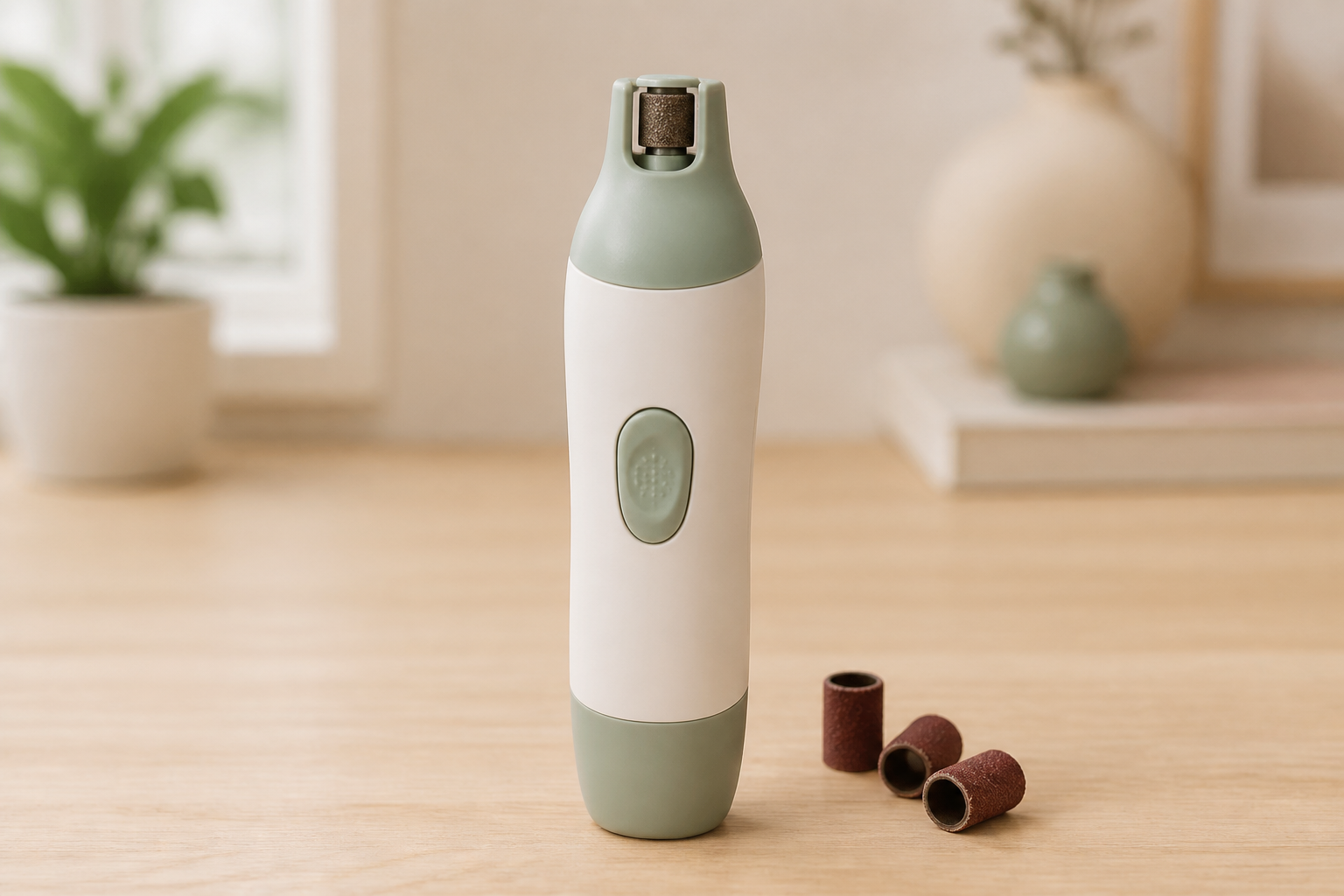
 Guarded nail grinders
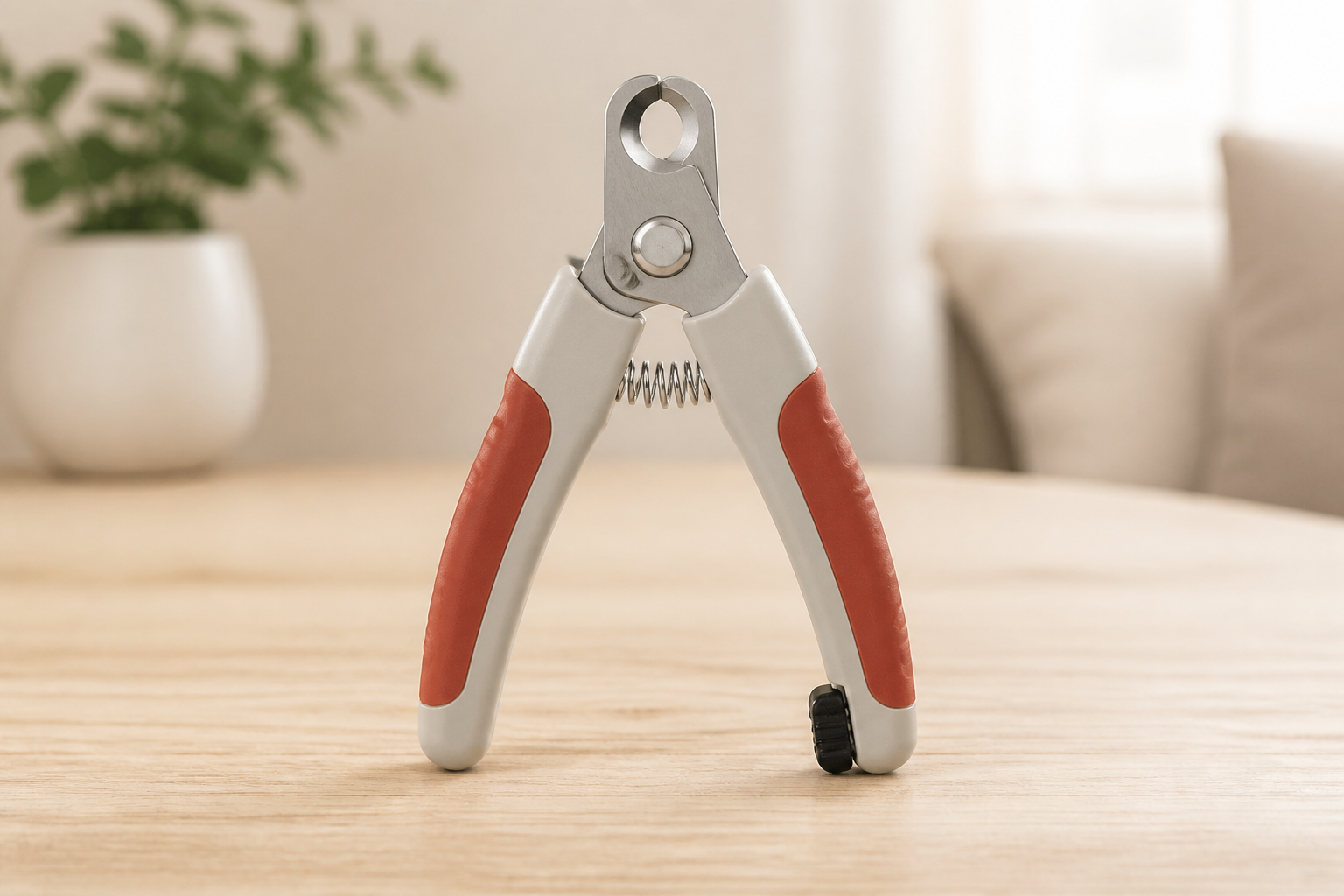 Guillotine-style clippers
A nail clipper or grinder is a routine-care tool, not a treatment for injured, split, painful, infected-looking, or severely overgrown nails. If your pet is fearful, struggling, trying to bite, showing pain, or has a nail problem you do not understand, stop and ask a veterinarian or qualified groomer for help. Do not use a product purchase as a reason to push through distress.
Choose the format before comparing extras
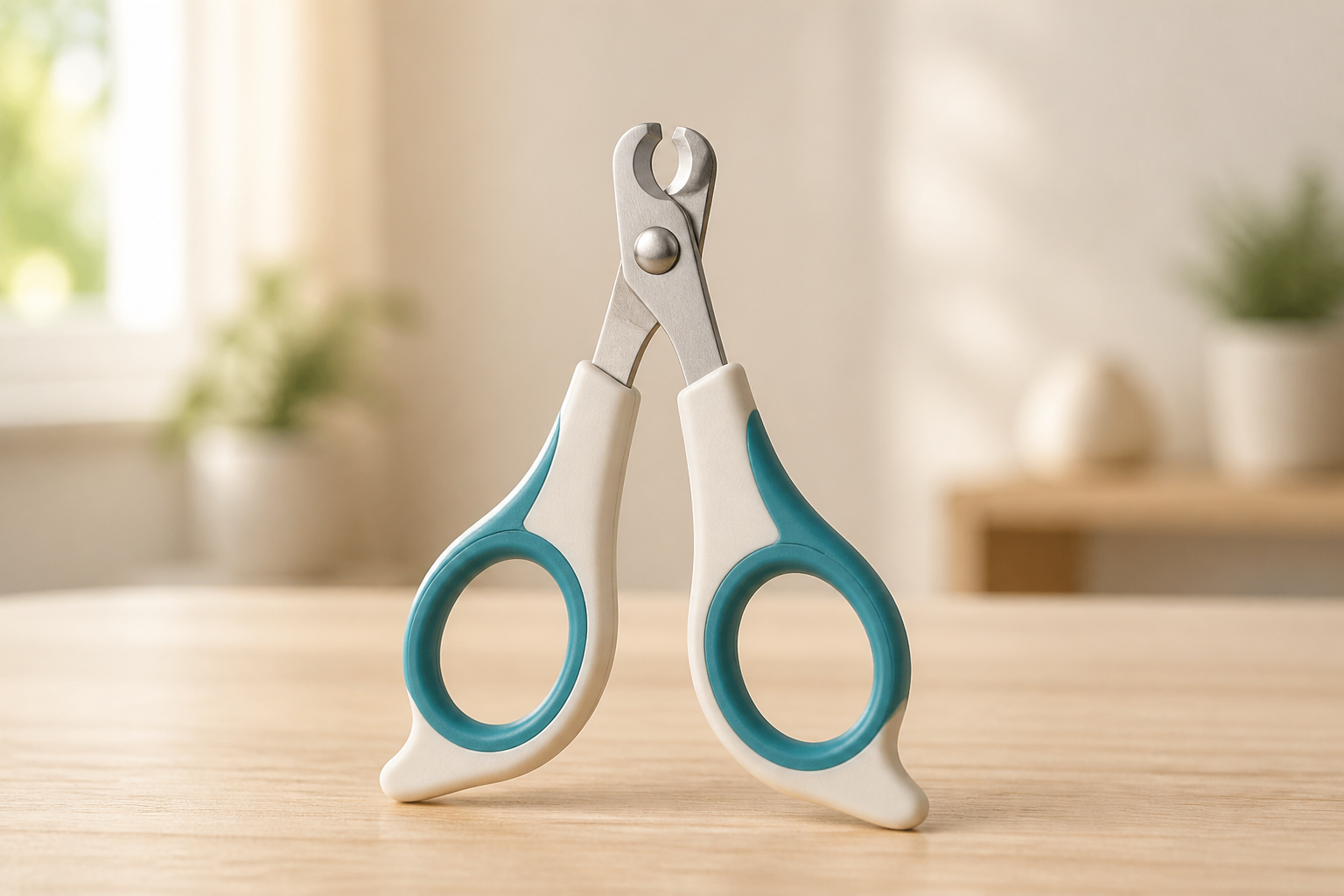
Scissor-style clippers use two handles and a compact cutting head. Small versions can offer a clear view around fine nails, but the opening and leverage may be wrong for thick nails. Larger plier-style clippers provide more leverage, yet their bulk can make positioning harder for a nervous beginner. Match the tool to the manufacturer's stated pet and nail sizes rather than assuming one clipper works for every pet.
A grinder removes material gradually with a rotating abrasive surface. That avoids one decisive squeeze, but introduces sound, vibration, charging, dust, and replaceable sanding parts. “Low noise” is not a universal promise: compare stated specifications when available, and treat your pet's response as more important than marketing language.
Guillotine-style clippers guide the nail through a fixed opening before a blade moves across it. The opening can make alignment feel defined, but it also limits compatible nail sizes and may obscure the view for some owners. Replacement-blade availability and correct reassembly matter over the life of the tool.
Quick comparison framework
- Small scissor-style clipper: Compare first for fine nails when a compact head and finger-loop grip feel controlled in your hand.
- Guarded grinder: Compare when gradual removal is preferable and your pet is comfortable around the device's sound and vibration.
- Guillotine-style clipper: Compare when the specified opening fits the nail and the tool gives you a clear, stable alignment.
- Larger plier-style clipper: Ask a groomer which size suits thicker nails if a small cutting head lacks the manufacturer's recommended capacity.
- Professional nail care: Choose this instead of a home tool when fear, movement, pain, poor visibility, injury, or your own uncertainty makes the task feel unsafe.
Selection criteria that matter
- Pet and nail size: Use the maker's stated size range and opening dimensions. “Small,” “medium,” and “large” vary by product.
- View around the head: The body of the tool should not hide the area you need to see. Added lights can help visibility but do not identify anatomy or make an uncertain trim safe.
- Hand fit and control: Compare finger-loop diameter, handle span, texture, spring tension, weight, and left- or right-hand usability.
- Blade condition: Look for care and replacement instructions. Do not use a dull, nicked, loose, rusty, or damaged cutting edge.
- Lock and storage: A reliable lock or protective cap helps keep the tool closed, but it still belongs in secure storage away from pets and children.
- Grinder sound and vibration: Check speed settings, guarded-port sizes, charge method, runtime claims, and whether replacement bands are readily identified.
- Cleaning: Follow the manufacturer's instructions for removing nail dust and debris. Avoid immersing powered tools unless the instructions explicitly allow it.
- Instructions and support: Prefer a tool with clear diagrams, size guidance, maintenance directions, replacement-part information, and a reachable manufacturer.
Do not let a safety feature make the decision for you
Guards, lights, and depth stops may improve visibility or limit part of a tool's movement, but none can account for every nail shape, anatomy, angle, pet movement, or owner grip. Treat them as secondary features, not guarantees. If you cannot confidently see what you are doing, professional help is the better choice.
The same applies to grinders marketed as quiet or gentle. A pet may still dislike the motor, vibration, handling, or restraint. A tool cannot train away fear, diagnose pain, or make forceful handling appropriate.
A calmer purchasing plan for beginners
Before ordering, ask your veterinarian or groomer whether home nail care is appropriate and which general tool size fits your pet. Then compare the tool's dimensions with your own hand and the manufacturer's stated pet-size range. Plan secure storage using a closed grooming supply organizer, and read the full manual before turning on or positioning any tool.
If you are uncertain after the tool arrives, take it unopened or unused to an appointment and ask the professional whether the format is suitable. Returning the wrong tool is better than testing it on a frightened pet.
Who should skip buying pet nail clippers
Skip a home tool if your pet panics during paw handling, snaps, struggles hard, has very dark nails you cannot confidently assess, or has overgrown, split, bleeding, swollen, painful, or unusual-looking nails. Contact a veterinarian for injury, pain, swelling, bleeding, or other medical concerns; ask a qualified groomer or veterinarian about routine care when handling confidence is the issue.
Also skip a new purchase if you already have a correctly sized, well-maintained tool that you can use confidently with professional guidance. A light, guard, extra speed, or new handle color does not automatically improve fit or safety.
The bottom line
For small pets with fine nails, compact scissor-style clippers are the clearest first category to compare. A guarded grinder may suit an owner who prefers gradual material removal and a pet who tolerates sound and vibration. Guillotine clippers make sense only when the opening fits and alignment stays clear. Whichever format you consider, pet comfort, tool condition, manufacturer sizing, and your willingness to stop matter more than accessory features.