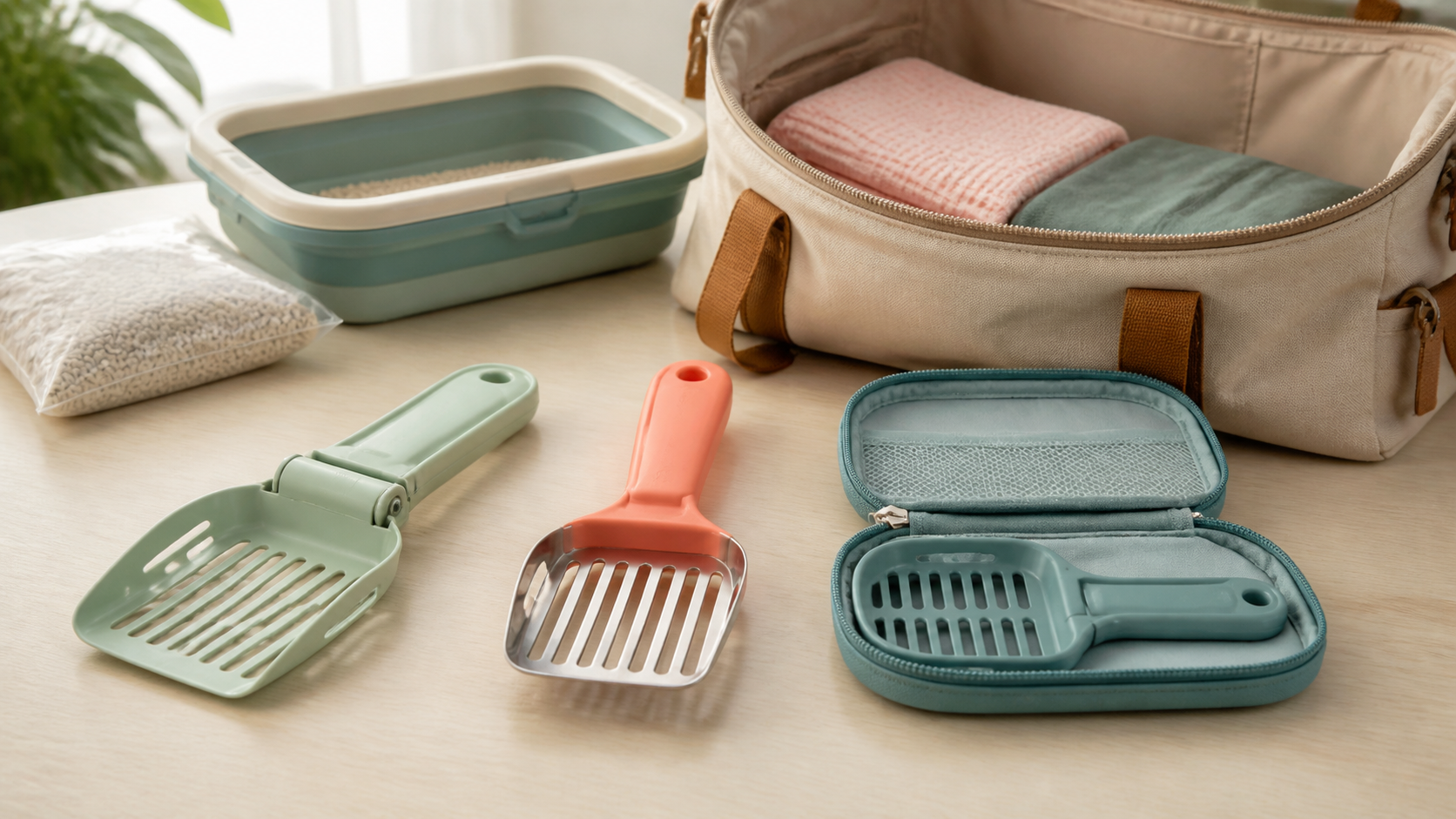
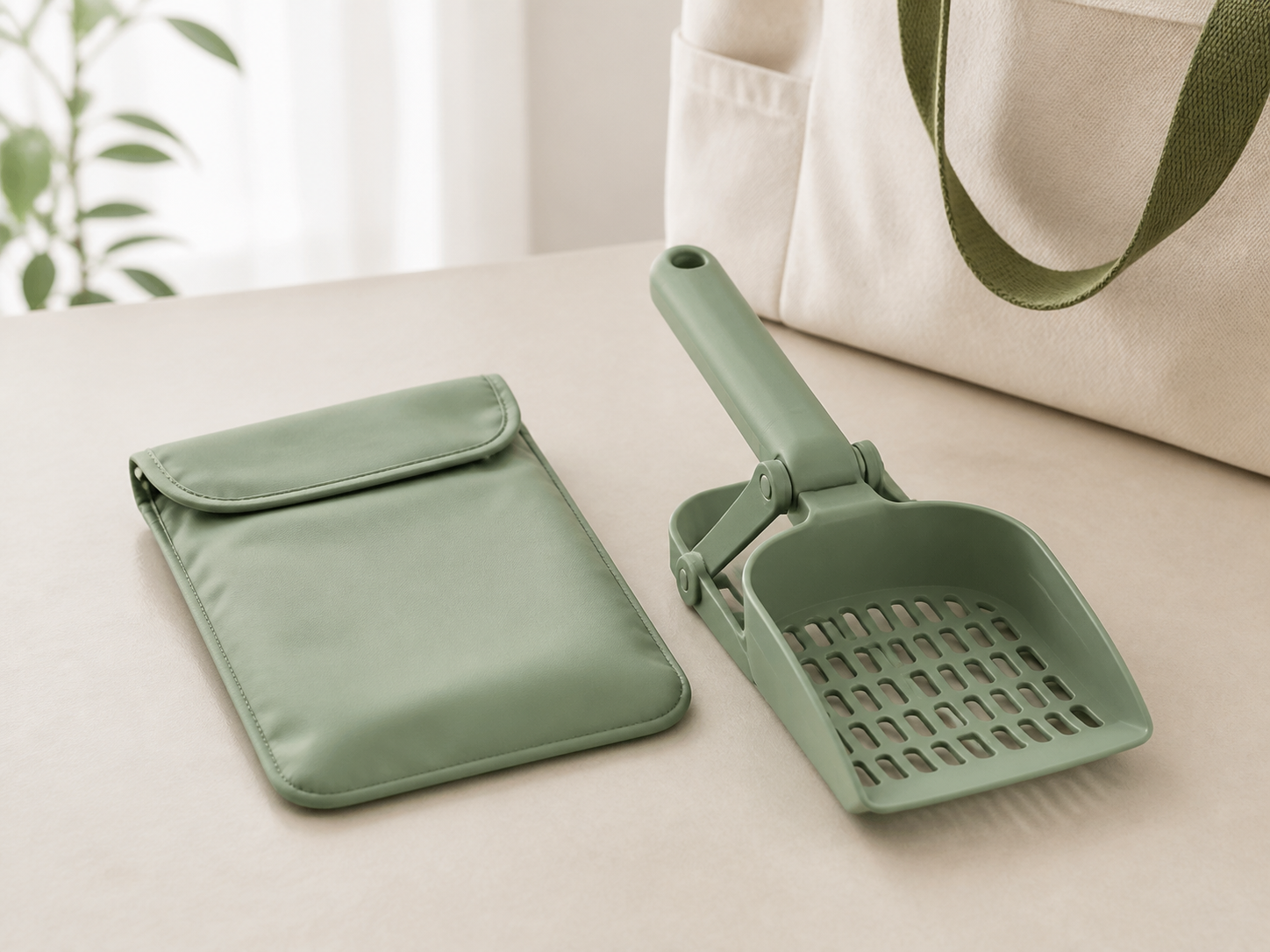
 Folding travel scoop
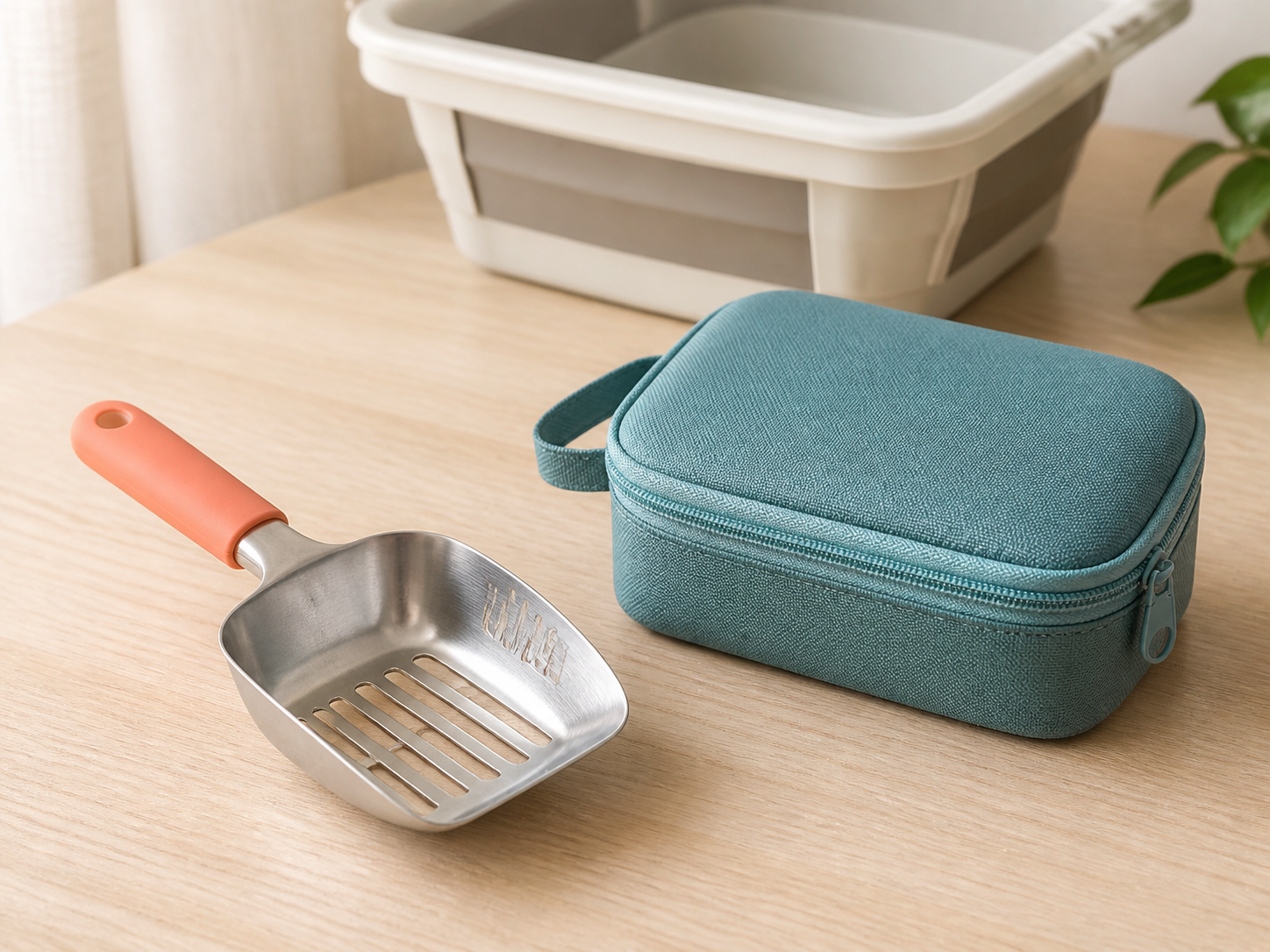 Short-handled metal scoop
A travel scoop is a convenience item, not a way to make a cat comfortable with travel or a new litter setup. Keep the litter type and box routine as familiar as practical. If your cat strains, cries, repeatedly enters the box without eliminating, has blood in urine or stool, or has an abrupt elimination change, contact a licensed veterinarian promptly.
Best for the Smallest Packed Shape: A Folding Scoop
A folding handle can reduce the longest dimension in a small tote. Measure the scoop both folded and fully open: a compact packed shape is not useful if the open handle is too short to reach the bottom of the travel box without your hand crossing the rim.
Inspect the hinge before each trip. It should stay open during ordinary scooping without pinching fingers, wobbling, or collecting granules in a hard-to-clean joint. If the lock loosens or the plastic develops a crack, replace the scoop rather than packing it again.
Best for a Firm Edge: A Short-Handled Metal Scoop
A compact metal basket keeps its edge more rigid than many thin mini plastic scoops. That can be useful with a shallow travel box where you need a short tool but do not want the basket to flex. The tradeoff is extra weight and a hard edge that can scrape a soft or coated portable box if used roughly.
Check for smooth finished edges, a handle that stays comfortable when the basket is loaded, and a shape that fits the box corners. Dry metal completely before it goes into a case, and follow the maker's care guidance rather than assuming every metal finish tolerates every cleaner.
Best for Contained Storage: A Mini Scoop With a Case
A fitted case or washable zip pouch creates a clear storage place after the scoop has been emptied, washed, and dried. The case should be easy to wipe or launder and large enough that the scoop does not have to be packed while damp.
A case does not make a dirty scoop sanitary. Remove stuck litter, clean the tool according to its material and care instructions, allow it to dry, and clean the case separately. Keep both away from food, bowls, medication, and children's items.
Selection Criteria That Matter
- Open and packed dimensions: Compare the open reach with the temporary box depth, then verify the folded or cased scoop fits your travel organizer.
- Slot pattern: Match the openings to the familiar litter you plan to bring; very wide slots can lose small clumps, while very fine slots sift slowly.
- Basket width and depth: A smaller basket fits compact box corners but takes more passes during cleanup.
- Handle and hinge: Look for a comfortable grip and, on folding models, a stable open position with a joint you can clean.
- Material: Rigid metal can be heavier; lightweight plastic can flex or crack. Inspect either format before packing.
- Containment: Prefer a washable case, holder, or separate pouch that keeps the cleaned scoop away from other supplies.
- Cleaning and drying: Read the maker's instructions for the scoop and case, and make sure both can dry fully before storage.
- Replacement cues: Retire a scoop with cracks, sharp burrs, deep scratches, corrosion, a loose hinge, or a case that cannot be cleaned.
A Quick Comparison Framework
First measure the travel box's inside depth, narrowest corner, and packed compartment. Eliminate any scoop that is too wide for the box, too short to reach comfortably, or too long for the bag. Next, compare slot openings with a small clean sample of the litter you already use at home.
Finally, plan the return trip. Decide where the scoop will be washed, how long it can dry, and what cleanable barrier will separate it from the rest of the kit. If two formats fit equally well, choose the simpler one with fewer joints and easier-to-reach surfaces.
Who Should Skip a Separate Travel Scoop
Skip buying another tool if your ordinary scoop already fits the portable box, can be packed in a dedicated washable container, and does not crowd the bag. A basic full-size scoop may be easier to use and clean than a novelty folding model.
A travel-specific scoop may also be unnecessary for a very short visit where the host provides a suitable clean tool, or for a disposable setup that includes an appropriate scoop. Do not choose a tiny scoop only because it packs neatly if it makes routine cleanup slow or awkward.
Build the Rest of the Temporary Litter Setup
The scoop comes after the box decision. Our portable litter box guide compares reusable foldable, disposable, and lidded formats by open size, packed size, wall height, cleaning, and litter familiarity.
For home use, a larger tool is usually more practical; compare litter scoops for clumping litter and easy cleanup by slot width, basket depth, reach, and storage. If the travel box sits near a doorway or hotel bathroom, a compact litter mat may help contain granules, but measure the available floor space first.
The Bottom Line
For weekend trips, start with a folding scoop when packed length is tight, a short-handled metal scoop when rigidity matters, or a mini scoop with a washable case when contained storage is the priority. The best fit is the format that works with your cat's familiar litter, reaches the temporary box comfortably, cleans without hidden gaps, and has a realistic place to dry before the trip home.