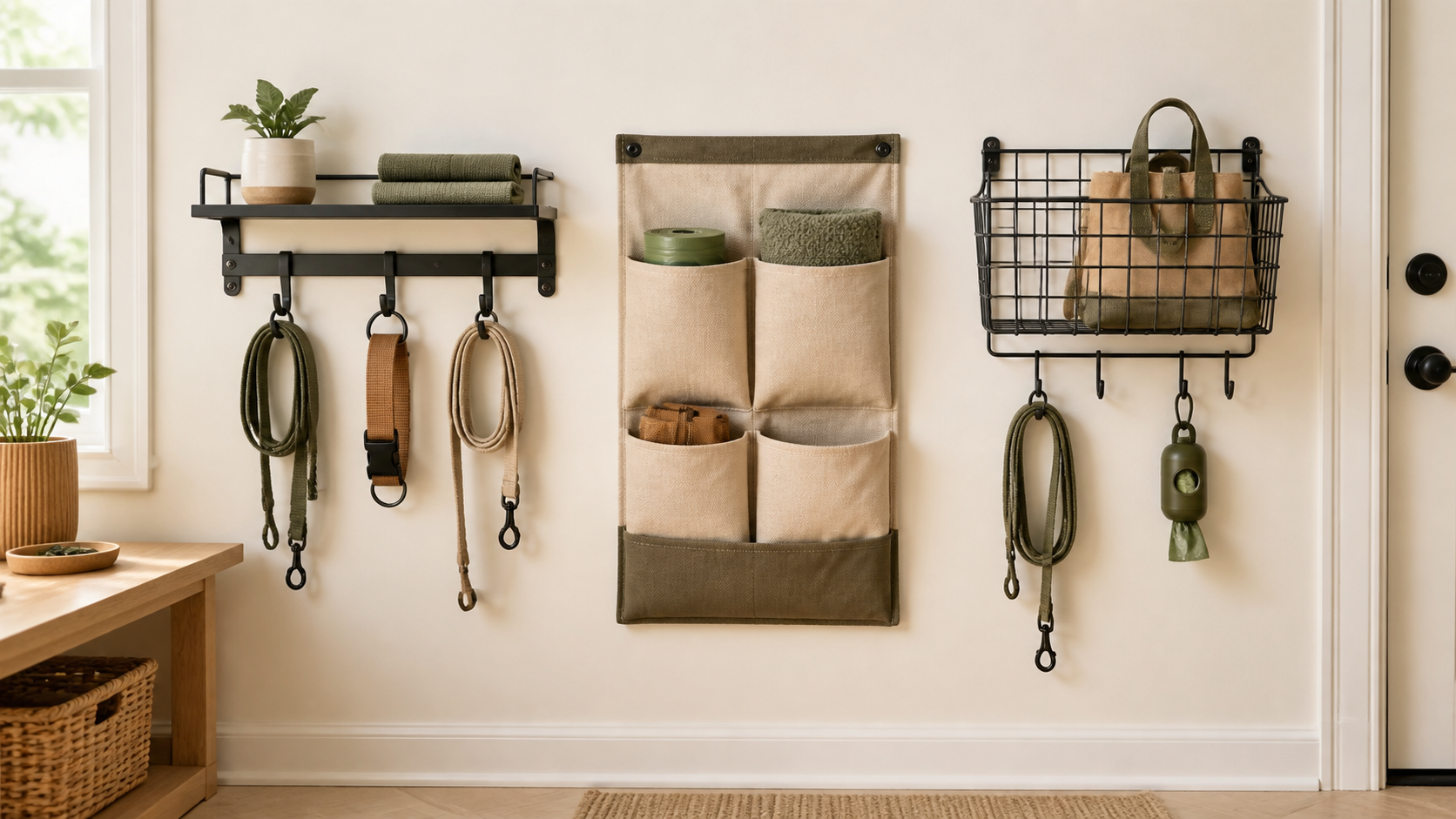
This is a category comparison, not a named-product ranking or a report of hands-on testing. Wall construction, fasteners, installation quality, and the organizer maker's directions determine what a setup can hold. Never use a pet-supply organizer as a tie-out point, restraint anchor, child-safety device, or substitute for secure storage.
Quick Comparison: Which Format Fits?
Shelf-and-hook rails: best for a compact daily station
A combined rail can put coiled leashes and harnesses on hooks while keeping a waste-bag roll, light, or other small item on a shallow shelf. It works best when the shelf does not project into the walking path and the hooks are spaced far enough apart that wet gear can dry. The tradeoff is installation: a wider rail may need several correctly placed mounting points.
Fabric wall pockets: best for separated lightweight supplies
Open pockets make small items easy to sort without a rigid shelf edge. They can suit folded towels, empty bags, and spare waste-bag rolls, but soft pockets may sag or hide damp items at the bottom. Check how the organizer attaches, whether it can be removed for cleaning, and how far full pockets project from the wall.
Wall baskets with hooks: best for open, wipeable storage
A metal or rigid basket keeps contents visible and can be easier to wipe than fabric. Hooks underneath add leash storage without another rail. Wire spacing matters: very small items may fall through, and protruding basket corners or hooks are a poor fit beside a narrow doorway or at pet eye level.
Selection Criteria That Matter
- Available wall area: Measure width, height, baseboard and trim position, switches, vents, and the full door swing.
- Loaded depth: Add the organizer's depth to the bulkiest stored item. A basket that fits empty can still crowd a narrow route when filled.
- Storage mix: Count leashes, harnesses, waste-bag rolls, towels, and lightweight totes. Avoid buying pockets or hooks with no assigned purpose.
- Wall and mounting method: Identify the wall material and follow the organizer instructions for fasteners, anchors, mounting points, and stated load.
- Hook layout: Check projection, edge finish, spacing, and whether clips or straps can hang without tangling.
- Cleaning and drying: Choose wipeable or removable materials and keep damp leashes and towels spaced for airflow.
- Pet access: Keep chewable gear, dangling loops, and small loose items outside your pet's reach. Storage is not pet-proof merely because it is mounted.
- Inspection: Check the wall, fasteners, seams, baskets, and hooks regularly. Stop using an organizer that loosens, bends, tears, or develops sharp edges.
Check Wall and Mounting Fit Before Buying
Sketch the organizer outline on paper or mark it with removable painter's tape, then open the door fully and walk through the entry carrying an ordinary bag. This reveals whether a shelf corner, basket, or hanging leash would catch clothing or narrow the route. Keep storage away from electrical panels, heat sources, and any location where drilling could contact hidden utilities; if you are unsure, use a qualified installer.
Do not assume included fasteners suit every wall. Follow the current product instructions and any lease or building rules. A renter-friendly over-door or freestanding option may be better when drilling is prohibited, although it still needs measured door clearance and stable placement.
A Simple Comparison Framework
First, list only the supplies used at the door during an ordinary week. Second, measure the clear wall and maximum safe projection into the room. Third, match the format to the contents: hooks for hanging gear, pockets for light separated items, or a rigid basket for open visibility. Finally, compare installation requirements, stated load, cleaning, and how easily you can inspect every item.
If the setup only needs two leashes and a harness, the narrower dog leash hook guide may be the better decision. If muddy paws and wet towels are the larger problem, start with the doorway cleanup station and add a boot tray for contained floor storage.
Who Should Skip a Wall-Mounted Organizer?
Skip one if you cannot confirm a suitable mounting method, the only wall is a busy shoulder-level passage, the stored items would exceed the maker's guidance, or your pet can reach and chew dangling gear. Also skip it when wet supplies would be packed together without drying space.
An existing drawer, cabinet, coat closet, properly installed hook, or portable caddy may already solve the problem. Keep food, medication, first-aid supplies, chemicals, and sharp grooming tools in storage designed for those items and securely away from pets and children rather than adding them to an open entryway organizer.
The Bottom Line
Choose a shelf-and-hook rail for a compact daily station, fabric pockets for separated lightweight supplies, or a wall basket with hooks for open wipeable storage. The right organizer fits the wall and walking path, follows its mounting and load instructions, keeps damp gear able to dry, and stores only the supplies you actually use near the door.