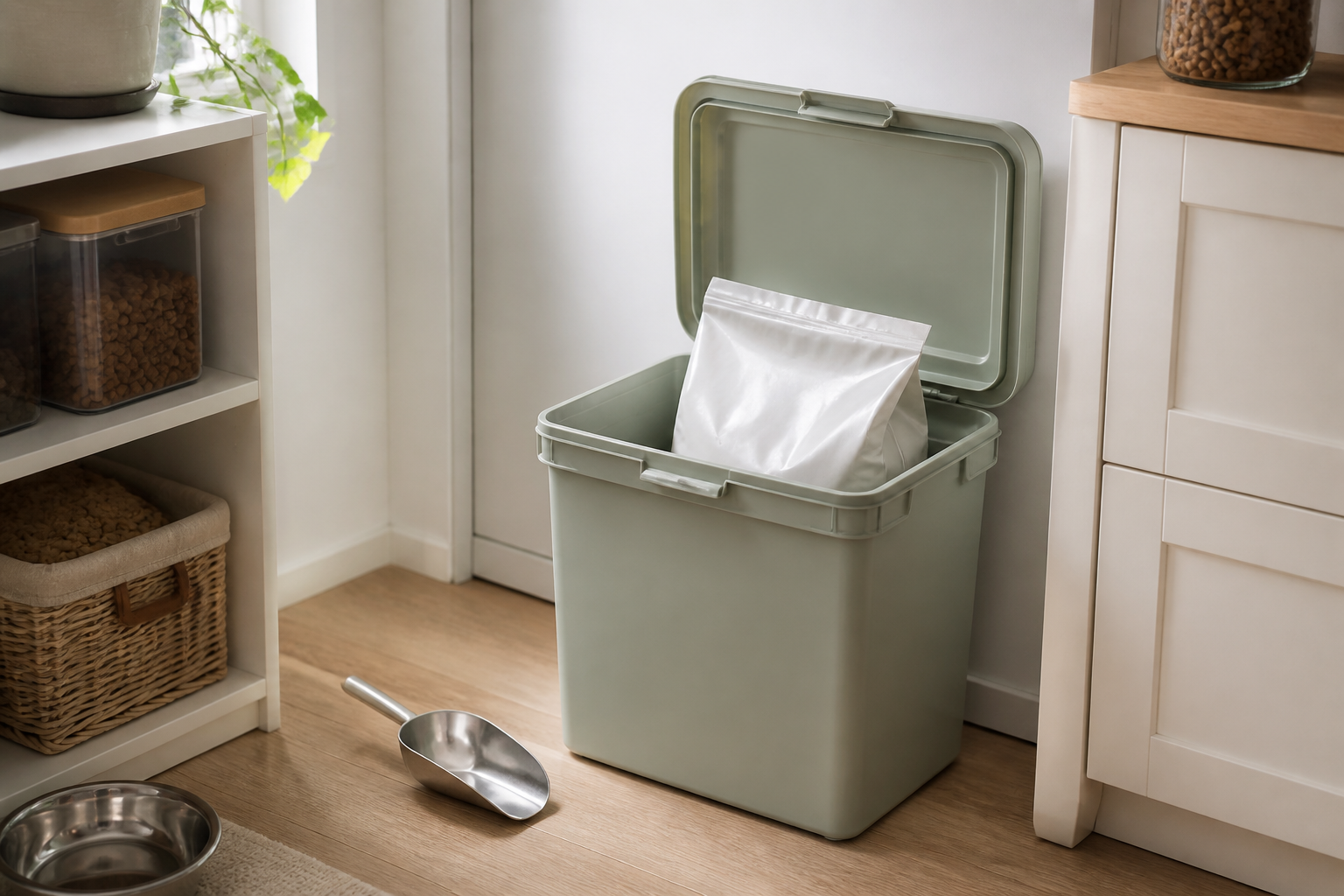
This is a storage decision guide, not a claim that a bin makes food last longer or corrects a feeding or health problem. Follow the food maker's current storage directions. Keeping the original package inside the bin preserves its label, date, lot code, and feeding information while adding a second physical layer around the bag.
Quick decision: buy, skip, delay, or choose another setup
Buy when an opened bag is hard to close, tips over, crowds a shelf, or is awkward to scoop from—and a measured container will make the daily routine simpler.
Skip when a small bag already reseals, stays upright in a dry pet-inaccessible cabinet, and is easy to use without spills.
Delay when you do not know the full bag dimensions, storage opening, container care instructions, or whether you can comfortably lift and clean the bin.
Choose an alternative when a lidded secondary tote, sturdy cabinet shelf, or smaller bag size solves the organization problem. A small daily canister can also reduce lifting while the main food remains in its labeled package elsewhere.
Escalate pests, damp storage, damaged food packaging, unusual odor or appearance, or suspected contamination to the food maker or an appropriate local professional. Contact a licensed veterinarian about refusal to eat, vomiting, diarrhea, sudden thirst changes, weight changes, or other health concerns rather than treating storage gear as the solution.
Practical criteria before you buy
- Original-bag fit: Measure the bag when full, including its folded or sealed top. Capacity labels alone do not guarantee a specific bag will fit.
- Storage footprint: Measure floor, shelf, or cabinet width, depth, height, door swing, and the clearance needed to open the lid.
- Seal and closure: Check how the gasket, latch, or threaded lid closes and whether you can operate it easily every day.
- Materials: Look for clear maker information about intended use and food-contact surfaces. Do not assume every household tote is designed for direct food contact.
- Cleaning access: Wide openings and removable seals are easier to inspect, wash, rinse, and dry fully.
- Scoop routine: Decide whether the scoop stays outside the bag, clips to the lid, or needs a clean separate holder.
- Pet access: A lid is not a security guarantee. Store food where pets cannot chew the bin, operate the closure, or knock it over.
- Package retention: Keep the label, lot code, best-by information, ingredients, and feeding directions with the food.
Cost, maintenance, and setup tradeoffs
Cost: The value comes from easier handling and organization, not from buying the largest or most elaborate bin. A container is poor value if a smaller food bag or existing cabinet solves the problem.
Setup: A tall bin may hold more but can be harder to lift, reach into, or fit beneath a shelf. Rolling designs need wheel clearance and a level route; stackable designs need safe access to each lid.
Maintenance: Crumbs and residue still collect around the bag, scoop, lid, and gasket. Follow the container maker's care instructions and let every washed surface dry completely before putting food back.
Food changes: Empty and clean the container as directed rather than placing a fresh bag on top of old crumbs. Do not combine foods or discard packaging when doing so would lose useful identification or feeding information.
Space: A bin can turn vertical dead space into organized storage, but it can also block a walkway or consume scarce cabinet room. Map the lid movement as well as the base footprint.
Who should skip a separate container
Skip a new bin when you buy small resealable bags, finish them comfortably within the maker's directions, and already have a dry, tidy, pet-inaccessible storage location. Also skip containers that require decanting if you are unlikely to retain the full package information.
Choose a different format if lifting a full bin is difficult, the lid cannot open in the intended location, the interior is hard to reach for cleaning, or the pet can chew or tip the container. Buying gear should not create a new access or handling problem.
Red flags in a container or listing
- No usable interior dimensions, material information, or cleaning directions.
- Claims that “airtight” automatically guarantees freshness for a specific time.
- A lid that visibly flexes, a gasket that will not seat, or a latch that opens with light pressure.
- Crevices, wheels, hinges, or seals you cannot inspect and clean.
- A footprint that fits only when the lid, cabinet door, or walkway is blocked.
- Advice to discard the original label or mix old and new food without reference to the food maker's directions.
When the original bag is enough
The original bag is often the simplest choice when its closure works and it sits securely in a dry cabinet away from pets. If the bag needs more structure, placing the entire closed bag inside a clean secondary bin can combine package retention with easier handling.
If counter space and spills are the larger problem, work on the whole low-mess feeding station instead. For a new-pet setup, the starter pet supplies guide is the relevant pillar path and can help separate daily essentials from optional organizers.
Bottom line
An airtight pet food container is worth it when it solves a measured storage or handling problem, fits the full original bag, is easy to clean and dry, and stays inaccessible to pets. It is a convenience and organization tool—not a nutrition, freshness, pest-control, or health guarantee.
Skip it when the original bag already works. Delay until you can measure the space and full bag. Choose a smaller or simpler setup when lifting, cleaning, or lid access would make a large bin harder to live with.