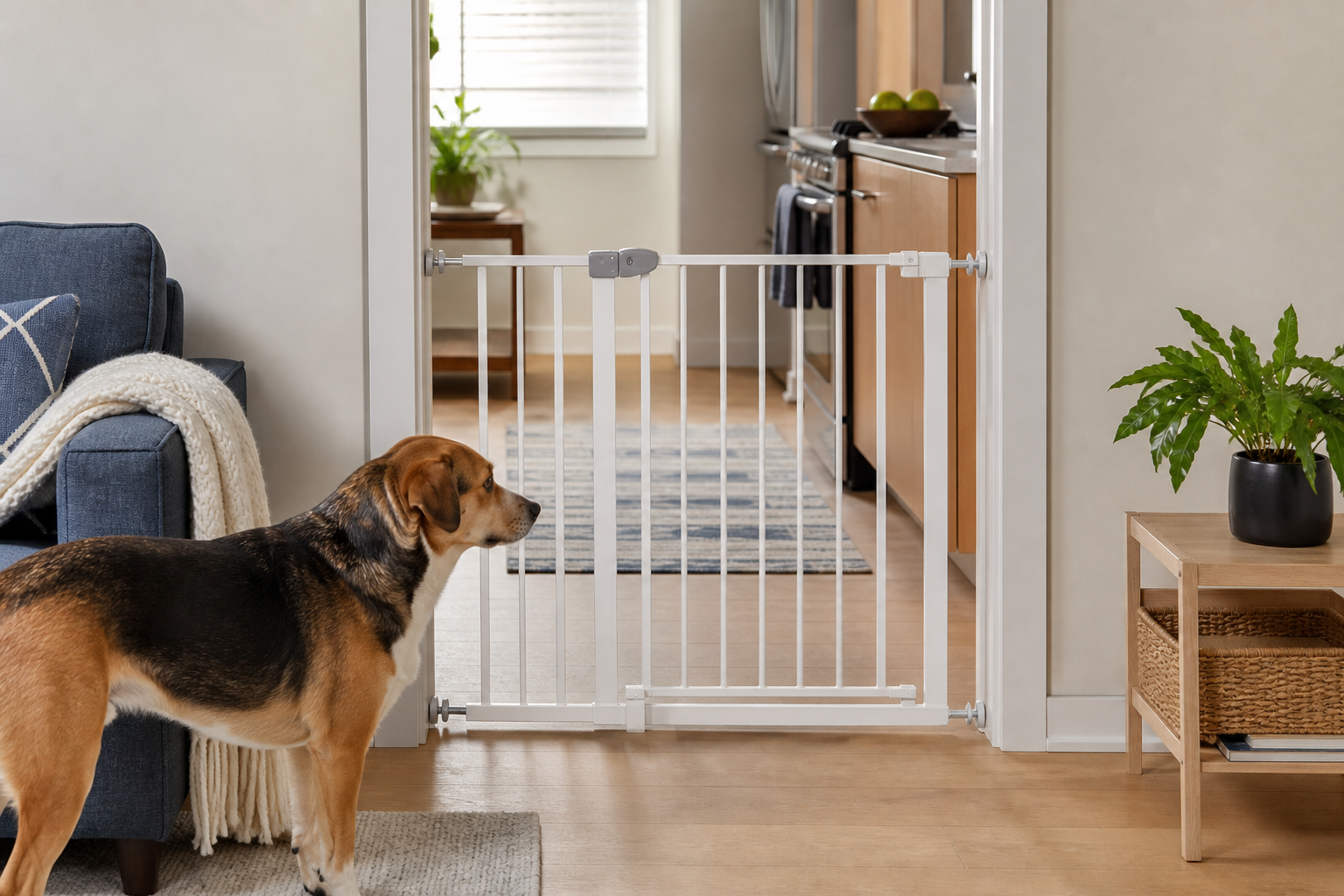
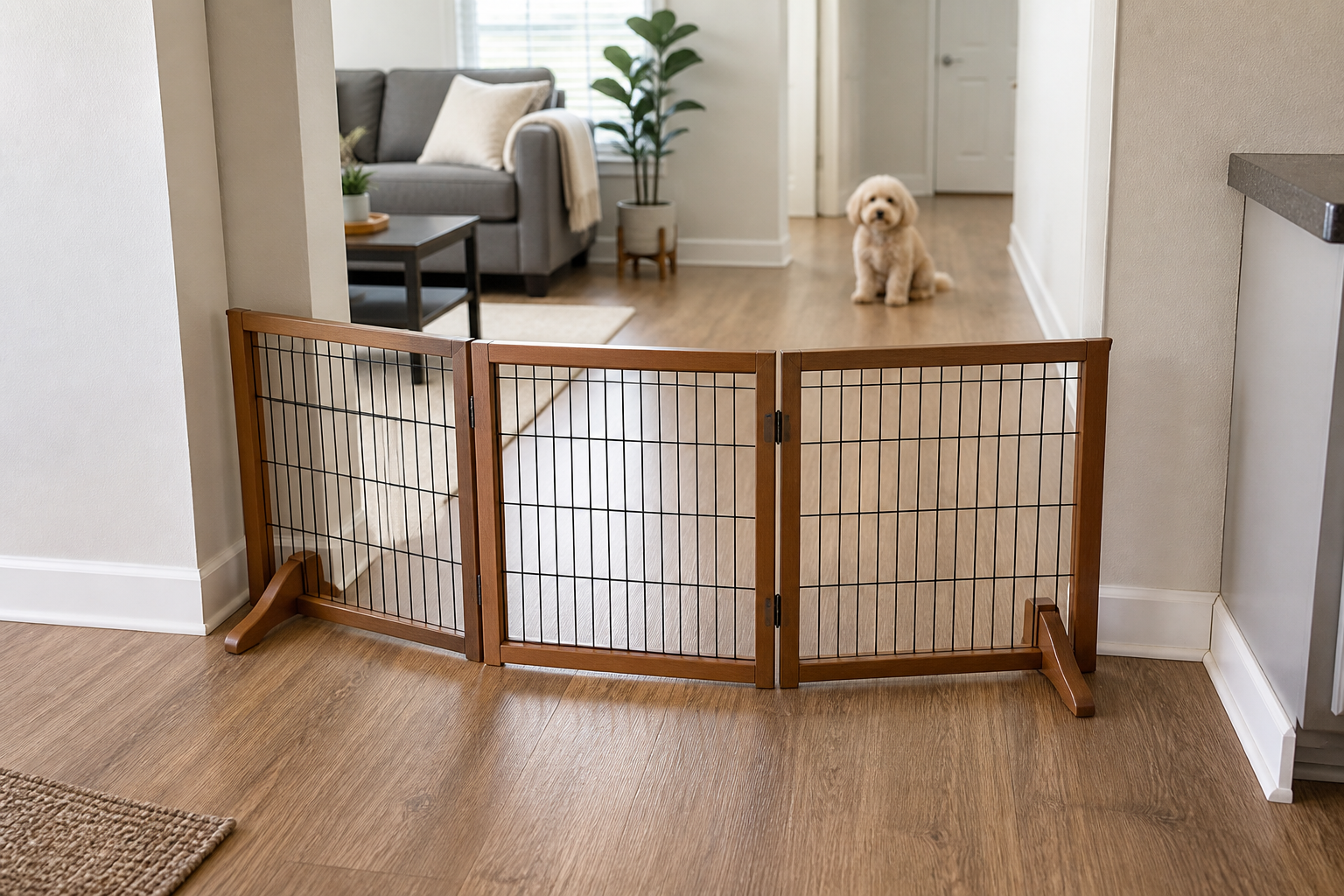
 Freestanding folding gates
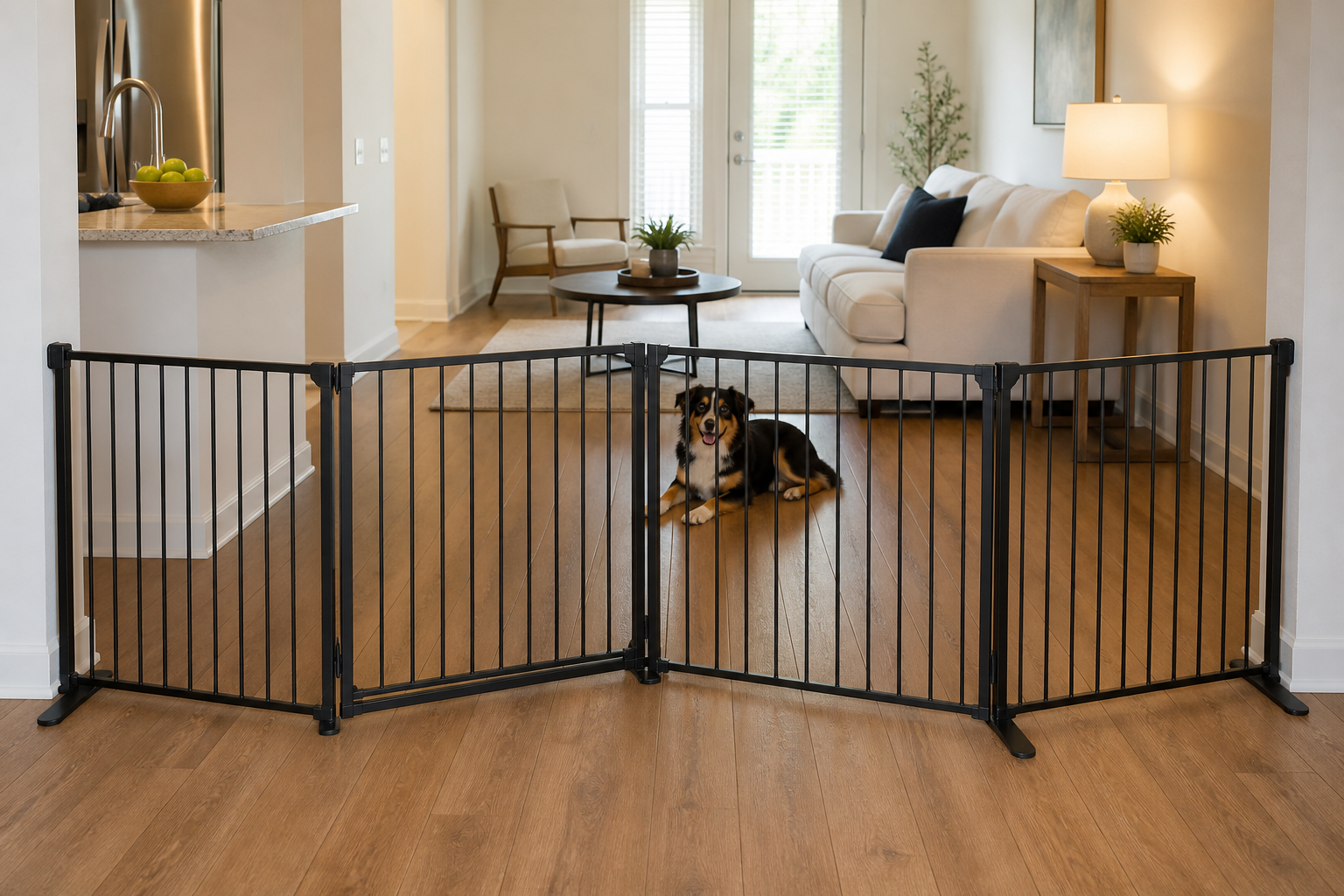 Configurable panel gates
This is a category decision guide, not a hands-on review. A gate can support a supervised household routine, but it is not escape-proof, is not automatically suitable for stairs or children, and does not replace training or qualified behavior help.
Quick Decision: Buy, Skip, Delay, or Choose an Alternative
Buy a gate when one measured opening controls a recurring, low-stress problem such as keeping a calm pet out of a kitchen during food preparation, and a walk-through design will not obstruct the household.
Skip it when the boundary is rarely needed, the only placement blocks an exit or creates a tripping point, or your pet climbs, chews, pushes, or panics at barriers.
Delay the purchase until you have measured the opening at several heights, checked baseboards and trim, confirmed rental rules, and observed how often people need to cross that doorway.
Choose an alternative when rearranging furniture, closing an existing door, supervising briefly, or using a correctly sized exercise pen would solve the actual problem with less disruption.
Escalate when separation causes panic, repeated escape attempts, guarding, aggression, or conflict between pets. A certified trainer or qualified behavior professional can help plan the boundary; contact a veterinarian when behavior changes suddenly or your pet may be unwell.
The Small-Space Worth-It Test
- One clear job: Can you name the room, routine, and time when the gate is needed?
- Measured fit: Does the manufacturer's stated range cover the opening without improvised extensions?
- Livable traffic: Can everyone use the latch and pass through without stepping over bars?
- Pet fit: Are height, bar spacing, bottom gap, and materials appropriate for your pet's size and habits?
- Calm response: Does your pet remain settled during short, supervised introductions?
- Realistic upkeep: Can you check tension, hardware, feet, latches, and wall contact regularly?
If fit, traffic, or temperament is a no, a gate is likely to add friction rather than solve the problem.
Cost, Maintenance, and Setup Tradeoffs
The purchase price is only part of the decision. Pressure-mounted gates may need wall cups or protectors; hardware-mounted styles require appropriate surfaces and installation; freestanding gates take floor space; and configurable panels need storage when folded. Extensions can add cost and bulk, so measure before assuming a standard model will work.
Daily maintenance is light but not zero. Check that pressure points remain even, hardware stays tight, feet sit flat, and the latch closes fully. Clean fur and debris from hinges and floor contact points, inspect for chewing or bent parts, and stop using a damaged gate.
Mounting Style Changes the Decision
Pressure-mounted walk-through gates can be convenient in standard, high-traffic doorways, but they depend on compatible surfaces and correct installation. Freestanding gates avoid wall contact and move easily, but they suit only pets that respect a light visual boundary. Hardware-mounted gates are more permanent and require suitable structure and permission. Retractable or panel systems can address awkward openings, but only within the maker's placement and pet-use instructions.
Do not assume a pet gate is suitable at the top of stairs, for child safety, or for every pet merely because it fits the width. Those uses require products and installation explicitly intended for them.
Who Should Skip a Pet Gate
Skip a gate if anyone in the home has difficulty operating the latch or stepping around the frame, if the doorway is an essential exit, or if the open gate door collides with cabinets or appliances. Small homes magnify every obstruction.
Also skip a gate as the main plan for pets that lunge, climb, chew barriers, squeeze through gaps, redirect frustration, or become distressed when separated. A taller or heavier product is not automatically a safer answer.
Red Flags Before Buying
- The listing omits an exact width range, height, bar spacing, or installation instructions.
- The proposed setup needs improvised blocks, stacked gates, unapproved extensions, or uneven pressure.
- The seller promises escape-proof containment or a behavior fix.
- The gate would block an exit, narrow a busy route, or require frequent stepping over.
- The latch is hard for household members to operate consistently.
- Your pet can place a head, paw, collar, or jaw through an unsafe-looking gap.
- Rental or wall-surface requirements are unclear.
Cheaper Alternatives and Better First Moves
Start with the boundary you already have. A closed interior door can be simpler for short routines if the room remains comfortable and appropriate for the pet. Rearranging the feeding station, litter area, or pet bed may remove the conflict point without buying containment gear. For a temporary supervised zone, an exercise pen may work better than spanning a doorway, but it still needs correct sizing and a pet who tolerates it.
If a gate passes the worth-it test, compare formats in the pet gates for small spaces guide. For the broader setup, use Starter Pet Supplies That Actually Help, the site's practical new-pet pillar, so the gate supports access to water, rest, cleanup, and daily routines rather than becoming an isolated purchase.
Bottom Line
A pet gate is worth it when a measured doorway, calm pet, repeat routine, manageable latch, and clear traffic path all line up. In that case, it can be a useful convenience rather than a major household system.
Skip or delay when the job is vague, the space is cramped, or the pet's response makes the barrier unreliable. Choose the smallest practical change that keeps the routine calm, supervised, and easy for the household to maintain.