 The Good Sign Company
Family Command Center Buying Guide
Best family command center signs and labels: make every zone obvious.
A useful command center tells each person where to look, write, drop, and retrieve. Choose the zones and update methods before matching colors; the best-looking labels will not rescue a calendar nobody can read or a mail pocket nobody knows how to use.
Disclosure: As an Amazon Associate, we may earn from qualifying purchases and approved partner referrals.
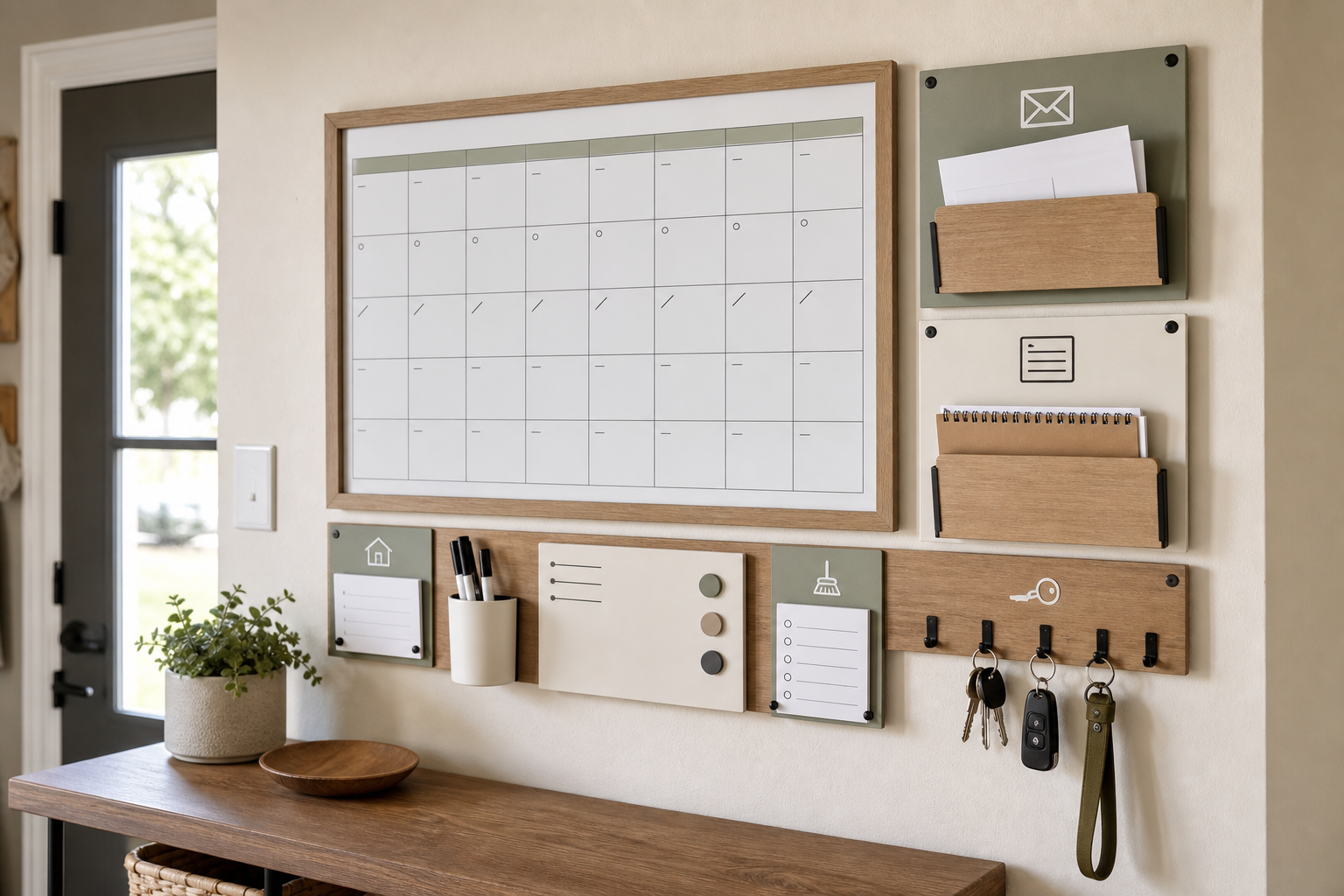
Best category-shopping route
Compare the working zones, not the number of pieces.
Use the category to compare current dimensions, calendar format, included labels, writing surface, pockets, hooks, mounting instructions, and care guidance. A smaller system with four understood zones can work better than a large bundle of loosely related organizers.
Best Command Center Sign Types by Household Need
These are fit-based categories, not named winners or hands-on product rankings.
- Large monthly calendar: best for shared date visibility. Favor generous writing cells and simple headings. Measure how far away family members will read it and whether glare hides marker strokes.
- Changeable name and chore labels: best for rotating responsibilities. Magnetic, dry-erase, or slide-in labels can change without remaking the system. Confirm that the label method works with the listed surface.
- Fixed zone signs: best for mail, forms, keys, and outgoing items. Short labels such as icons or one- to two-word headings reduce sorting decisions. Make the physical pocket, tray, or hook match the label.
- Small daily note board: best for messages that expire quickly. Keep it separate from the monthly calendar so a reminder does not crowd a date cell. Check the writing and cleaning instructions for the actual surface.
- Clip or pocket labels: best for school papers and permission forms. Assign one destination to each pocket and test whether it can hold the normal paper size without covering its label.
- Picture or color-coded labels: best for early readers. Use a small, consistent visual vocabulary. Avoid decorative icons that look similar or require explanation every day.
How We Compare Family Command Center Systems
- Zone clarity: every sign should name a physical action or destination—write here, file here, hang here—not merely decorate the wall.
- Readable type: test headings and calendar marks from the normal approach. Contrast, letter height, and uncluttered spacing matter more than an elaborate font.
- Changeability: decide which information is permanent, monthly, weekly, or daily. Use fixed labels only for jobs unlikely to change.
- Wall footprint: include working clearance for opening pockets, writing on boards, removing papers, and lifting keys—not just the product dimensions.
- Mounting fit: compare the listed complete weight and hardware with the actual wall surface. Do not assume adhesive strips suit a loaded pocket or key rail.
- Surface compatibility: magnets, dry-erase markers, chalk markers, and removable labels are not interchangeable. Verify each listed material and care method.
- Cleaning and reset: favor surfaces that can be cleared without leaving confusing old marks, and set a regular time to empty pockets and rewrite the board.
A Quick Comparison Framework
- Your main problem is missed dates: start with one large calendar and a marker holder; add labels only after the calendar habit works.
- Your main problem is paper piles: prioritize labeled pockets with enough depth and a clear weekly emptying routine.
- Responsibilities rotate: use movable name labels beside fixed task labels rather than rewriting the entire chore area.
- The wall is narrow: stack two or three high-value zones vertically, but keep writing areas within comfortable reach for intended users.
- You rent or expect to rearrange: compare a freestanding board or rail with freestanding sign options for renters; follow the product and surface instructions for any removable mounting.
- Only one schedule changes: skip the multi-zone category and choose a focused dry-erase schedule board.
Map the Wall Before You Buy
- List the three to five household actions the command center must support; leave general home storage out of scope.
- Choose a fixed place near the household's normal entry or transition route without blocking a door, switch, or walkway.
- Mark the proposed outer dimensions with painter's tape and test calendar readability from the normal approach.
- Use paper rectangles to test each calendar, pocket, note, and key zone at its listed size, including working clearance.
- Check the wall material, complete loaded weight, supplied hardware, and installation guidance before choosing a mounting route.
- Assign one label style and one update owner, then schedule a short weekly reset so expired notes and papers do not bury the system.
Who Should Skip a Family Command Center System
- Skip a multi-piece wall setup if the household only needs a shared calendar; extra zones create maintenance without solving another problem.
- Skip tiny decorative labels that cannot be read at the speed and distance of everyday entry.
- Skip permanent personalized labels while chores, rooms, or routines are still changing.
- Skip deep pockets in a narrow passage where papers or bags can be bumped.
- Skip a magnet-dependent system until the product listing confirms a magnetic surface; many metal-look and framed boards are not magnet-compatible.
- Skip adhesive-only mounting when the loaded organizer weight, wall finish, or removal expectations are unclear. Follow current instructions and use suitable hardware or qualified help for the real conditions.
The Practical Bottom Line
The best family command center is not the biggest coordinated set. It is a small group of readable signs and labels that gives calendars, papers, notes, chores, and keys unmistakable homes. Map the workflow with paper first, verify each surface and mounting method, and buy only the zones the household will reset and use.