 The Good Sign Company
Indoor sign material comparison
Metal sign vs plastic sign: compare the actual product, not just the label.
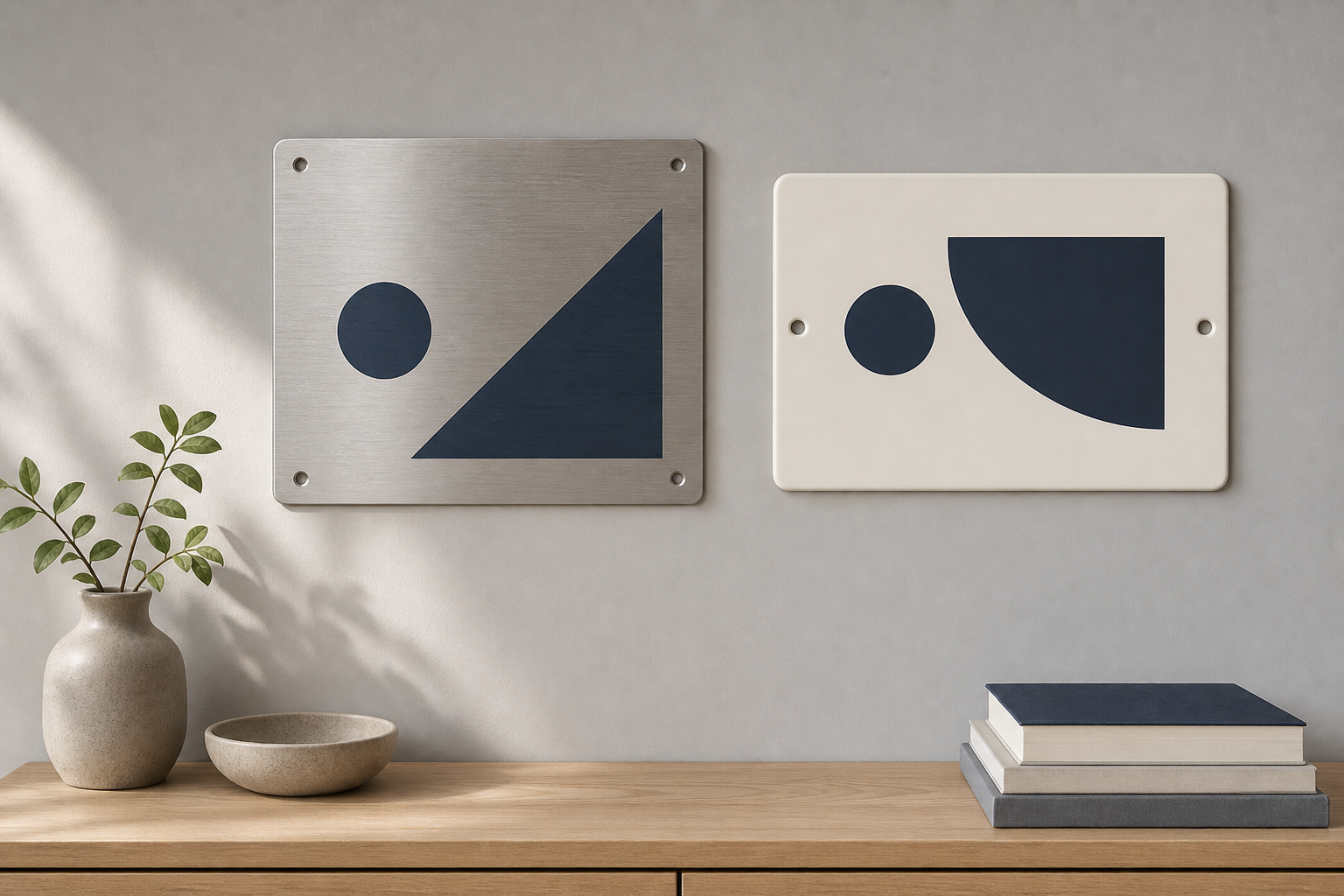
Metal often gives an indoor sign a thinner, firmer, more reflective face. Plastic can offer a lighter-looking, matte, or slightly flexible format. But both categories cover many constructions, so the useful choice comes from the listed material, thickness, weight, edge finish, mounting points, and care instructions for the exact sign.
Disclosure: As an Amazon Associate, we may earn from qualifying purchases and approved partner referrals.
The short answer
Choose a metal sign when a crisp thin profile, rigid face, punched mounting holes, or brushed or printed finish suits the room and the verified weight works with the mounting plan. Choose a plastic sign when a matte face, lower listed weight, easier handling, or a temporary display format matters more. Do not assume every metal sign is heavy or every plastic sign is flexible: construction and thickness change both.
Who each material fits
A metal sign fits when
- The room suits a crisp, industrial, vintage, garage, workshop, bar, or office-style face.
- You want a rigid panel and the product has usable holes, a frame, or another documented mounting method.
- A brushed, painted, or printed metal finish provides enough contrast without troublesome reflections at the normal sightline.
- The listed weight and edge construction are appropriate for the wall, shelf, or display support.
A plastic sign fits when
- A matte or low-key face better suits an office, booth, counter, utility area, or temporary indoor display.
- The exact product's listed weight makes frequent setup, transport, or repositioning easier.
- Slight flex is acceptable and the sign will be supported so it stays flat and readable.
- The seller specifies a mounting or stand method that works with the chosen location.
Tradeoffs that change the decision
Finish, glare, and readability
Metal can range from a subdued brushed surface to a glossy printed face. Plastic can be matte, satin, glossy, opaque, or translucent. Those differences affect readability more directly than the material name. Check the sign from the real approach angle and account for windows, lamps, and camera lights. A pale face on a pale wall may disappear even when the lettering looks clear in a close product photo.
Weight, rigidity, and handling
Never choose mounting hardware from a material stereotype. A small thin metal plate may weigh less than a thick plastic panel, while a corrugated plastic sign may flex more than either. Use the seller's finished dimensions and weight, then inspect whether the panel bows when supported only at its corners. Rounded corners, finished edges, and protected transport matter anywhere the sign is handled often.
Mounting holes and hardware
Pre-punched holes can simplify alignment, but their spacing still has to suit the wall and fasteners. A plastic panel may use holes, adhesive, clips, a frame, or a tabletop support; a metal sign may use holes, magnets on a compatible surface, a frame, or attached hanging hardware. Follow the exact sign and hardware instructions. If the wall method is the harder choice, compare adhesive and screw mounting before buying.
Appearance and room fit
Metal often brings visible grain, a thin edge, or an industrial reference. Plastic can look quieter and more utilitarian, though premium printed or layered plastic can be visually polished. Judge the face, edge, thickness, and print quality in current product images. A material that suits the theme can still look wrong when the sign is undersized for the wall or crowded by shelves and trim.
Setup and maintenance
Before mounting either sign
- Measure the usable display area and mark the normal eye line and reading distance.
- Confirm finished dimensions, weight, thickness, hole spacing, edge treatment, included hardware, and intended orientation.
- Match the hardware to the sign, wall surface, and manufacturer instructions; do not rely on an unverified load claim.
- For a booth or counter, check base footprint, tip resistance, packing method, and whether the panel stays flat in its support.
Cleaning and storage
Follow the seller's care instructions for the exact coating, print, laminate, or plastic surface. A cleaner that is acceptable on bare metal may damage a printed layer, and an aggressive solvent can cloud or mark some plastics. Start with gentle dust removal unless the maker specifies more. Store panels flat or fully supported, separate faces from sharp hardware, and avoid stacking items where edges can scratch the printed surface.
Skip criteria
- Skip a metal sign when its verified weight, edge construction, reflectivity, or mounting layout does not fit the intended indoor location.
- Skip a plastic sign when the exact panel flexes too much for the support, the face looks too temporary for the room, or the seller does not explain how it mounts.
- Skip either ready-made route when the message, dimensions, colors, or mounting points must fit a specific wall rather than a generic theme.
- Pause the purchase when material, thickness, weight, use setting, or care guidance is missing from the listing.
- Do not use this indoor comparison to choose an exterior sign. Outdoor exposure, installation, property approval, accessibility, electrical work, permits, and code requirements need product- and project-specific review.
Choose the next buying path
For a ready-made room sign, shortlist items by exact dimensions, verified material, finished weight, face contrast, edge treatment, and included mounting method. Then compare those details against the wall rather than choosing from the thumbnail alone. The room decor sign guide helps with wall scale and message fit, while the mounting supplies pillar helps screen the hardware plan.
If the sign needs a family name, logo, exact size, or purpose-built mounting layout, gather the message, wall measurements, straight-on and approach photos, preferred visual finish, and indoor placement before contacting a maker.
Verdict
Metal is the stronger starting point for a rigid, thin, industrial, or visibly brushed indoor sign. Plastic is the stronger starting point when the exact product offers a useful matte face, listed lower weight, or easier temporary handling. The final decision belongs to the product specification: finish, thickness, weight, edges, mounting, and care are the details that determine whether either material works in the real display.