 The Good Sign Company
Storefront Glass Planning Guide
How to plan store-hours window vinyl that people can actually find.
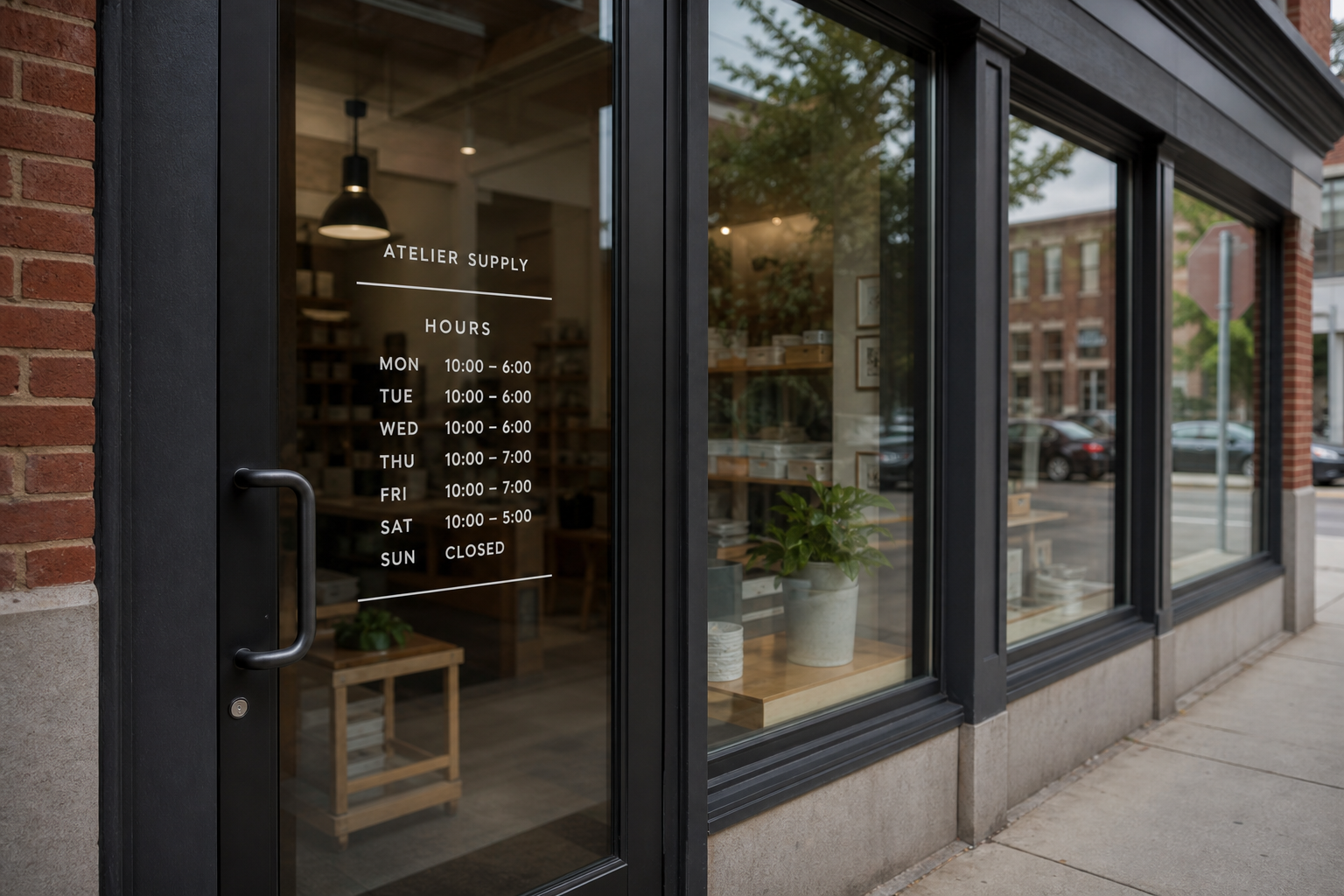
Store-hours vinyl has one modest job: help someone outside confirm when the business is open. The layout needs to survive reflections, door frames, handles, changing light, and the temptation to place every policy on the same pane. Plan the viewing situation before choosing type, color, or size.
Disclosure: As an Amazon Associate, we may earn from qualifying purchases and approved partner referrals.
Custom project route
Bring the glass measurements and final hours to the sign conversation.
DaNite Sign Company currently identifies simple window vinyl with store hours as part of its public offering. Confirm the current project fit, artwork, dimensions, placement, production details, installation scope, and terms directly before ordering.
Start with the path a customer takes
Stand where a first-time visitor approaches and note which glass panel they face before reaching for the handle. The hours should not require someone to cross the doorway, peer around a display, or search several panes.
- Approach view: photograph the entrance straight on and from the usual walking direction. Reflections and framing can change between the two positions.
- Reading distance: decide whether the hours need to work from the sidewalk, at the threshold, or only from directly in front of the door.
- Door movement: check what happens when the door opens. A readable layout on a closed door may rotate out of view during business hours.
- Obstructions: mark handles, locks, push plates, mullions, decals, displays, shades, and seasonal decorations before defining the usable area.
Build a simple message hierarchy
Use a short heading such as “Hours,” followed by days and times in a consistent pattern. If every weekday shares the same schedule, grouping them can reduce clutter. Keep temporary closures, holiday exceptions, and daily notices on a replaceable sign rather than rebuilding the permanent hours block around them.
A business name can sit above the hours when it helps identify the correct entrance, but it should not compete with the schedule. Phone numbers, social handles, payment marks, long policies, and promotional copy each create another place for the eye to stop.
Test contrast against the changing background
- Look through the glass: vinyl is read against the interior, reflections, vehicles, sky, displays, and people moving behind it—not against a blank design canvas.
- Test at several times: morning glare, interior lighting, shade, and evening reflections can change which color is easiest to see.
- Protect open space: generous spacing between lines often does more for quick scanning than decorative details.
- Use a full-size paper mockup: tape a temporary print inside the glass, then view it from the intended approach before approving the final layout.
Choose what stays permanent and what must change
Window vinyl makes the most sense when the wording and placement are stable. If hours change seasonally, staffing changes often, or the business tests different schedules, keep the stable identity separate from a replaceable hours insert. For a frequently revised message at the entrance, compare a framed paper insert, changeable door sign, or another update-friendly format.
If the entrance also needs “open” status at a glance, use the small-business open-sign guide. Store hours and live open status answer different questions and do not need to occupy the same visual layer.
What to give a sign company
- A straight-on photo of the full entrance and a second photo from the normal approach.
- Glass width and height, plus the position of frames, handles, locks, existing graphics, and other obstructions.
- The exact hours copy, including punctuation and how closed days should appear.
- The viewing distance and whether the schedule should be readable before a visitor reaches the door.
- Notes about interior colors, window displays, shades, and the reflections seen at the busiest arrival times.
- Which details are stable and which may need an update-friendly layer.
DaNite Sign Company publicly describes custom sign design, fabrication, installation, and repair in Columbus and lists window vinyl with store hours as an example of its work. Use the required project details to ask DaNite Sign Company about current fit; do not assume a material, installation method, schedule, price, or approval requirement before they confirm it.
Skip window vinyl when the format does not fit
- Skip permanent vinyl when the hours are still being tested or change frequently.
- Use a different pane or format when reflections, displays, tint, framing, or door movement keep the copy from holding contrast.
- Separate the messages when store hours are competing with menus, promotions, pickup instructions, or building notices.
- Pause the order when measurements, final wording, placement permission, or the responsible decision-maker are unresolved.
- Get project-specific guidance for exterior, electrical, permit, lease, landlord, accessibility, or code questions rather than treating this layout guide as approval advice.