 The Good Sign Company
Placement Comparison
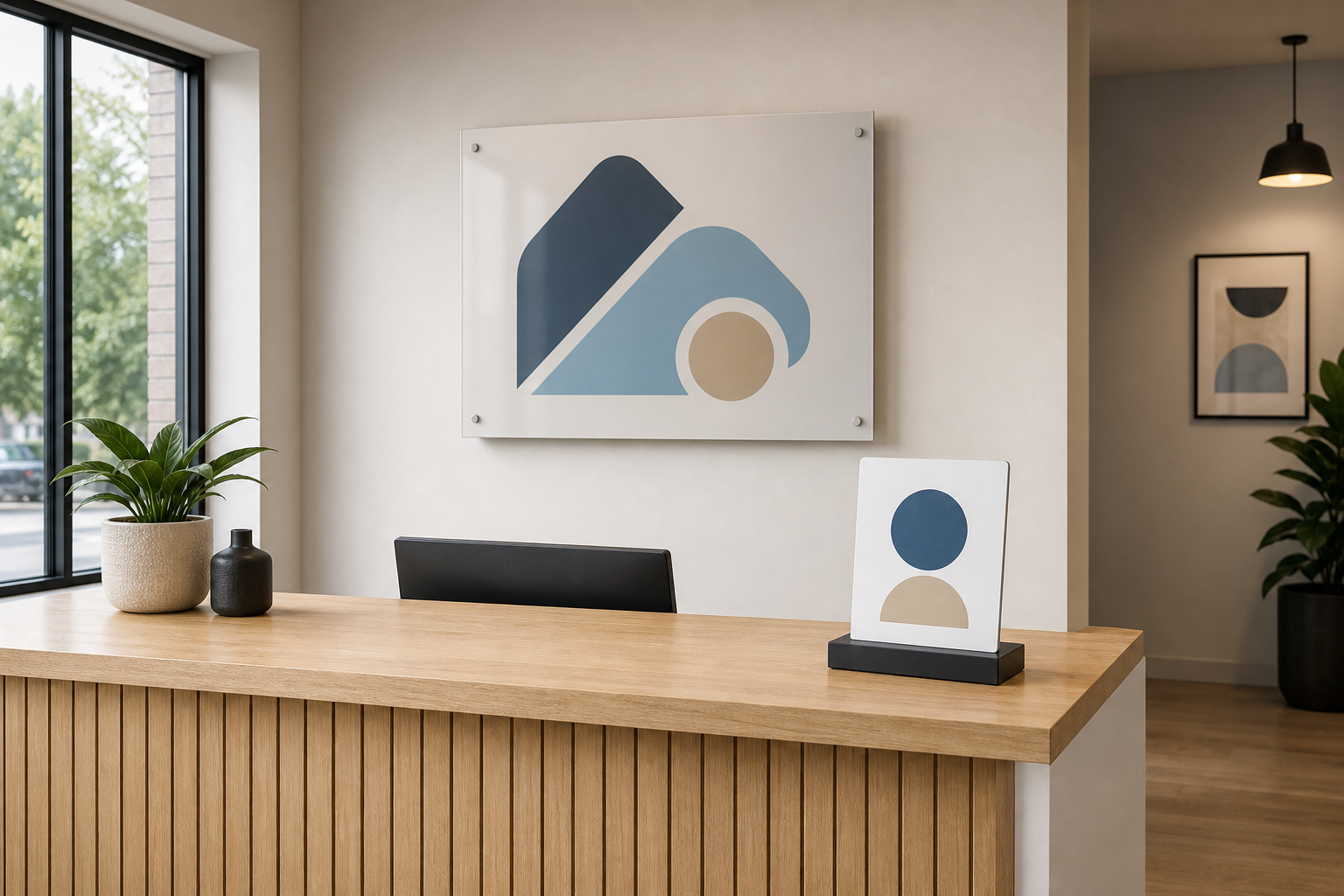
Wall-mounted sign vs tabletop sign: which placement fits the job?
A wall-mounted sign usually wins when the message needs a clear, permanent sightline and the wall can support the installation. A tabletop sign is easier to move, update, and carry, but it uses working surface and can disappear behind products, people, or counter clutter. Decide from the viewer's position before choosing the sign itself.
Disclosure: As an Amazon Associate, we may earn from qualifying purchases and approved partner referrals.
Custom route for a settled business display
Choose custom wall signage when the location and message are stable.
DaNite Sign Company publicly describes commercial sign design, fabrication, installation, and repair for Columbus-area businesses, including interior and exterior signs. Bring the viewing distance, wall dimensions, wall surface, artwork, installation location, and a photo of the space when asking what fits your project.
Quick Decision
- Choose wall-mounted for a long-lived brand, room, or wayfinding message that should remain visible above furniture and routine counter activity.
- Choose tabletop for a temporary, portable, frequently changed, or close-range message with dependable counter or shelf space.
- Choose both only when they do different jobs—for example, a wall logo identifies the business while a counter card handles a current check-in instruction.
- Choose neither yet when you have not tested the real viewing position, confirmed the wall or surface, or reduced the message to what a passerby can actually absorb.
Where a Wall-Mounted Sign Works Better
- Longer sightline: mounting above a reception desk, sofa, display, or work surface can keep the sign visible when the foreground is busy.
- Preserved surface area: the message does not consume counter, shelf, desk, or merchandise space.
- Stable visual position: a fixed sign stays aligned with the room or brand backdrop instead of being moved during cleaning and daily work.
- Larger practical format: a suitable wall may accept a sign that reads from farther away than a counter-sized piece.
- Tradeoff: installation, wall suitability, alignment, removal, and any power route need to be resolved before ordering.
Where a Tabletop Sign Works Better
- Portability: a counter sign can move between a checkout point, event table, desk, shelf, or temporary display.
- Message changes: inserts, printed cards, and changeable faces suit hours, check-in steps, QR prompts, prices, or event-specific information that does not belong on a permanent wall sign.
- No wall installation: a stable base or easel avoids drilling or adhering to a wall, provided the surface is large and secure enough.
- Close-range reading: tabletop placement can put detailed instructions near the exact point where a visitor needs them.
- Tradeoff: the sign occupies usable surface, can be blocked or moved, and needs a base appropriate for its size, weight, and setting.
Compare the Placement Before the Product
- Viewer position: stand where a guest or customer first needs the message. Check height, angle, obstructions, and the amount of time available to read.
- Message length: a distant wall sign needs fewer words and stronger hierarchy. A close tabletop sign can carry more detail, but it still needs a clear first line.
- Available space: measure clear wall width and height for one route, then measure the counter footprint and required work area for the other.
- Stability: confirm how a tabletop base resists ordinary bumps and how a wall sign is intended to mount. Size alone does not determine the right hardware or stand.
- Glare and lighting: view sample finishes from the actual approach. Windows and overhead lights can wash out either format at the wrong angle.
- Power route: for a lighted sign, identify the outlet and cord path before choosing the placement. Do not let a cord pull on a sign or cross a walking path.
- Change frequency: permanent brand artwork favors the wall; messages that change by event, season, service, or shift usually favor a replaceable tabletop format.
Home, Booth, and Small-Business Tradeoffs
At home, wall mounting is useful when the sign anchors a room and the furniture plan is settled. A tabletop sign fits renters, gift recipients, shelves, desks, and people who rearrange frequently. If wall impact is the main concern, compare adhesive and screw mounting only after checking the actual sign and surface.
At a booth or event, tabletop signs pack easily but compete with products and hands. A hanging or backdrop sign may stay visible from the aisle, though venue attachment and setup rules still control. Use the market-booth hanging sign guide for that narrower decision.
At a small business, use wall space for identity or a stable destination and reserve the counter for information that changes. The checkout counter sign guide helps narrow messages at the point of purchase; the reception wall sign guide focuses on brand hierarchy and room scale.
Skip Criteria
- Skip wall mounting when the wall construction, finish, attachment points, sign weight, or installation instructions are unknown.
- Skip a wall sign when furniture, doors, displays, or normal foot traffic will hide it from the decision point.
- Skip tabletop placement when the counter is narrow, crowded, frequently cleaned, exposed to bumps, or needed for transactions and accessibility.
- Skip a tall or light tabletop sign when the available base does not provide a stable setup for the actual environment.
- Skip a powered format when there is no clean outlet and cord route for the chosen location.
- Skip custom fabrication when the message is temporary, likely to change, or still untested at full size; prototype with paper at the intended location first.
A Simple Full-Size Test
Cut paper or cardboard to the proposed sign dimensions. Tape the wall mockup only with a method suitable for that surface, or have someone hold it in place; set the tabletop mockup in a base-sized footprint. Photograph both from the entrance, normal approach, and decision point. Then check what is blocked, how much counter remains usable, whether the first line reads, and where a cord would go.
If the wall route wins and the project is a Columbus-area commercial sign, DaNite Sign Company is a relevant next conversation. Keep the request factual: share the space, dimensions, artwork, viewing position, and installation context, then ask which options fit.