Air Purifier vs Humidifier for a Bedroom
An air purifier and a humidifier can sit in the same corner, but they do completely different jobs. Choose by the bedroom problem you can actually identify—not by which appliance sounds more comforting.
As an Amazon Associate, The Good Home Doc may earn from qualifying purchases.
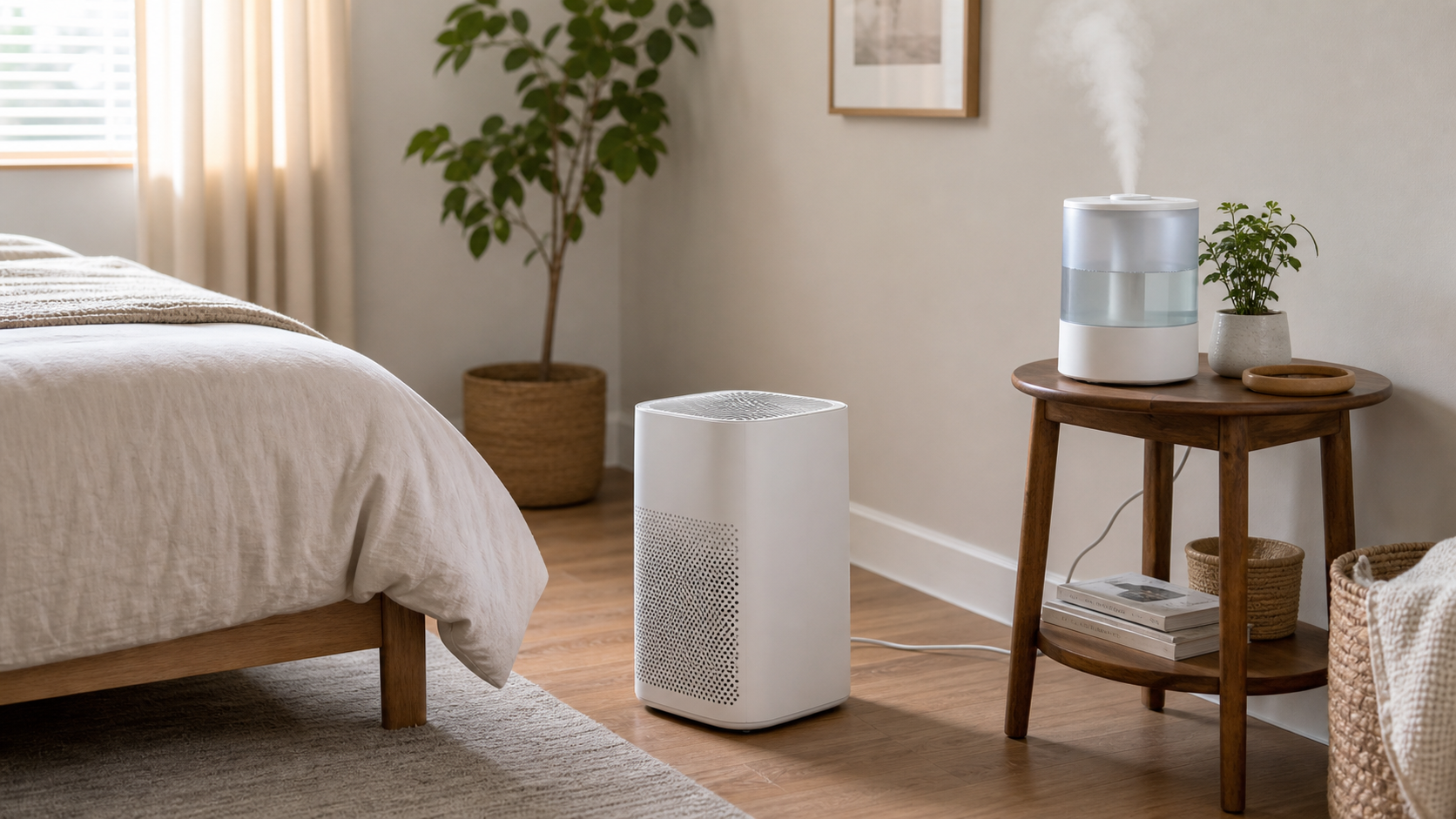
Compare the two product categories: Check room-size guidance, nighttime noise, ongoing supplies, and cleaning instructions before buying.
- Browse category: Quiet Bedroom Air PurifiersFor filtering airborne particles; expect filter replacement and fan noise.
- Browse category: Easy-Clean Bedroom HumidifiersFor adding moisture to dry air; expect frequent tank and base cleaning.
- Browse category: Bedroom Humidity MonitorsA simple way to check humidity trends before adding more moisture.
These are shopping starting points, not test winners. Confirm the manual, room sizing, placement clearances, consumable costs, return policy, and maintenance burden.
Quick Answer
Choose an air purifier when the problem is airborne particles, smoke that has already entered the room, or lingering odors and the selected filter is intended for that job. Choose a humidifier only when the room air is actually dry and you can monitor moisture, clean the water-contact parts, and keep nearby surfaces dry.
Neither machine diagnoses a health complaint, repairs moisture damage, removes an ongoing pollution source, or replaces ventilation where it is required. If symptoms persist, ask an appropriate qualified professional rather than buying both by default.
What an Air Purifier Does Best
An air purifier pulls room air through one or more filters. Particle filters are designed to capture airborne particles as air cycles through the unit. Carbon-based media may help with some odors or gases, but performance depends on the amount and type of media; a thin carbon sheet should not be treated as a cure for a strong or ongoing source.
Choose an air purifier if:
- Your practical goal is reducing airborne dust, pollen, pet dander, or smoke particles in the bedroom.
- You can place it with the intake and outlet clear instead of hiding it behind furniture.
- The manufacturer provides understandable room-size or clean-air delivery guidance.
- You can tolerate the fan setting needed at night and budget for replacement filters.
Skip or pause the purifier if:
- The real issue is dry air; filtration does not add moisture.
- The odor comes from an active leak, damp material, gas, combustion, pests, or another source that needs correction.
- You cannot leave airflow clearance or replace the correct filter on schedule.
- You expect a small bedroom unit to clean an open-plan home or solve poor ventilation.
What a Humidifier Does Best
A humidifier adds water vapor or mist to room air. That is useful only when the air needs more moisture. A small humidity monitor can provide better evidence than guessing from a dry feeling alone, which may have several causes.
Choose a humidifier if:
- You have checked that bedroom humidity is low rather than already moderate or high.
- The tank opening and base are easy enough for you to clean and dry routinely.
- Output is adjustable and the unit has automatic shutoff when empty.
- You have a stable, water-resistant placement away from bedding, walls, curtains, and electronics.
Skip or pause the humidifier if:
- Windows condense, surfaces feel damp, or the room has a musty odor or visible moisture problem.
- You will not empty, clean, rinse, and dry it as directed by its manufacturer.
- Mist lands on the wall, floor, furniture, books, or bedding.
- Children or pets make a warm-mist unit, hot water, or its cord hard to place safely.
Air Purifier vs Humidifier: Tradeoffs
| Decision point | Air purifier | Humidifier |
|---|---|---|
| Main job | Filters room air | Adds moisture to room air |
| Evidence to check | Particle or odor source; filter type; room-size guidance | Humidity reading; condensation; dampness |
| Ongoing upkeep | Vacuum or wipe exterior; replace filters as directed | Empty, clean, descale, rinse, and dry water-contact parts |
| Night concern | Fan sound and indicator lights | Operational sound, wet surfaces, and refill timing |
| Recurring cost | Replacement filters and electricity | Filters or wicks on some models, cleaning supplies, and electricity |
| Does not fix | Dry air, active sources, or ventilation defects | Particles, leaks, damp materials, or high humidity |
Setup and Maintenance Issues People Miss
Room sizing is not interchangeable
For a purifier, compare the maker's clean-air or room-size information at the speed you will really use. A large coverage claim at the loudest setting may be a poor bedroom fit. For a humidifier, compare output and tank capacity with the actual room; oversized output can wet nearby surfaces if it runs unchecked.
Placement affects both machines
Keep purifier intakes and outlets clear. Put a humidifier on a stable, water-resistant surface where mist disperses into open air and stays away from walls, fabrics, and electronics. Follow the product manual rather than placing either machine solely where it looks tidy.
The maintenance burdens are different
A purifier can become expensive or ineffective when the correct filter is hard to find. A humidifier can become unpleasant to maintain when the tank has a narrow neck, hidden channels, or a base that cannot dry. Before buying, read the care instructions and price the consumables.
Can You Use Both in One Bedroom?
Yes, if the room has two separate, verified problems and both machines can be maintained. Keep them apart so humidifier mist does not enter the purifier directly or dampen its filter. Monitor the room for condensation, follow both manuals, and stop adding moisture if surfaces become damp.
Using both is not automatically better. It doubles the floor or surface space, cords, noise, cleaning, and consumable decisions. Solve the clearer problem first, then reassess.
When Neither Is the Right Next Step
Skip the shopping decision when there is an active leak, recurring condensation, visible mold-like growth, a persistent musty or burning odor, a combustion concern, damaged building material, or a ventilation problem. Renters should report building or moisture issues to the property owner or manager. Homeowners should use an appropriate qualified professional when the source is unclear or safety-sensitive.
If the bedroom mainly feels hot or stagnant, a fan or ventilation check may fit better than either appliance. If the complaint is a health symptom, seek individualized medical guidance rather than treating an appliance category as a diagnosis or treatment.
Bottom Line
Pick the machine by its job. An air purifier filters room air and fits a particle-focused problem. A humidifier adds moisture and fits verified dry air. Measure the room, check the evidence, read the maintenance instructions, and skip either product when the source problem needs repair or professional attention instead.