Are Removable Hooks Worth It for Renters?
Removable hooks are worth it for lightweight, predictable items when the hook type matches a sound surface and a failure would be a minor inconvenience. Skip them for fragile, expensive, heavy, overhead, or frequently tugged items—and whenever the paint, lease, or removal instructions leave too much doubt.
As an Amazon Associate, The Good Home Doc may earn from qualifying purchases.
Compare the category after checking your surface: Browse category: Shop removable hooks for renters on Amazon.
This is a shopping starting point, not a tested ranking. Confirm the maker's approved surfaces, stated load, preparation and wait time, humidity limits, removal method, and replacement-strip availability.
This page answers the upstream question: whether any removable hook is a sensible solution for your item and rental. If the answer is yes, the removable-hook buying framework helps match adhesive, suction, magnetic, and over-door options to the job. For the wider lease-safe approach, use the renter-friendly upgrades pillar.
Quick Decision: Buy, Skip, Delay, Choose an Alternative, or Escalate
- Buy: you have a maker-approved, clean, sound surface; a light and predictable item; enough time to follow the preparation and wait instructions; and a low-consequence fall zone.
- Skip: the paint is peeling, chalky, damp, textured, freshly applied, or otherwise excluded by the instructions, or the item is heavy, breakable, valuable, overhead, or pulled during use.
- Delay: you have not checked the lease, identified the surface finish, weighed the item as it will actually be used, or found the original removal directions.
- Choose an alternative: use a magnetic hook on suitable steel, an over-door hook with adequate clearance, or freestanding storage when wall-finish risk matters more than a small footprint.
- Escalate: ask the landlord or property manager about damaged paint, wallpaper, tile, doors, disputed attachment rules, or a storage need that would require permanent hardware.
When Removable Hooks Earn Their Keep
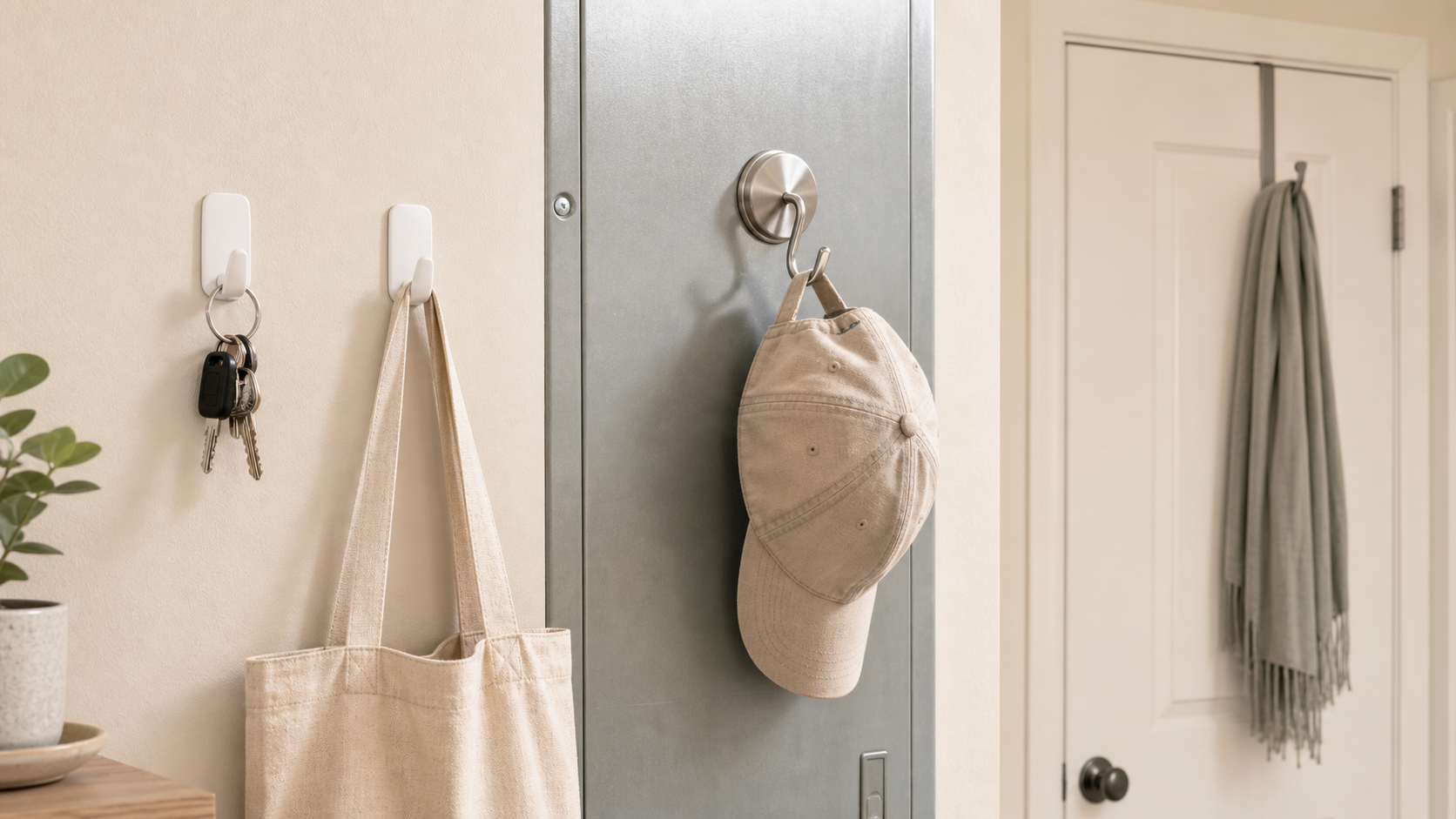
The category works best for keys, light hats, empty fabric totes, small accessories, and other stable loads. It can add storage without drilling, move with you, and cost less than a cabinet or rack. The strongest case is not “the package says removable.” It is a complete fit among the item, hook, surface, room conditions, and removal method.
Different formats solve different constraints. Adhesive hooks need a compatible finish and careful removal. Suction hooks need smooth, nonporous surfaces. Magnetic hooks need genuinely magnetic steel and can slide or scratch. Over-door hooks avoid wall adhesive but need door-top clearance and protected contact points. If you already know hooks fit the job, compare those formats in the renter removable-hook guide.
Five Criteria That Decide Whether They Are Worth Buying
- Surface condition: Sound, compatible material matters more than the advertised load. Loose paint, wallpaper, grout lines, porous stone, dusty texture, and damaged finishes are poor bets unless the maker explicitly approves them.
- Real working load: Count what happens after installation. A tote gets filled, a towel gets wet, a leash gets pulled, and a door moves. A static package limit does not describe every tug, swing, or impact.
- Consequence of failure: A dropped hat is different from broken glass, damaged electronics, a fallen mirror, or an object landing over a bed. Keep the fall zone boring.
- Room conditions: Humidity, heat, steam, splatter, direct sun, and temperature changes may make a seemingly suitable location harder on adhesive or suction.
- Exit plan: A removable setup is only useful if you can follow the exact release method later. Keep tabs accessible and save the instructions instead of assuming you will remember them at move-out.
Cost, Setup, and Maintenance Tradeoffs
Hooks are inexpensive one by one, but a row of specialty hooks, replacement strips, cleaning supplies, and failed attempts can approach the price of a simple over-door or freestanding organizer. Compare the total system, especially if the wall would need repair after a poor removal.
Setup is easy only when the surface is ready. Follow the current product directions for cleaning, drying, placement, pressure, and waiting before loading. Do not improvise with extra glue, double layers of strip, screws, or a different cleaner. A product that cannot be installed as directed is not the right product for that spot.
Maintenance is small but real. Check for sliding, lifting edges, stretched tabs, rust, loosened suction, door rubbing, or finish marks. Reassess after humid weather, a room change, or a heavier item replaces the original one. Replace consumable strips only with compatible replacements and remove a failing setup before it drops.
Red Flags
- The wall or door is already peeling, bubbling, soft, damp, cracked, or visibly damaged.
- The item will be loaded after hanging, pulled sideways, slammed with a door, or used by a child or pet.
- The hook would sit above a bed, crib, seat, glass surface, electronics, heater, cooking area, or busy walkway.
- The product does not clearly state compatible surfaces, preparation, wait time, load, and removal steps.
- The adhesive tab will be hidden behind furniture or trim when it is time to remove it.
- You are relying on a removable hook for a mirror, shelf, plant, cookware, loaded backpack, large wet towel, or anything safety-critical.
Who Should Skip Removable Hooks
Skip the category if you cannot tolerate even a small chance of paint or finish damage. That includes rentals with delicate wallpaper, unknown or weak paint, old plaster, specialty tile, unfinished wood, or a landlord rule that bars adhesives. Marketing language cannot override the actual surface or lease.
Also skip it when the storage problem is really a capacity problem. Several loaded bags, coats, cleaning tools, or pantry supplies need a stable system rather than more small hooks. An over-the-door organizer, a freestanding rack, or the small-entryway storage framework may handle the load with fewer failure points.
When to Choose an Alternative
Choose magnetic when a steel surface is available and minor sliding or finish contact can be managed. Choose over-door when the door closes freely with the hook installed and the contact surfaces are padded. The adhesive-versus-over-door comparison covers that narrower choice.
Choose freestanding storage for heavier, frequently handled, or growing collections. Ask about permanent hardware when reliability matters and the property owner may approve a correctly installed solution. Delay when the real issue is water damage, failing paint, or a damaged door that should be addressed before anything is attached.
Bottom Line
Removable hooks are worth it for renters when the load is light, the surface is explicitly compatible and sound, setup directions are practical, and a fall would cause little harm. Buy after checking the whole use case, not just the weight number. Skip fragile or questionable surfaces, move to freestanding or over-door storage for larger needs, and involve the property manager when attachment rules or existing damage are unclear.