Best Adhesive Shower Shelves for Renters
An adhesive shower shelf is useful only when its mounting system matches the wall, its basket drains, and its loaded weight stays within the maker's instructions. Renters also need a removal plan: “no drill” does not automatically mean damage-free.
As an Amazon Associate, The Good Home Doc may earn from qualifying purchases.
Product-category guide
Compare removable shower storage
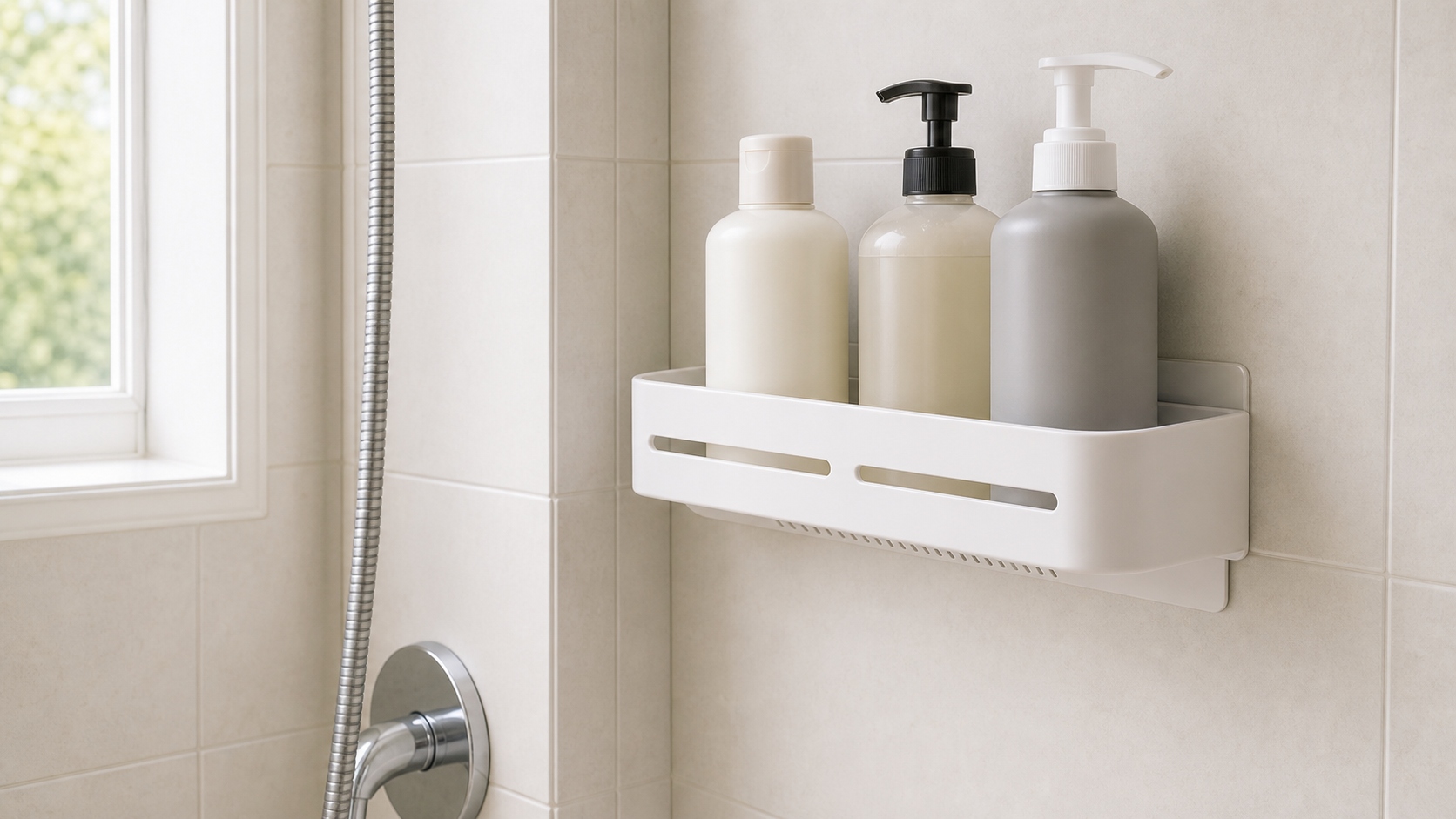
Compare open-wire adhesive baskets, corner shelves, and suction-mounted caddies, then check the maker's approved surfaces, loaded-weight limit, cure time, and removal directions.
This is a category-fit guide, not a tested product ranking. Packaging claims cannot tell you whether a shelf suits your particular tile, grout layout, wall panel, bottle load, or lease. Start with the renter-friendly home upgrades guide if you are comparing several no-drill storage approaches.
Quick Picks by Shower Setup
- Best for smooth glazed tile: an open-wire shelf with a replaceable adhesive mounting plate explicitly approved for that surface.
- Best for a tiled corner: a corner basket whose adhesive pads land fully on tile rather than bridging grout lines.
- Best for frequent moves: a reusable suction shelf, but only on a smooth nonporous surface that holds suction reliably.
- Best for tall pump bottles: a deep basket with a raised front rail, generous vertical clearance, and a load rating that includes full bottles.
- Best when adhesive is prohibited: a showerhead caddy or tension-pole system that fits without stressing plumbing or damaging the tub and ceiling.
Check the Wall Surface Before Shopping
Adhesive plates generally need a smooth, clean, dry, nonporous surface. Small mosaic tile, deep grout lines, textured tile, peeling coatings, wallpaper, porous stone, and uneven fiberglass can prevent full contact. Do not assume an adhesive labeled for “tile” works on every tile finish; follow the exact surface list and preparation directions.
Place the complete mounting pad on one flat plane. A pad that crosses a grout joint has less contact and may allow water behind it. If the shower wall is cracked, loose, persistently damp behind the finish, or already damaged, storage is not the first problem to solve. Renters should document and report defects rather than covering them.
Comparison Framework
Adhesive Open-Wire Baskets
Wire baskets drain quickly and make bottle labels easy to see. They suit smooth tile when the mounting plate has full contact and the finish tolerates routine wetting.
Choose them when: you store several bottles and want less standing water around them.
Watch for: coating chips, welds that trap residue, narrow wire spacing, oversized adhesive plates, and mounting hardware that cannot be replaced.
Adhesive Solid Shelves
Solid plastic or composite shelves can feel gentler around tubs and are easy to wipe, but they need effective drain slots and enough slope or ventilation to avoid puddles.
Choose them when: small items would tip through wire and the shelf can be removed for cleaning.
Watch for: shallow lips, blocked drains, soap buildup beneath bottles, and plastic parts that flex under a full load.
Suction-Mounted Caddies
Suction mounts can be repositioned and may leave less residue. Their hold depends heavily on a very smooth surface, a clean seal, and regular checks.
Choose them when: the wall is glass or smooth glossy tile and you can tolerate occasional reseating.
Watch for: slow seal loss, placement over grout, textured panels, and damage from a falling loaded basket.
Showerhead and Tension-Pole Storage
These are alternatives when adhesive is unsuitable. A showerhead caddy must not strain a fixture or interfere with controls; a tension pole needs secure, compatible top and bottom surfaces.
Choose them when: the lease or wall finish rules out adhesive and the product fits the shower geometry.
Watch for: sway, overloaded plumbing, ceiling marks, blocked controls, and shelves that narrow the standing area.
Must-Have Features
- Explicit surface compatibility: The instructions should name the wall finishes the mount can and cannot use.
- A realistic loaded-weight limit: Count full shampoo, conditioner, and soap bottles—not empty containers.
- Open drainage: Water should leave the basket readily, with enough access to clean underneath.
- Corrosion-resistant construction: Stainless steel grade, coated metal care, or suitable plastic should be clearly described without assuming “rustproof” means maintenance-free.
- A contained front edge: Bottles should not slide off when a pump is pressed.
- Clear removal instructions: Renters need a documented way to release the mount without prying blindly at the wall.
Nice-to-Have Features
- Replaceable mounting plates: Useful after a move or when the basket outlasts the adhesive.
- Removable basket: Makes cleaning the wall, mounts, and shelf easier.
- Adjustable hooks: Handy for razors or cloths if they do not crowd bottles or create sharp projections.
- Wide bottle spacing: Helps pump bottles sit flat instead of rocking on narrow wires.
- Rounded corners: More comfortable in a tight shower where shoulders and elbows pass close to storage.
Installation and Cure Time Matter
Clean and dry the wall exactly as directed. Avoid substituting cleaners that leave residue, and do not shorten the stated cure time before loading the shelf or running the shower. Press the complete pad as instructed; extra tape, caulk, or improvised fasteners can make removal harder and may not improve the rated hold.
Keep mounts away from grout joints and direct spray when the instructions require it. After loading, check for lifting edges, sliding, rust spots, or movement. Remove weight immediately if the mount starts to release. Never place glass, sharp tools, or other hazardous items where a falling shelf could cause injury.
Renter and Removal Checks
Read the lease and ask the property manager if adhesive fixtures are restricted. Even removable adhesives can lift paint, coatings, sealers, or damaged tile finishes. Keep the packaging and removal instructions, and photograph the wall before installation if condition documentation is useful.
At move-out, unload the shelf and use only the stated removal method. Do not force a scraper behind tile, apply unapproved solvents, or use heat near plastic wall panels without specific manufacturer guidance. If the mount will not release normally, stop before turning a small storage choice into wall damage.
Who Should Skip Adhesive Shower Shelves
Skip this category if the wall is textured, porous, cracked, loose, heavily grouted, or excluded by the product instructions. It is also a poor fit when the only mounting spot would put the shelf above a child's head, block a grab bar or control, narrow a small shower, or hold more weight than the mount permits.
Choose a stable floor caddy, approved showerhead caddy, tension-pole organizer, or storage outside the wet area instead. If you need to store many bulk bottles, reducing the shower load or using refillable bathroom-safe containers as directed may be more reliable than adding another adhesive shelf.
A Practical Buying Checklist
- Identify the exact wall material and find a flat mounting area without grout beneath the pad.
- Measure the available width, corner angle, bottle height, and clearance from controls and doors.
- Estimate the weight of every product when full and stay within the maker's loaded limit.
- Confirm drainage, corrosion care, cure time, replacement-adhesive availability, and removal steps.
- Check lease rules before mounting and keep plumbing controls and accessibility features unobstructed.
Bottom Line
For most renters with smooth glazed tile, the best adhesive shower shelf is an open, draining basket with a mounting plate approved for that exact surface, enough capacity for full bottles, and clear removal instructions. If the surface or lease does not support adhesive, choose a genuinely compatible alternative instead of trusting a “damage-free” label.