Best Closet Dehumidifiers and Moisture Absorbers for Renters
A closet that feels a little clammy needs a different solution from a room with an active leak. For most renters, the best closet moisture control is a passive absorber or rechargeable desiccant that fits safely among stored items, is easy to check, and does not require permanent installation. Small electric units make sense only when the closet has a suitable outlet, airflow, and a genuinely recurring humidity problem.
As an Amazon Associate, The Good Home Doc may earn from qualifying purchases.
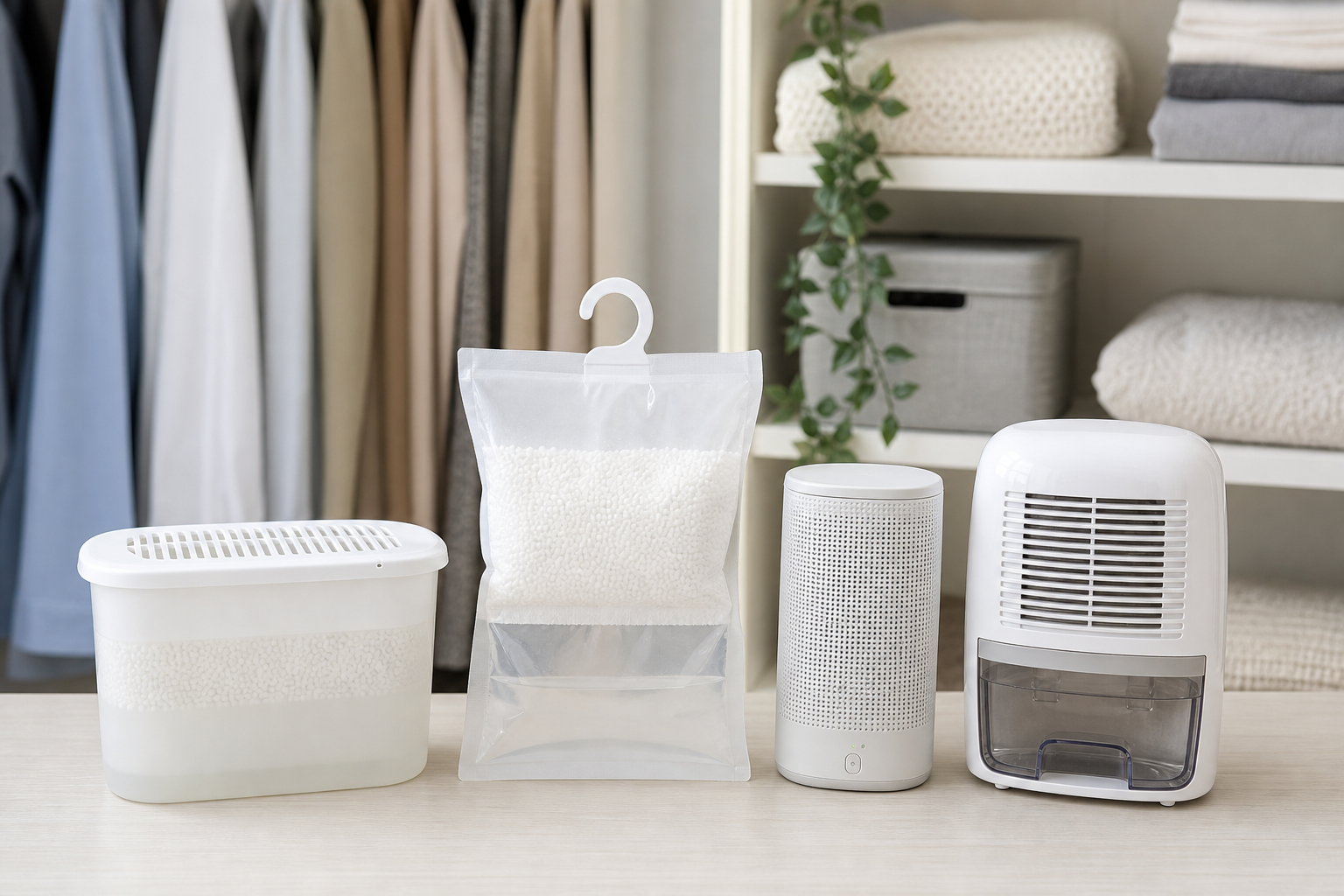
Product-category guide
Compare the right format first
Match the product to the closet size, where it can sit safely, and how often you will check or recharge it. These are shopping starting points, not tested rankings.
This guide covers mild closet humidity and product fit; it does not diagnose mold or building moisture. If you see wet materials, spreading stains, soft drywall, peeling finishes, or recurring musty odor, document the issue and contact the landlord or property manager instead of trying to conceal it with an absorber.
Quick Picks by Closet Situation
- Best for a small reach-in closet: a stable, fragrance-free absorber tub on a clear shelf or tray where it cannot be kicked or tipped.
- Best when shelf space is scarce: a hanging absorber bag with a sturdy hook, visible collection chamber, and enough clearance from clothes.
- Best for avoiding recurring refills: a rechargeable desiccant unit, provided you will remove and recharge it on schedule.
- Best for a larger walk-in closet: a compact electric dehumidifier only if its stated operating conditions, airflow clearance, outlet access, and tank routine all fit.
- Best first purchase when you are unsure: a basic digital humidity monitor to check whether the closet is persistently humid or merely feels stale.
Selection Criteria That Matter
Start with the source. A closet beside a steamy bathroom, against a cold exterior wall, or packed with damp shoes may need better habits or airflow. A closet below a plumbing line or showing water marks needs investigation, not a stronger absorber.
Measure usable space. Record shelf depth and height, hanging-rod clearance, floor area, and the distance from clothes. Electric units also need room around their intake and exhaust plus space to remove the tank.
Plan for spills. Disposable salt-based absorbers can collect liquid. Choose a stable base, keep the unit below rather than above valuable items, and consider a shallow washable tray. Do not place one where children or pets can reach it.
Count the upkeep. Compare replacement frequency, refill availability, recharge time, tank emptying, filter cleaning, and energy use. The cheapest unit is poor value if it is inconvenient enough to be ignored.
Avoid unnecessary fragrance. Scent can mask an odor without addressing its cause and may bother fragrance-sensitive households. An unscented format makes it easier to notice whether the original smell returns.
Comparison Framework
Moisture-Absorber Tubs
Tubs use moisture-attracting material that gradually collects liquid in a lower chamber. They need no outlet and work quietly, which makes them a straightforward fit for mild seasonal dampness in small closets.
Choose one when: you have a stable shelf or floor corner, can inspect it regularly, and want the simplest low-commitment option.
Watch for: tipping, collected liquid, refill costs, fragrance, and placement above shoes, linens, or valuables. Follow the maker's disposal instructions.
Hanging Absorber Bags
Hanging bags save shelf space and make the collection chamber easy to see. They are useful in narrow wardrobes, but the hook and seams carry the load as liquid accumulates.
Choose one when: the closet has sturdy hanging space and the bag can hang freely without rubbing against clothes.
Watch for: punctures, weak hooks, crowded garments, curious pets, and a bag hanging above anything that would be damaged by a leak.
Rechargeable Desiccant Units
Rechargeable desiccants absorb moisture without collecting a tub of liquid. Once saturated, the unit is removed and plugged in to dry the material for reuse. This can reduce disposable refills.
Choose one when: the closet is small, moisture is mild, and a visible indicator will remind you to recharge it.
Watch for: limited capacity, slow results, unclear saturation indicators, recharge time, and heat during regeneration. Recharge it outside the packed closet exactly as directed.
Compact Electric Dehumidifiers
A small electric unit actively condenses water into a tank. It may suit a roomy walk-in closet, but tiny units are often oversold for spaces they cannot manage, especially in cooler conditions.
Choose one when: measured humidity stays elevated, the manufacturer allows the planned setting, and there is an accessible outlet with safe airflow around the unit.
Watch for: blocked vents, heat, noise, cords, small tanks, energy use, cleaning, and extension cords pinched beneath a door. For stronger room-scale moisture removal, use the separate compact dehumidifier comparison.
Must-Haves vs Nice-to-Haves
Must-have features
- Clear capacity or replacement guidance: You need to know when the product is spent, full, or ready to recharge.
- Stable placement: Tubs need a broad base; hanging bags need a dependable hook; electric units need a level surface.
- Visible status: A transparent collection chamber, saturation window, or full-tank light makes maintenance harder to miss.
- Instructions for use and disposal: Skip products that do not explain handling, recharge, refill, or disposal.
- Fragrance choice: Prefer an unscented option when sensitivities or unexplained odors are concerns.
Nice-to-have features
- Refillable housing: May reduce plastic waste if compatible refills remain easy to buy.
- A spill-resistant cover: Helpful for tubs, though it does not make careless placement safe.
- A washable catch tray: Adds protection beneath passive products.
- Auto shutoff: Essential in practice for electric models with tanks, even if marketed as an extra.
Setup and Maintenance for Renters
First, empty the closet enough to see walls, baseboards, ceiling, and flooring. Do not put an absorber in front of a stain and forget it. Let damp shoes and towels dry before storage, leave a little air space around tightly packed clothes, and avoid pushing cardboard boxes against a cold or damp-feeling wall.
Put passive tubs on a level, easy-to-see surface, ideally in a washable tray. Hang bags where they cannot touch fabric or swing into the closet door. Mark a calendar check rather than waiting for odor to remind you. Clean any collected dust around electric vents and empty tanks as the manufacturer directs.
Do not drill, add permanent ventilation, or alter doors without permission. Do not route an extension cord under rugs, through a pinched door, or through a walkway. If the closet has no suitable outlet, use a passive option or address airflow and storage habits instead.
Who Should Skip These Products
Skip closet absorbers and mini dehumidifiers as a supposed fix when there is active water, suspected mold, repeated staining, damaged finishes, swollen wood, wet carpet, soft drywall, or a persistent odor that returns quickly. Renters should photograph and report those conditions. Homeowners should have the source assessed by the appropriate qualified professional.
Also skip passive absorbers where a child or pet could open, tip, or chew them. Skip hanging bags above valuable clothing. Skip electric units in tightly packed closets that cannot meet the product's clearance instructions. And skip the entire category if occasional stale air improves simply by drying items before storage and giving the closet more airflow.
Bottom Line
For most renter closets with mild humidity, start with an unscented absorber tub or hanging bag placed where it is visible and unlikely to spill. Choose a rechargeable desiccant if you prefer reuse and can keep up with recharging. Reserve electric units for larger closets with verified humidity, proper outlet access, and adequate clearance. No closet product should be used to hide a leak, damage, or recurring musty condition from a landlord or qualified professional.