Best Command Center Organizers for Family Entryways
A family command center should shorten the trip from “Where are my keys?” to out the door. The best format is the smallest organizer that gives each recurring item a clear landing spot without turning the entryway wall into a second junk drawer.
As an Amazon Associate, The Good Home Doc may earn from qualifying purchases.
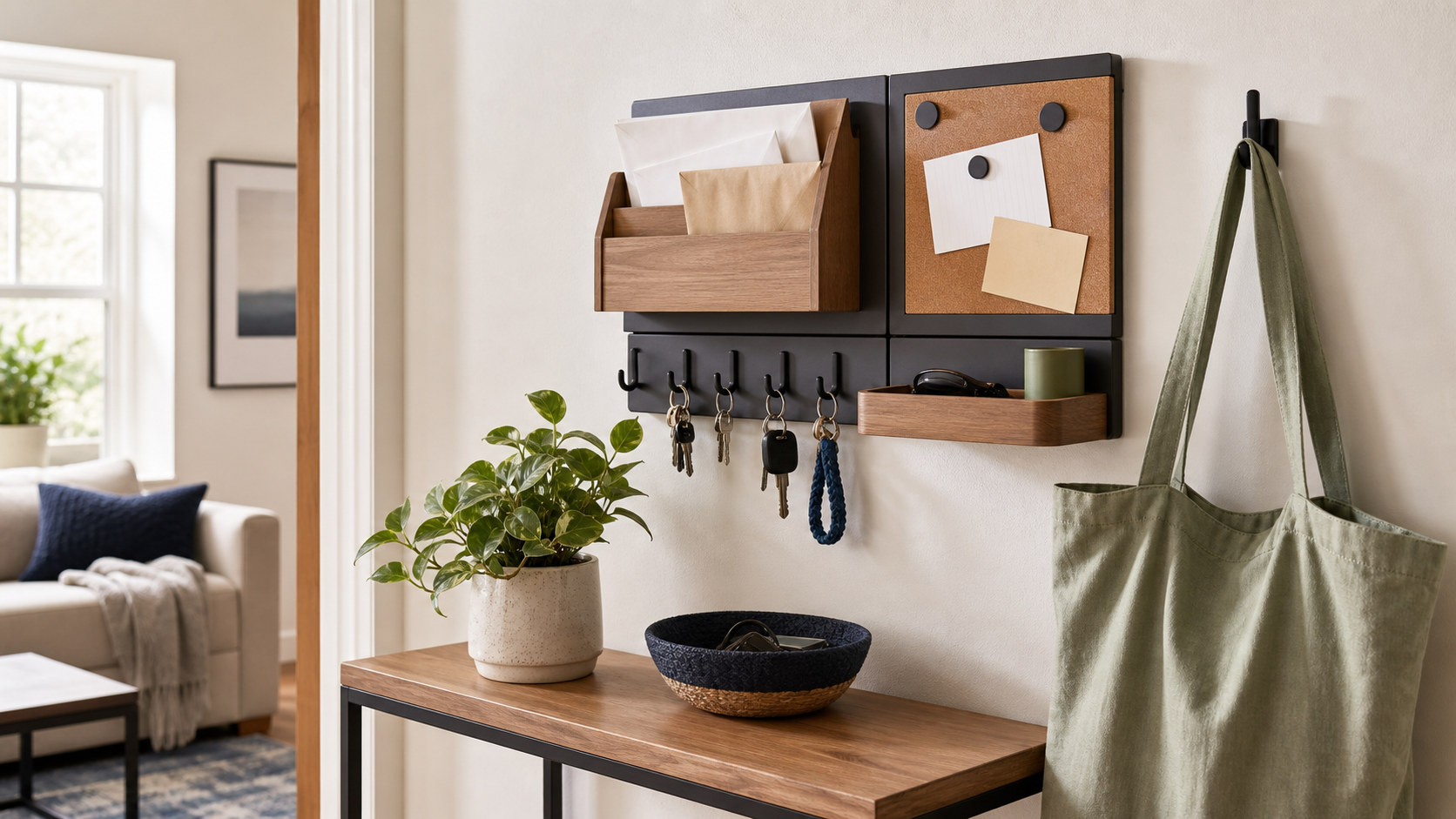
Product-category guide
Match the organizer to the handoff routine
Start with what repeatedly enters and leaves the home: keys, mail, school papers, bags, or a short reminder. Compare only organizers with enough capacity for those items and mounting instructions that fit your wall and lease.
This is a category-fit guide, not a hands-on test or a brand ranking. Check the current listing for dimensions, included hardware, load limits, surface instructions, and replacement-part availability. No organizer should cover an electrical panel, thermostat, alarm, vent, door hardware, or required exit signage.
Quick Picks by Household Routine
- Best for keys and daily mail: a shallow mail pocket with clearly separated key hooks and no unnecessary writing surface.
- Best for school papers: a two- or three-slot sorter with open tops, label space, and compartments deep enough for folders without hiding them.
- Best for changing schedules: a compact dry-erase, magnetic, or cork board paired with a separate tray for pens and small items.
- Best for renters: a lightweight tabletop or over-the-door setup, or a wall unit explicitly compatible with an approved removable mounting method.
- Best for very narrow entries: a rail with hooks plus one slim wall pocket, kept out of the door swing and walking line.
Selection Criteria That Matter
Begin with the routine, not the feature count. List the three to five things that cause the most morning friction. An organizer with a calendar, chalkboard, cork panel, basket, six hooks, and a phone shelf is not better if the household needs only keys and outgoing mail.
- Usable mail depth: A pocket should hold the household's normal envelopes or folders without bending them or swallowing small items.
- Hook spacing: Bulky key rings need room to hang without tangling. Keep keys beyond the reach of toddlers and away from a window beside the door.
- Reach height: Adults need comfortable access, while children may need a separate low hook for a backpack or visual reminder. Do not place heavy or sharp items above a child.
- Mounting match: Product weight, loaded weight, wall material, stud position, hardware, and lease terms all matter. “No-drill” does not automatically mean damage-free.
- Easy reset: Open pockets and trays should be simple to empty and wipe. Deep bins encourage forgotten paper and clutter.
- Traffic clearance: The organizer and hanging items must stay clear of the door swing, lock, light switches, handrails, and walking path.
Comparison Framework
Mail Sorter with Key Hooks
This is the strongest fit when incoming paper and missing keys are the main problems. A compact one- or two-pocket version is usually easier to maintain than a large office-style sorter.
Choose it if: the household can process mail on a set schedule and every regular key ring fits its own hook.
Watch out for: shallow slots, hooks directly below overflowing paper, sharp corners, and open placement that makes keys visible from outside.
Memo Board with a Small Shelf
A dry-erase, magnetic, or cork surface works for reminders that change frequently. It is useful only if someone reliably clears old notes and stores the marker or pins safely.
Choose it if: schedule handoffs are the real bottleneck and the family already checks one shared physical spot.
Watch out for: unreadable visual clutter, loose magnets or pushpins around young children, marker stains, and a shelf that projects into a narrow path.
Modular Rail and Add-On Bins
A rail lets a household combine hooks, cups, and pockets in the order the entry requires. It can adapt as routines change, but only within the maker's compatible system and load guidance.
Choose it if: wall width is available and you need a deliberate mix of bag hooks and small-item storage.
Watch out for: proprietary accessories, total loaded weight, snagging bags, and a growing system that becomes wider and busier than planned.
Tabletop Catchall
A divided tray or small desktop sorter is the lowest-commitment option. It suits renters and households that already have a stable console away from the door swing.
Choose it if: the main problem is keys, wallets, and outgoing items rather than backpacks or several days of paper.
Watch out for: an easy-to-tip tray, a surface that becomes a dumping ground, and small objects accessible to children or pets.
Over-the-Door Organizer
This preserves wall surfaces but moves storage onto the door. It is a niche solution because hooks and pockets can interfere with closure, seals, trim, or door hardware.
Choose it if: the door manufacturer, building rules, and measured clearances allow it and the organizer stays stable during use.
Watch out for: rattling, scratched trim, thick top brackets, pinched fingers, and anything that prevents the door from closing and latching normally.
Measure Before You Shop
- Map the full door swing, trim, switches, vents, controls, and walking path.
- Mark the proposed organizer width, height, and projection with painter's tape.
- Measure a normal folder, the bulkiest key ring, and any bag the setup must hold.
- Choose a comfortable adult reach point and, if needed, a separate child-height zone that does not put heavy items overhead.
- Add the expected loaded weight, then follow the organizer and fastener instructions for the actual wall material. Ask the landlord before drilling or using adhesive.
If the wall is too constrained, do not squeeze the full system beside the door. A console tray several steps into the home or a measured piece from our small-entry shoe storage guide may create a calmer handoff point.
Must-Haves vs Nice-to-Haves
Must-Haves
- Enough capacity for one normal cycle of mail or school papers, not indefinite storage.
- Hooks, pockets, and edges that do not snag clothing or bags in the walking line.
- Mounting hardware and instructions appropriate for the wall and loaded weight.
- A layout every household member can understand without adding a complicated filing system.
- Surfaces that can be emptied and wiped without removing the entire organizer.
Nice-to-Haves
- Removable labels for changing paper categories.
- A dedicated outgoing-mail slot that is visually different from incoming paper.
- A shallow marker ledge or closed cup positioned away from young children.
- Modular hooks that can be spaced for different key rings or light accessories.
Keep It from Becoming a Clutter Display
Give every compartment a capacity limit. One slot can hold action-needed paper, another can hold outgoing items, and everything else should move to recycling or longer-term filing. A quick weekly reset is more useful than another pocket.
Keep private information out of direct view from the doorway or windows. Avoid displaying addresses, schedules, school details, access codes, or identifying documents. Store spare house and vehicle keys somewhere less visible and more secure than an open entry hook.
Who Should Skip a Command Center
Skip a wall command center if the entry has no location clear of the door, controls, and walking path; if lease restrictions rule out a reliable mounting method; or if the household does not process paper often enough to keep open pockets under control. A small drawer, lidded box, or tabletop tray may be safer and calmer.
Also skip an all-in-one organizer when household members need different drop zones. A low backpack hook near a child's routine, secure key storage farther inside, and a mail tray near recycling may work better than forcing every handoff onto one crowded wall.
Bottom Line
For most family entryways, the best command center is a shallow mail organizer with well-spaced key hooks and only one small reminder surface. Choose capacity around a real weekly routine, measure the loaded setup, protect privacy, and keep it out of the door and walking path. If mounting or clutter is likely to be a problem, use a divided tabletop tray instead.