Best Over-the-Toilet Storage for Small Bathrooms
Over-the-toilet storage can turn otherwise unused wall space into a practical home for towels, toilet paper, and daily toiletries. The right unit clears the tank and lid, stays stable, tolerates bathroom humidity, and still lets you clean behind the toilet.
As an Amazon Associate, The Good Home Doc may earn from qualifying purchases.
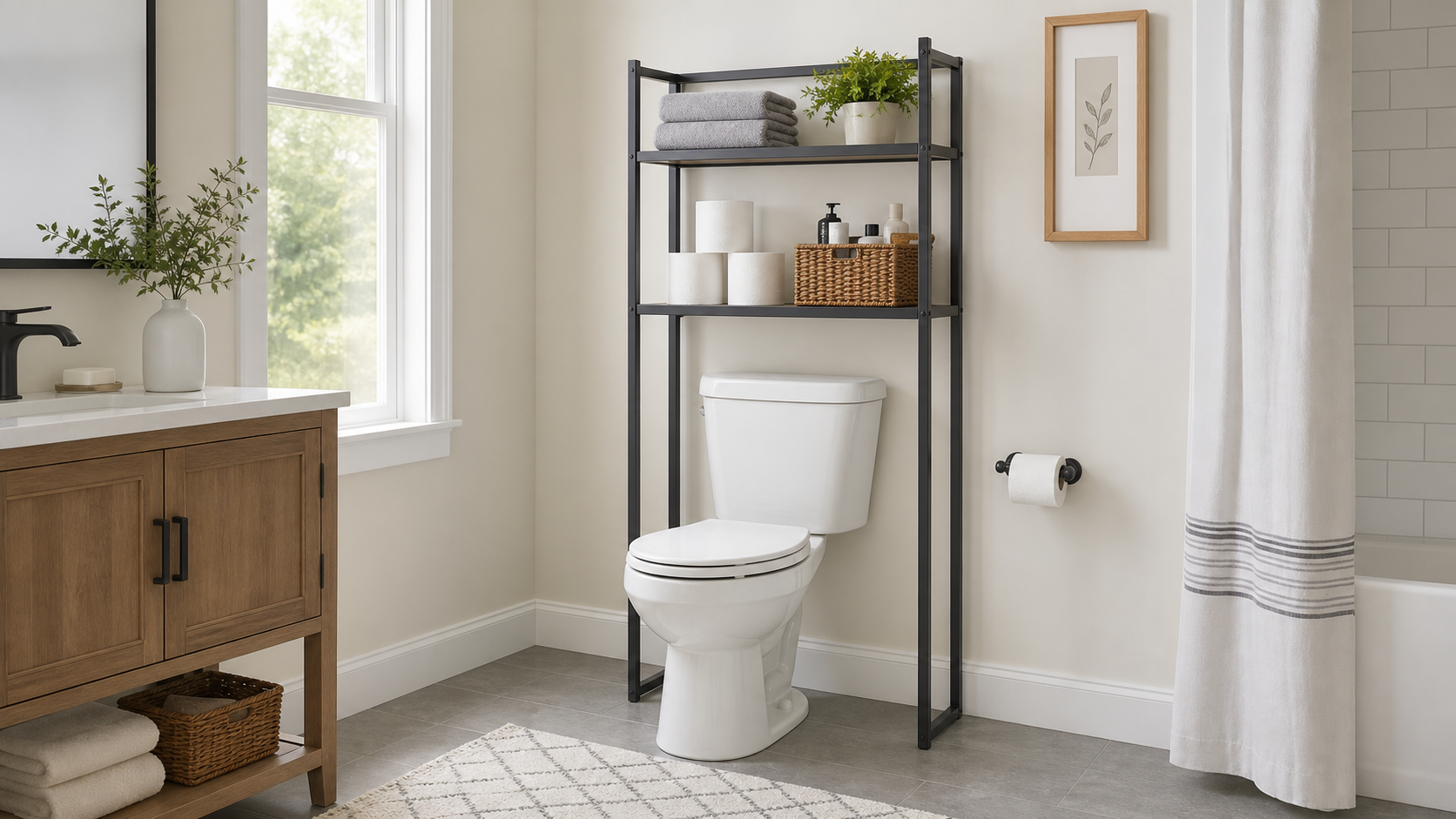
Product-category guide
Compare over-the-toilet storage
Use the shopping route to compare freestanding shelves and cabinets, then verify toilet clearance, baseboard fit, anti-tip requirements, and material care.
This is a best-fit category comparison, not a tested product ranking. The goal is to help you choose a storage style that fits the toilet, room, household, and lease. For a broader storage plan, start with the small-home organization systems guide. Renters should also review the renter-friendly upgrades guide before buying anything that requires anchoring.
Quick Picks by Bathroom Problem
- Best for most renters: a low-profile freestanding unit with adjustable feet, open shelves, and an anchoring method allowed by the lease.
- Best for hiding backup supplies: a cabinet with doors that open without hitting a wall, mirror, or shower enclosure.
- Best for daily towels: open shelves with enough depth for folded towels and enough vertical space to remove them easily.
- Best for an irregular toilet area: a narrow leaning ladder shelf only when its feet sit securely and its design is approved for that use.
- Best when floor space is too tight: a properly mounted wall cabinet installed according to the maker's directions and the wall type—not a squeezed-in floor unit.
Measure the Toilet and Wall First
Measure the toilet at its widest point, including the tank lid, supply line, shutoff valve, flush handle, and any bidet attachment. Then measure from the floor to the top of the tank and from the wall to the front of the tank. Compare those numbers with the unit's inside width, lower crossbar height, and leg depth.
Leave working room. The tank lid should lift off without dismantling the shelf, the shutoff should remain reachable, and a plumber should not have to fight through stored products during service. Check baseboards too: rear legs that cannot sit flush may push the whole unit forward and make it less stable.
Comparison Framework
Freestanding Open Shelves
Open shelf units are easy to see and usually simple to stock. They work for towels, baskets, and toilet paper, and their lack of doors helps a very small bathroom feel less boxed in.
Choose them when: quick access matters and you can keep the shelves reasonably uncluttered.
Watch for: wobble, fixed crossbars that hit the tank, shelves too shallow for towels, and small items that can fall behind the toilet.
Freestanding Cabinets
Cabinet doors hide visual clutter and help protect spare paper goods from splashes. They suit households that keep backup toiletries in the bathroom but do not want every package visible.
Choose them when: there is enough room for the doors to open fully and the cabinet interior matches what you store.
Watch for: heavy upper sections, swollen composite wood edges, awkward knobs, and doors that collide with lights, mirrors, or shower doors.
Ladder and Wall-Leaning Shelves
Ladder-style storage looks light and can fit tight rooms, but the angle uses more floor depth than product photos suggest. Some models are decorative shelves rather than stable bathroom organizers.
Choose them when: the floor is level, the wall position works, and the maker permits the intended setup.
Watch for: slippery tile, feet that interfere with the toilet base, shallow top shelves, and required wall attachment.
Wall-Mounted Cabinets and Shelves
Mounted storage keeps the floor clear and simplifies cleaning, but installation quality matters. The fasteners must suit the wall and the loaded unit, and hidden plumbing or wiring can make a planned location inappropriate.
Choose them when: you have permission, know the wall construction, and can follow the manufacturer's mounting directions.
Watch for: relying on drywall anchors that are not rated for the actual load, drilling without checking the wall, and mounting items where they are hard to reach safely.
Must-Have Features
- Verified tank clearance: Include the lid, handle, valves, hoses, and accessories—not only toilet width.
- Stable construction: Look for a broad base, adjustable feet where useful, solid connections, and clear anti-tip directions.
- Moisture-tolerant finish: Powder-coated metal, sealed wood, and wipeable surfaces are easier to maintain in a humid room.
- Usable shelf spacing: Towels and tall bottles need removal space above them, not just enough height to sit still.
- Cleaning access: You should be able to wipe the floor, toilet exterior, legs, and lower crossbars without unloading the room.
- Reachable storage: Frequently used items belong within comfortable reach; high shelves are for light backup goods.
Nice-to-Have Features
- Adjustable shelves: Helpful when towel stacks and bottles need different clearances.
- Raised shelf edges: Can keep small baskets from sliding, provided the edge does not make towels hard to remove.
- Ventilated or slatted shelves: Useful around fully dry towels, though ventilation does not solve persistent bathroom dampness.
- Concealed lower crossbar: A unit is easier to fit when braces sit behind or above the toilet tank instead of across it.
- Replaceable feet or floor pads: Useful for leveling and reducing floor scuffs; verify that the material suits your flooring.
Stability, Anchoring, and Renter Limits
A tall, narrow unit can become top-heavy, especially when doors are opened or heavy bottles sit high. Follow the manufacturer's anti-tip and anchoring instructions. Do not assume the toilet will brace a shelf, and do not improvise by tying a unit to plumbing.
Renters should check the lease or ask the property manager before drilling. If required anchoring is not permitted, choose a different product whose safe setup works within the lease; skipping the anchor is not a renter-friendly workaround. Keep the shutoff valve and supply line visible and reachable.
What Belongs Above a Toilet
Good candidates include folded hand towels, toilet paper, light baskets of backup toiletries, and cleaning cloths stored as their labels direct. Keep items contained so they cannot easily fall into the toilet or onto someone using it.
Avoid heavy glass containers, overloaded bulk packages, and anything that would be hazardous if dropped. Store medicines according to their labels; bathroom heat and humidity make many bathroom cabinets a poor location. Keep cleaning products in original containers and secured away from children and pets.
Humidity and Maintenance
Wipe condensation and splashes promptly, run available ventilation, and let towels dry before folding them onto a shelf. Check metal joints for corrosion and composite wood edges for swelling or peeling. Retighten approved fasteners as the manufacturer directs, especially after moving the unit for cleaning.
Musty odors, recurring wetness, visible growth, or water staining are not storage problems. Do not hide them behind a cabinet. Renters should document and report the condition; homeowners should investigate the moisture source and use qualified help when appropriate.
Who Should Skip Over-the-Toilet Storage
Skip this category if the unit would block the shutoff, prevent tank-lid removal, crowd the toilet, or require anchoring you cannot complete. It is also a poor choice for anyone who cannot safely reach the shelves or who tends to overload open storage.
A narrow rolling cart, vanity-door organizer, recessed shelf, or small wall shelf elsewhere may work better. If the bathroom already feels visually busy, reducing what is stored there can be more useful than adding another tall piece of furniture.
A Practical Setup Checklist
- Measure toilet width, tank height, wall width, baseboards, and the route needed to assemble the unit.
- Confirm access to the flush handle, tank lid, shutoff valve, supply line, outlet, and ventilation.
- Check the manufacturer's anchoring, wall, load, and bathroom-use instructions before buying.
- Put light backup goods high and daily items at a comfortable reaching height.
- Leave open space around the floor and toilet so routine cleaning remains realistic.
Bottom Line
For most small bathrooms, the best over-the-toilet storage is a stable freestanding unit with verified tank clearance, wipeable materials, and shelves that fit the items you actually use. Choose open shelves for quick access or a cabinet for visual calm, but never trade away plumbing access, safe anchoring, or easy cleaning just to gain one more shelf.