Best Portable Blackout Shades for Travel and Rentals
The best portable blackout shade covers beyond the visible glass, attaches without relying on unknown walls, and packs down without becoming a daily folding project. Suction-cup panels suit smooth glass, hook-and-loop panels offer flexible sizing when a removable attachment is acceptable, and static-cling sheets are compact but usually less forgiving around gaps.
As an Amazon Associate, The Good Home Doc may earn from qualifying purchases.
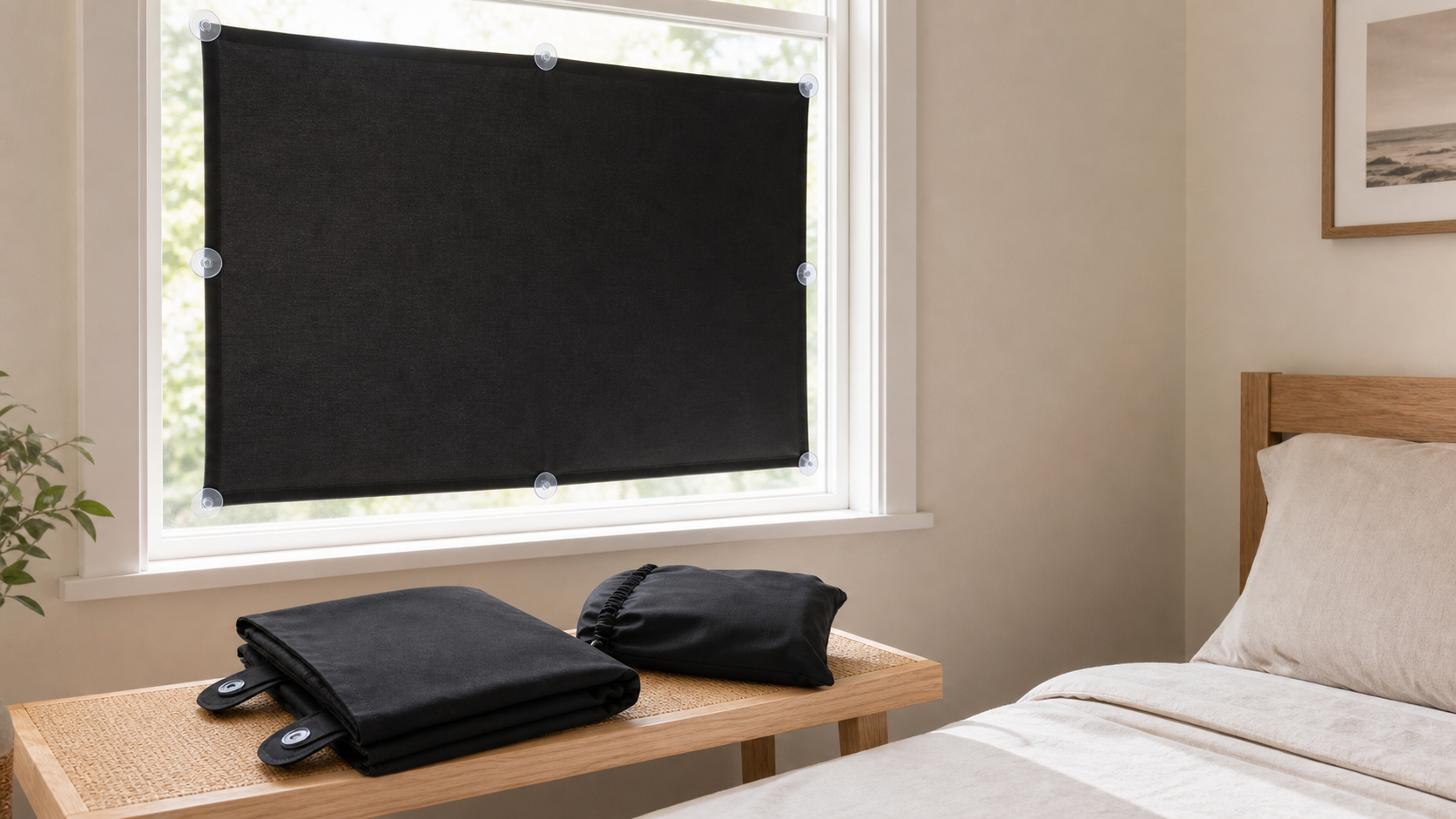
Compare the attachment and coverage first: These affiliate category links are shopping starting points, not tested rankings.
- Browse category: Suction-cup portable blackout shadesBest starting point for smooth glass when quick installation and removal matter.
- Browse category: Hook-and-loop travel blackout panelsWorth comparing when adjustable coverage matters and the attachment surface is approved.
- Browse category: Removable static-cling blackout sheetsCompact for repeated glass-only use, but measure carefully and check glazing restrictions.
Check the maker’s exact panel dimensions, attachment method, glass and surface restrictions, care directions, and heat warnings. “Blackout” does not guarantee a gap-free fit on every window.
This guide compares portable panel formats by fit and setup rather than ranking unverified brands. The key distinction from ordinary blackout curtains is repetition: a travel shade should go up, come down, and fit in luggage or a rental closet without permanent hardware. For a shade you plan to leave up for months, a properly measured curtain or landlord-approved blind may be simpler.
Quick Picks by Situation
- Best for most hotel or rental windows: an oversized fabric panel with several adjustable suction cups and enough overlap to cover the bright perimeter.
- Best for irregular window sizes: a foldable hook-and-loop panel with attachment points that let you shorten or overlap the fabric.
- Best for the smallest packed size: a static-cling blackout sheet made for compatible smooth glass, if careful application is realistic.
- Best for frequent daytime removal: a fabric suction-cup panel with a simple pouch and attachment pieces that remain fixed to the panel.
- Best for a long rental stay: a reusable panel only if daily access to the window, ventilation, and emergency exit is preserved; otherwise compare renter-friendly curtains.
Start With the Window, Not the Blackout Claim
Measure the visible glass width and height, then measure the usable smooth area around it. A panel matching only the glass can still leave a bright outline. Look for extra fabric that can overlap the frame without covering handles, locks, vents, or hardware needed to open the window.
Identify the window material before choosing an attachment. Suction cups need clean, smooth, nonporous glass. Adhesive or hook-and-loop strips may not suit textured walls, fresh or weak paint, wallpaper, dusty trim, or hot surfaces. Static-cling products belong only on glazing types the maker allows.
Comparison Framework
Suction-Cup Fabric Panels
These shades use several cups through grommets or tabs around a lightweight blackout panel. They are quick to reposition and do not need wall contact, which makes them the most broadly useful travel format when the glass is smooth.
Choose this type if: you need fast setup in changing rooms, want to avoid adhesives, and can clean the glass before installation.
Watch out for: cups releasing on dirty, textured, very cold, or condensation-covered glass; too few attachment points; and panels that sag away from the edges.
Hook-and-Loop Fabric Panels
Foldable panels with multiple loop zones can adapt to smaller windows and odd proportions. Some attach to a frame with removable adhesive strips; others include suction-mounted tabs.
Choose this type if: adjustable width and height matter more than the fastest removal and the supplied attachment method suits the exact surface.
Watch out for: adhesive residue or paint damage, noisy removal, separate tabs that are easy to lose, and fabric bunching that creates side gaps.
Static-Cling Blackout Sheets
These thin sheets press directly onto compatible glass without fabric or hanging hardware. They can pack very small, but application takes more care and repeated folding may crease the material.
Choose this type if: the maker approves your glass, you want minimal luggage bulk, and you are comfortable smoothing the sheet onto a clean pane.
Watch out for: trapped air, edge lift, difficult reuse, sizing waste, and glass restrictions. Do not assume a dark film is safe on every insulated, coated, wired, laminated, or specialty pane.
Temporary Paper or Pleated Shades
Trim-to-fit paper shades are inexpensive for a move or short gap before permanent coverings arrive. Many use an adhesive strip and are designed more for temporary residence than repeated travel.
Choose this type if: you need a short-term shade in one place and accept that it may be consumable rather than reusable.
Watch out for: weak light blocking, surface-removal risk, limited durability, and loose cords or clips. Follow all child-safety instructions.
Must-Have Features
- Measured coverage: Published panel dimensions should exceed the glass where the setup allows, not merely match it.
- Enough attachment points: Corners plus intermediate points help stop sagging and light channels.
- A surface-compatible mount: The attachment must fit smooth glass, trim, or another explicitly approved surface.
- Simple adjustment: Fold lines, multiple tabs, or movable cups should let one panel fit more than one window.
- Portable storage: A pouch keeps cups, tabs, and fabric together and protects the panel from luggage snags.
- Clear care and heat guidance: The maker should explain washing or wiping, drying, and placement limits near warm glass or heat sources.
Nice-to-Have Features
- Numbered or paired attachment points: Helpful when setting up in an unfamiliar room while tired.
- Matte room-facing fabric: Looks less improvised than a shiny coated surface during a longer rental stay.
- Washable construction: Useful for repeated family travel, provided cups and fasteners can be removed or protected.
- Two-panel kit: Can cover separate windows or overlap on one wide pane, but only if the packed bulk still works for you.
Measure and Pack Before the Trip
- Measure the widest and tallest window you expect to cover when that information is available.
- Add overlap for edge light, while keeping handles, locks, vents, and required openings clear.
- Compare the folded dimensions with the suitcase, car storage, or rental closet—not just the product weight.
- Count cups, tabs, clips, and the pouch before leaving home.
- Do one practice setup so you know how the panel folds and whether attachment pieces stay organized.
If you cannot know the window size in advance, a larger foldable panel is more adaptable than a precut sheet. Oversizing has limits, though: excess fabric can sag, cover an air conditioner, or interfere with window hardware.
Light Gaps, Privacy, and Heat
Portable shades often block the central light well but leak around the perimeter. More attachment points and generous overlap usually matter more than a thicker center panel. At night, inspect the setup from the room side and do not assume a small travel panel provides complete privacy if the edges remain open.
Dark material against sunlit glass can get warm. Follow the shade and window makers’ placement guidance, especially on double-pane, coated, cracked, or specialty glass. Never cover a heater, vent, window air conditioner, or other warm equipment with loose fabric. Stop if the setup produces unusual heat, odor, condensation, or glass concerns.
Rental, Hotel, and Family Setup Cautions
Ask before using adhesive on a rental or hotel surface. Even products sold as removable can lift weak paint, leave residue, or mark trim. Test only where permission and the product instructions allow. Glass-mounted suction cups generally avoid paint risk, but the window still needs to remain usable.
Do not block a required emergency exit, fire-safety device, door viewer, sprinkler, or ventilation opening. Keep loose fabric, cords, clips, magnets, and small suction cups away from children according to product guidance. A portable shade is a comfort product, not safety equipment.
Care and Reuse
Let a damp panel dry fully before packing it. Wipe suction cups and smooth glass as directed; dust and skin oils can weaken the seal. Fold along the intended lines rather than crushing the coating, and store small parts in the supplied pouch. Before each trip, check for torn tabs, hardened cups, separated coatings, and missing fasteners.
Who Should Skip a Portable Blackout Shade
Skip this category if you need a polished covering that stays installed year-round, must open the window frequently, cannot identify the glazing, or cannot keep an emergency opening clear. Also skip adhesive formats when surface damage would threaten a deposit or hotel charge.
For a stable rental bedroom, use the renter-friendly blackout curtain guide to compare wider panels and longer-term coverage. If hardware is the obstacle, the no-drill curtain rod guide explains tension, trim-mounted, and adhesive tradeoffs.
Bottom Line
For most travel and short rental stays, start with an oversized fabric shade that uses multiple suction cups on smooth glass and packs into one labeled pouch. Choose hook-and-loop panels for more sizing flexibility only when the attachment surface is approved. Choose static cling for minimal bulk only after confirming glass compatibility and accepting a slower setup. Coverage, surface fit, and easy removal matter more than an unsupported “total blackout” promise.