Best Refrigerator Drip Trays and Floor Protectors
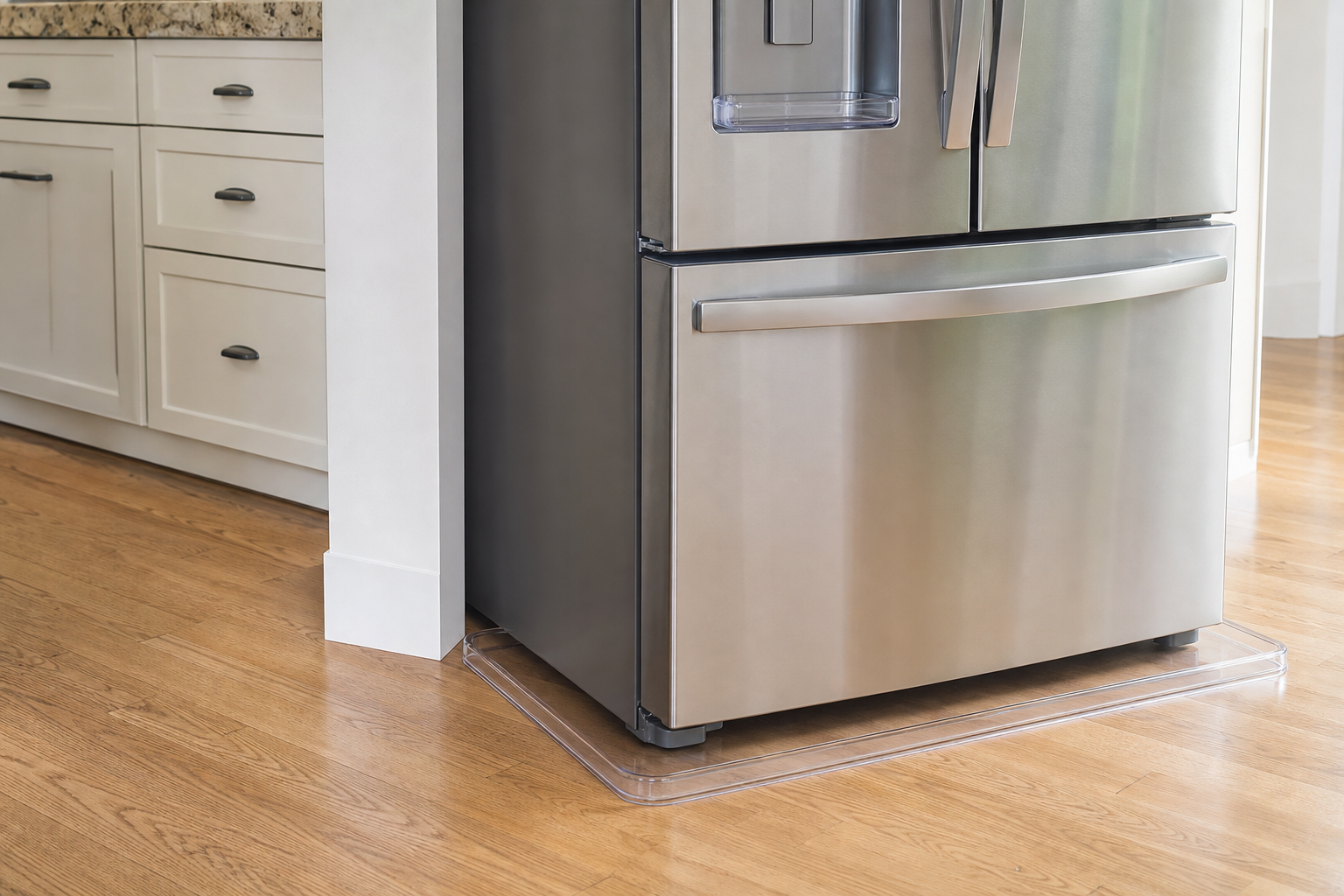
The best refrigerator floor protector fits the appliance footprint, stays compatible with the finished floor, keeps small drips visible, and does not interfere with leveling feet, ventilation, doors, or service access. A shallow under-appliance tray works for limited incidental water; a smaller dispenser mat is better for everyday splashes in front.
As an Amazon Associate, The Good Home Doc may earn from qualifying purchases.
Start with the problem and measurements: These affiliate category links are shopping starting points, not tested rankings.
- Browse category: Under-refrigerator drip traysCompare for a shallow containment edge around most of the appliance footprint.
- Browse category: Refrigerator floor-protector matsCompare when surface protection and easier cleanup matter more than containment.
- Browse category: Water-dispenser drip matsUseful for routine cup overflow and melting ice in front of a dispenser.
Confirm interior dimensions, material, edge height, flooring compatibility, appliance-clearance requirements, and the refrigerator maker's installation guidance before buying.
A protector is a cleanup aid, not a leak-control system. It cannot stop a failed supply line, a large ice-maker leak, or water spreading beyond its edge. For the broader prevention plan—including leak alarms and regular connection checks—use the home leaks and moisture prevention guide.
Quick Picks by Situation
- Best for small incidental drips beneath the appliance: a rigid or semi-rigid shallow tray sized to the refrigerator's actual feet and footprint.
- Best for protecting a vulnerable finished floor: a smooth, floor-compatible mat that stays flat and does not trap grit or moisture.
- Best for a water dispenser: a compact washable mat with a low edge that catches cup overflow without becoming a toe-catching ledge.
- Best for early warning: a visible tray paired with a separate water-leak alarm placed according to its instructions.
- Best when the refrigerator must roll out often: a low-profile protector specifically compatible with casters or leveling feet and routine service movement.
What Each Product Type Actually Does
Shallow Under-Refrigerator Trays
A tray adds a low perimeter around the appliance base. It may hold a limited drip long enough to make cleanup easier, but capacity varies with footprint and lip height. A high front lip can obstruct the refrigerator or make removal difficult, while a very low lip offers little containment.
Choose this type if: small condensation or appliance drips are the main concern and the tray can remain visible at the front edge.
Skip it if: the refrigerator maker requires a floor setup the tray would change, the feet cannot sit level, or pulling the appliance across the lip would damage the tray or floor.
Flat Floor-Protector Mats
A flat mat focuses on separating the appliance from the finished surface. It may make small spills easier to spot and wipe, but a mat without a raised edge does not contain much water. Soft material can also compress under feet or wheels.
Choose this type if: scuff protection and cleanup are the main goals, and the maker identifies the material as suitable for your flooring.
Skip it if: the mat curls, shifts, stains the finish, holds moisture against the floor, or changes appliance stability.
Dispenser-Area Drip Mats
These smaller mats sit on the dispenser shelf or on the floor in front of the appliance. Shelf mats catch drips close to the source; floor mats cover a broader splash zone. Neither protects beneath the refrigerator.
Choose this type if: the recurring mess is a few drops from cups or melting ice rather than water appearing under the appliance.
Skip it if: water is coming from inside, behind, or beneath the refrigerator. That calls for finding the source, not adding a larger mat.
Comparison Framework
1. Measure the Working Footprint
Measure the refrigerator width and depth at floor level, then locate the front and rear feet, rollers, hinges, bottom drawer travel, and any grille or required air gap. Product labels may quote exterior size while the usable interior of a raised-edge tray is smaller. Compare the usable dimensions—not just the overall dimensions—to the points that carry the appliance.
2. Match the Protector to the Floor
Hardwood, engineered wood, vinyl, laminate, tile, and other surfaces can react differently to plasticizers, rubber backings, trapped grit, and moisture. Check both the protector maker's surface guidance and the flooring warranty or care instructions. Do not assume “floor safe” covers every finish.
3. Keep Water Visible
Clear or light-colored material makes a small pool easier to notice than an opaque black mat hidden under the appliance. The front edge should remain inspectable without crawling behind the refrigerator. A tray that hides water can delay discovery and keep moisture against the floor.
4. Protect Service and Movement
Refrigerators may need to move for cleaning, filter access, connection inspection, or repair. A rigid lip can catch rollers; a thin mat can bunch; and a soft protector can let feet settle unevenly. Plan how a qualified appliance technician or plumber can pull the unit out without dragging a loaded tray across the floor.
5. Treat Capacity Claims Carefully
Even a broad tray is shallow. Its theoretical volume does not account for appliance feet, an uneven floor, displaced water, or a leak entering near the edge. Consider it limited containment for small drips, never protection against a pressurized line failure or an unattended large leak.
Must-Have Features
- Verified usable dimensions: enough interior space for every foot or roller without crowding a raised edge.
- Floor-compatible material: no unsupported promise that generic PVC, rubber, or adhesive is safe for every finish.
- Flat, stable support: no curl, rocking, compression, or interference with appliance leveling.
- A visible front edge: small drips should be discoverable during a routine glance.
- Cleanable surface: smooth enough to wipe without deep channels that retain grit or stale water.
- Service access: a realistic way to inspect connections and move the appliance when needed.
Nice-to-Have Features
- Clear material: useful for noticing water and checking the floor condition.
- Gently tapered front edge: may make routine movement easier than a square, tall lip.
- Rigid corners: help a tray keep its intended shape, provided they do not conflict with cabinets or feet.
- Trim-to-fit design: useful only when trimming does not remove the containment edge or void the product guidance.
- Separate leak alarm space: enough visible area for a compact sensor without blocking vents or moving parts.
Setup and Maintenance
- Read the refrigerator installation guide and protector instructions before moving the appliance.
- Shut off and disconnect water only as directed; use a qualified plumber or appliance technician when the connection, valve, line, or safe appliance movement is uncertain.
- Clean and fully dry the floor. Trapped grit can scratch a finish, and existing dampness should be investigated first.
- Center the protector without covering required ventilation or placing a raised edge under a door or drawer path.
- Confirm the appliance sits level and stable according to its instructions.
- Inspect the visible edge regularly. Remove water promptly and investigate its source.
Do not caulk or seal a loose protector to the floor unless both the appliance and flooring guidance explicitly allow it. Sealing can hide water, complicate service, and damage a finish. Clean beneath the protector on a schedule appropriate for the room and whenever it shifts, smells damp, or shows debris.
Who Should Skip This Category
Skip an under-appliance tray if it interferes with required clearances, ventilation, leveling, anti-tip provisions, doors, rollers, service access, or the flooring warranty. Renters should also check lease rules before moving a connected appliance or placing material that may mark the floor.
Skip the shopping step entirely when water is already appearing repeatedly, the supply line looks damaged, the shutoff valve is unreliable, the floor is swelling, or the refrigerator is not operating normally. Turn to the appliance instructions and appropriate qualified help. A protector should never be used to postpone an active leak repair.
Tray, Mat, or Leak Alarm?
- Choose a tray for limited containment of small drips when appliance fit and movement allow it.
- Choose a flat mat for surface separation and easier cleanup when containment is secondary.
- Choose a dispenser mat for routine cup and ice splashes at the front.
- Add a leak alarm when early warning matters; see the compact leak detector buying framework for sensor criteria, while following each sensor maker's placement limits.
Bottom Line
For most kitchens, choose the lowest-profile protector that fits every support point, stays compatible with the flooring, leaves water visible, and preserves service access. Use a small dispenser mat for everyday front-of-fridge drips and a separate alarm for early warning. If water is active, recurring, or hidden, skip containment shopping and address the source.