Best Removable Wallpaper for Renters and First-Time Installers
The best removable wallpaper is not simply the pattern you like most. It is a material that suits your wall, gives you enough working time to correct the first panel, and can come down with an acceptable level of risk when the lease ends.
As an Amazon Associate, The Good Home Doc may earn from qualifying purchases.
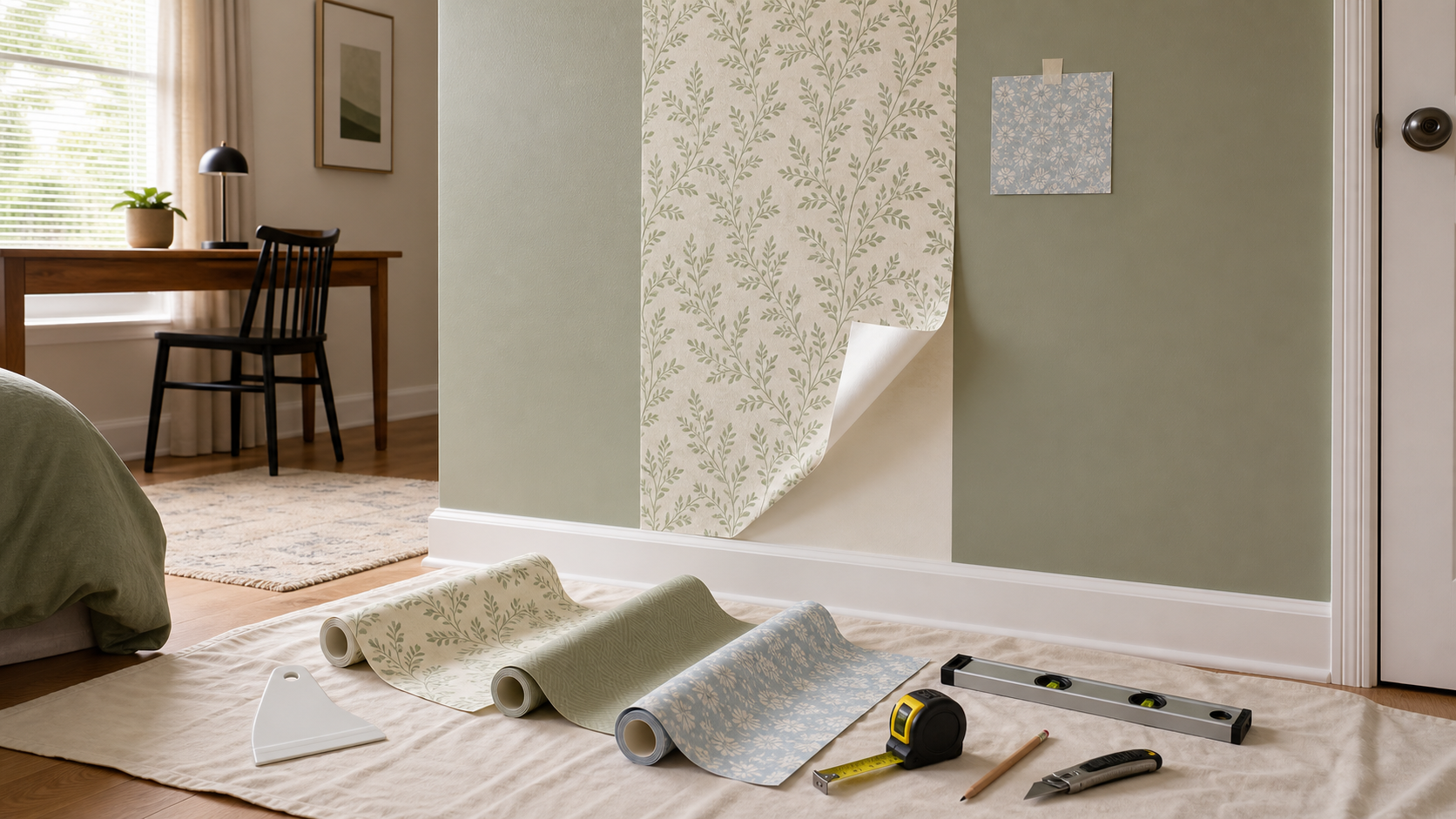
Shop the category: Browse category: compare repositionable peel-and-stick wallpaper after checking your wall finish, roll coverage, pattern repeat, and the seller's removal instructions.
This is a shopping starting point, not a tested ranking. Confirm dimensions, material, surface exclusions, installation directions, return policy, and lease rules before buying.
This guide compares removable wallpaper by best fit rather than claiming one unverified product wins every room. For the broader lease-safe decision process, see the renter-friendly home upgrades guide. If you are decorating a kitchen splash zone rather than a dry accent wall, use the separate peel-and-stick backsplash guide, which covers heat, grease, and water limits.
Quick Picks by Wall and Project
- Best starting point for most beginners: medium-weight, repositionable vinyl with a forgiving small-scale pattern and clear overlap or butt-seam instructions.
- Best for a short lease: a small accent area tested on the actual paint before a full wall commitment.
- Best for hiding minor visual variation: a thicker matte material, but only when the manufacturer allows the wall's texture.
- Best for easier pattern matching: a random-match texture or small repeat that wastes less material than a large mural-style repeat.
- Best for uncertain walls: a sample first—or no adhesive covering at all if the paint is weak, fresh, textured, or already damaged.
Selection Criteria That Matter
Wall and Paint Compatibility
Start with the surface, not the design. Many peel-and-stick papers are intended for smooth, clean, fully cured painted walls. Textured plaster, flat or chalky paint, peeling coatings, damp areas, and recently painted walls can produce poor adhesion or paint damage. Follow the wallpaper and paint manufacturers' cure-time guidance rather than guessing.
Material and Repositionability
Vinyl is usually wipeable and easier to handle than very thin contact film, while woven or fabric-like materials can feel more substantial. “Repositionable” is especially useful on the first panel, but it does not mean unlimited peeling and resticking. Look for specific installation directions and consistent customer support rather than a vague “renter friendly” label.
Pattern Repeat and Usable Coverage
A roll's square footage is not the same as usable coverage. Large repeats and straight-match patterns create more offcuts because adjoining panels must line up. Record the roll width, roll length, repeat, wall height, and number of full drops before ordering. Buying the calculated amount plus a sensible allowance from the same production lot helps avoid mid-wall color differences.
Finish and Cleaning
Matte finishes tend to hide glare and small application marks; glossy vinyl is often easier to wipe but can emphasize bubbles and uneven walls. Check the cleaning instructions before placing wallpaper in an entry, child's room, or other high-touch area. Removable wallpaper is decoration, not waterproofing or a repair layer.
Removal Instructions
Prefer a product that explains how to remove it, including recommended room temperature, pulling angle, and whether gentle warming is allowed. Even then, removal depends on paint quality, preparation, time on the wall, heat, humidity, and sunlight. No adhesive wallpaper is guaranteed damage-free on every rental wall.
Comparison Framework
Repositionable Vinyl
Good fit: smooth, cured walls; first projects; rooms that need occasional wiping. Tradeoffs: sheen can expose bubbles, and strong adhesive can stress weak paint. Choose a manageable roll width if you will install alone.
Woven or Fabric-Like Peel-and-Stick
Good fit: renters who want a more matte, substantial look and can verify surface compatibility. Tradeoffs: it may cost more, and textured fibers can hold dust or be harder to wipe. Confirm whether edges can fray during trimming.
Thin Contact-Style Film
Good fit: small craft-scale areas or very smooth surfaces when the manufacturer permits the use. Tradeoffs: it readily shows wall texture and application marks, folds onto itself easily, and can look less convincing across a full room.
Pre-Cut Panels or Murals
Good fit: one measured feature wall where the finished image matters more than flexible leftovers. Tradeoffs: wall dimensions and panel order must be exact; sloped ceilings, outlets, or out-of-square corners can crop the design unexpectedly.
Must-Haves Versus Nice-to-Haves
Must-have features: explicit surface guidance, clear panel dimensions, a stated pattern repeat, understandable installation and removal directions, and enough material from one lot for the measured wall.
Nice-to-have features: purchasable samples, grid marks on the backing, a forgiving matte finish, a smaller repeat, and customer support that can answer lot or installation questions.
Measure Before You Buy
- Measure wall width and height in several places; older rooms are not always square.
- Divide the wall width by the usable panel width and round up to find the number of vertical drops.
- Add trimming allowance to the wall height for each drop.
- Account for the pattern repeat before dividing the roll length by the length of each drop.
- Plan where the first seam lands around corners, doors, windows, and outlets. Do not subtract every opening as if scraps will be reusable.
For a large repeat, complicated room, or mural, use the manufacturer's calculator and verify the math yourself. Keep an unopened roll until the first panels align correctly when the return policy permits it.
A Safer First-Installation Plan
- Check the lease. Get permission when coverings are restricted or move-out responsibility is unclear.
- Order a sample. View it in daytime and evening light, then test it in a hidden spot for the period the manufacturer recommends.
- Prepare only as directed. The wall should be sound, clean, dry, and fully cured. Do not cover stains, moisture, loose paint, or wall damage.
- Mark one true vertical line. A ceiling or corner may not be plumb, so using it as the only guide can make every later seam drift.
- Expose backing gradually. Smooth from the center outward without stretching the material. Recheck pattern alignment before pressing the full panel firmly.
- Save the details. Keep the product label, lot number, spare material, and removal instructions for repairs and move-out.
Work carefully around outlets and switches. Do not place wallpaper inside electrical boxes or remove electrical components beyond what you are qualified and permitted to handle. If the project requires more than removing a simple cover plate safely, use qualified help.
Who Should Skip Removable Wallpaper
Skip it when the wall is textured beyond the product's allowance, damp, stained, soft, peeling, chalky, freshly painted, or historically delicate. Also skip it when the lease forbids adhesive coverings, the room has uncontrolled humidity, or losing a security deposit would outweigh the decorative benefit.
First-time installers should reconsider a ceiling, stairwell, very tall wall, complex mural, or room full of crooked corners. A framed removable panel, fabric wall hanging, or landlord-approved paint change may be easier to install and reverse.
Bottom Line
For most renters and beginners, the best removable wallpaper is a sample-tested, repositionable medium-weight product with a small repeat, clear surface rules, and documented removal steps. Fit the product to the wall and lease first; treat color and pattern as the final decision, not the first.
For other temporary wall and window options, continue with the removable hooks guide or the no-drill curtain rod guide.