Best Rolling Laundry Hampers for Shared Laundry Rooms
The best rolling laundry hamper for a shared laundry room fits the entire route—not just the bedroom corner. Start with wheel size, handle height, hallway turns, elevator doors, and thresholds. Then decide whether you need a removable bag, a folding frame, or a closed liner for the trip.
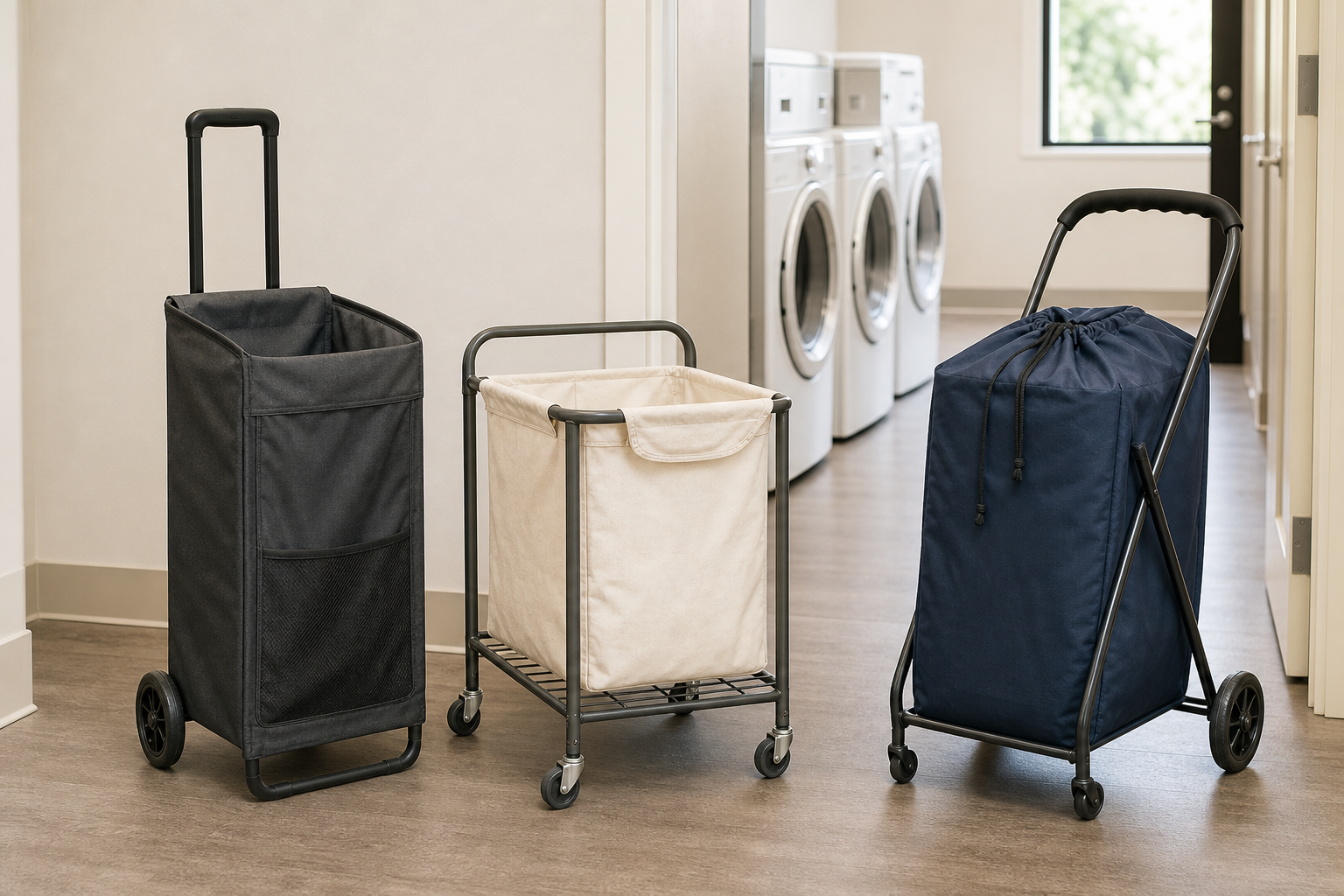
As an Amazon Associate, The Good Home Doc may earn from qualifying purchases.
Compare the transport format first: These affiliate category links are shopping starting points, not tested rankings.
- Browse category: Two-wheel pull hampersGood for straight hallway and elevator routes when parked width matters.
- Browse category: Four-wheel carts with removable bagsEasier to maneuver on smooth floors and useful when the frame stays parked.
- Browse category: Folding rolling hampersWorth comparing when the empty cart must store in a closet or beside a washer.
Confirm the assembled dimensions, wheel diameter, stated capacity, bag care, handle range, and replacement-part availability with the manufacturer before buying.
This guide compares formats and fit rather than naming an unsupported winner. A rolling hamper can reduce carrying on a level route, but wheels do not make a loaded cart suitable for stairs. If the trip includes even one flight, prioritize a light removable bag or handled basket you can carry safely.
Quick Picks by Route
- Best for long, straight hallways: a narrow two-wheel pull hamper with a rigid, comfortable-height handle.
- Best for elevators and tight turns: a compact four-caster cart that turns within its own footprint.
- Best when the frame stays in the apartment: a stable cart with a removable, closable, washable bag.
- Best for limited storage: a folding frame that locks open and remains stable when loaded.
- Best for stairs: skip the wheeled frame and carry a smaller removable bag with secure handles.
Measure the Whole Laundry Route
Measure the hamper’s parked space, but also record the narrowest doorway, elevator opening, hallway turn, and gap beside any fire door. Include baseboards and door hardware. A cart that barely clears a doorway when empty may catch once a soft bag bulges with towels.
Check every floor transition. Small hard casters roll easily on smooth tile but can stop abruptly at raised thresholds or thick rugs. Larger wheels usually cross minor seams more easily, while a four-caster base usually turns more tightly. Neither feature helps on stairs.
Comparison Framework
Two-Wheel Pull Hampers
These use two larger rear wheels and tilt toward a suitcase-style handle. They tend to be narrow and simple, and larger wheels can cope better with small thresholds than tiny casters.
Choose one if: your route is mostly straight, you can comfortably tilt the load, and storage depth is available.
Watch for: a low or flexible handle, a bag that drags when tilted, no front foot for upright parking, and a narrow base that tips during sharp turns.
Four-Wheel Laundry Carts
A four-caster frame can move sideways and pivot in a small elevator. It also keeps the load upright, which helps when detergent or laundry supplies share the cart.
Choose one if: the route is smooth and level but includes tight corners or elevator turns.
Watch for: tiny casters at thresholds, wheels that do not swivel consistently, a frame wider than the bag, and no reliable brake if the laundry room floor slopes.
Removable-Bag Carts
A removable liner lets the frame remain parked while the bag goes into the laundry room or into a vehicle. Look for handles that are part of the bag structure rather than thin loops sewn only to the top edge.
Choose one if: you want to wash the liner, close the load in a public hallway, or carry the bag separately for part of the route.
Watch for: hook-and-loop attachments that snag clothing, drawstrings that drag near wheels, and bags with care instructions that do not match your cleanup routine.
Folding Rolling Hampers
Folding frames save storage space when empty, but hinges introduce flex. A useful model should lock or brace open so the frame does not fold while you steer it.
Choose one if: empty-cart storage is the main constraint and the route is level.
Watch for: pinch points, loose cross-braces, wheels that interfere when folded, and a frame that becomes unstable with a top-heavy load.
Must-Have Features
- Route-appropriate wheels: Compare wheel diameter and material with the actual thresholds and flooring, not only the product photo.
- A useful handle height: You should be able to steer without hunching or kicking the hamper. Adjustable handles help shared households.
- Stable loaded geometry: A broad enough wheelbase and low load position reduce tipping during turns.
- A secured bag: The liner should stay off the wheels and frame edges even when full.
- Realistic capacity: Match the bag to one washer load rather than buying the largest volume available and overloading the route.
- Cleanable contact points: Wheels, the lower frame, and the bag bottom will meet shared floors and should be easy to wipe or wash as directed.
Nice-to-Have Features
- A closable top: A drawstring or flap keeps small garments contained and provides privacy in common areas.
- Replaceable liners: Useful when the frame is durable but fabric wear is likely.
- A small exterior pocket: Handy for a laundry card or empty mesh bag, but avoid loading it with leak-prone detergent.
- Wheel locks: Helpful on four-caster carts if they are reachable without putting fingers near moving parts.
- Reflective or contrasting trim: Makes a dark cart edge easier to see in dim hallways without adding bulk.
Capacity, Loads, and Shared-Room Etiquette
Do not equate a large fabric volume with a sensible rolling load. Wet towels, bedding, and denim can become heavy, strain handles, and make a tall cart harder to control. A hamper sized around one normal washer load reduces sorting on the laundry-room floor and discourages overfilling.
Keep walkways, doors, and machines clear. Park the cart where it does not obstruct exits or another resident’s access. A closing bag helps contain loose items, but damp laundry should not sit sealed for long; follow garment care guidance and deal with wet items promptly.
Who Should Skip a Rolling Hamper
Skip this category if the route includes stairs, severely uneven pavement, narrow fire doors, or nowhere to park without blocking circulation. A smaller handled bag, backpack-style laundry bag, or several lighter trips may be a better fit.
Also skip a tall pull hamper if steering, gripping, or tilting a load is uncomfortable. A four-wheel cart may require less tilting on level floors, but it still needs controlled pushing and threshold handling. Do not load a hamper beyond the manufacturer’s guidance or use it to transport children, pets, or people.
Buying Checklist
- Measure the storage spot, narrowest doorway, elevator opening, tightest turn, and every threshold.
- Choose two wheels for straighter routes or four casters for tight, smooth-floor maneuvering.
- Check handle height and whether the full bag can bulge into the wheels.
- Match capacity to one typical washer load and the manufacturer’s stated limit.
- Confirm the liner removes, closes, and cleans the way you expect.
- Plan a separate carry method if any stairs are unavoidable.
- Verify where the cart can wait without blocking doors or shared walkways.
Bottom Line
For most level apartment routes, choose a compact rolling hamper with a stable base, a comfortable handle, a secured removable bag, and wheels matched to the worst threshold on the trip. Two-wheel designs suit straight hallways; four-caster carts suit elevators and tight turns. If stairs are part of laundry day, the best rolling hamper is usually one whose bag detaches so the wheeled frame can stay home.