Best Under-Sink Organizers for Plumbing Access
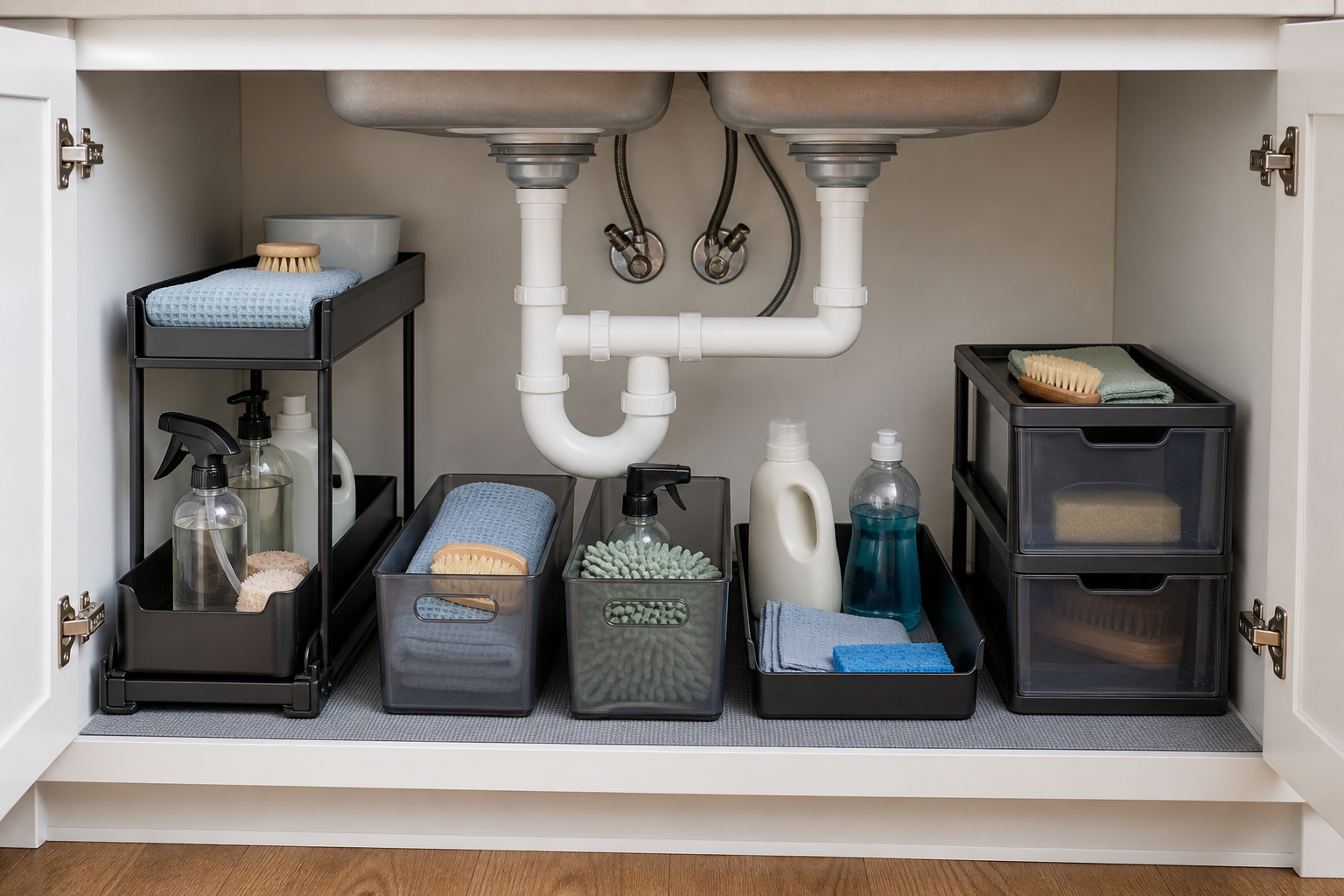
The best under-sink organizer is not the one that packs in the most bottles. It is the format that fits around the trap and supply lines, keeps shutoff valves reachable, and can move out quickly when you need to inspect the cabinet. For most awkward cabinets, modular handled bins are the safest starting point; a narrow pull-out earns its space when one side of the plumbing is genuinely clear.
As an Amazon Associate, The Good Home Doc may earn from qualifying purchases.
Product-category guide
Shop by cabinet layout, not organizer capacity
These category links are shopping starting points, not tested rankings. Measure the cabinet and map the plumbing before choosing a format.
This is a best-fit comparison of organizer formats. It does not cover plumbing repair. If the cabinet is wet, stained, swollen, soft, or musty, remove stored products and address the moisture source before adding storage.
Quick Picks by Cabinet Layout
- Best for awkward or crowded plumbing: separate handled bins that can sit on either side of pipes and lift out without tools.
- Best when one side is fully open: a narrow two-tier pull-out with enough rear clearance for hoses and enough front clearance for the cabinet hinge.
- Best for tall bottles: a low single-level sliding tray that improves reach without putting a shelf beneath the sink bowl.
- Best for small bathroom supplies: a short stackable drawer unit placed to one side of the trap, not in front of valves.
- Best when leak visibility matters most: a few shallow open bins on a removable raised-edge cabinet liner.
Selection Criteria That Matter
Map the no-storage zone first. The trap, disposal, hoses, supply lines, filter cartridges, and shutoff valves need space. Leave a clear hand path to each shutoff and enough room to see the cabinet floor beneath the plumbing.
Measure the opening as well as the interior. Record the usable width, depth, and height, but also measure between hinges and around the center stile. A product can fit inside yet fail to pass through the door or slide past a hinge.
Check movement clearance. Pull-outs and drawers need unobstructed travel. Account for door swing, hinge hardware, pipe bends, disposal wiring, and tall bottles. A freestanding frame should not tip when a loaded shelf extends.
Keep the floor inspectable. Opaque bins and full-width platforms can hide drips. Favor removable sections, open frames, or translucent bins, and do not build a tight wall of products around the plumbing.
Plan around liquids. Keep heavy refills low, cap products securely, and use a washable liner or tray that does not cover existing damage. Never store household chemicals where children or pets can reach them, and follow each label's storage directions.
Comparison Framework
Modular Handled Bins: Best for Awkward Plumbing
Separate bins make it easy to build storage around a central trap, offset pipes, or a garbage disposal. They require no drilling and can be removed one at a time for inspection or cleaning.
Choose them when: plumbing divides the cabinet into irregular pockets or you need the entire setup to lift out quickly.
Watch for: bins that are too deep to see into, handles that collide with pipes, and a collection of small containers that recreates the clutter problem.
Narrow Two-Tier Pull-Outs: Best for an Open Side
A narrow pull-out uses vertical space well and brings bottles at the back forward. It works best when the plumbing is centered or offset enough to leave one clean rectangular zone.
Choose one when: the measured width, height, and full slide path are open and the frame stays clear of valves and hoses.
Watch for: fixed shelf heights, weak frames, top tiers that hit the sink bowl, tracks that require drilling, and loaded units that shift or tip.
Low Sliding Trays: Best for Tall Bottles
A single low tray sacrifices a second tier but preserves vertical clearance for sprays, dishwasher products, or large refills. It can make a deep cabinet easier to use without surrounding the pipes.
Choose one when: the main problem is reach rather than a shortage of shelf levels.
Watch for: tray sides that snag triggers, narrow door openings, and rails that trap residue or make the cabinet floor harder to inspect.
Pipe-Friendly Stackable Drawers: Best for Small Items
Short drawers can contain sponges, cloths, grooming products, or backup toiletries. A single stack on the open side of a bathroom vanity often works better than a wide unit.
Choose them when: every drawer can open fully and the top stays below the basin, drain hardware, and any moving hose.
Watch for: frames that bow when stacked, drawers hidden behind a center stile, opaque fronts that conceal leaks, and a unit too tall to remove without dismantling it.
Must-Haves vs Nice-to-Haves
Must-have features
- Verified dimensions: Include the frame, feet, handles, rails, and full extended depth—not only basket size.
- Fast removal: You should be able to clear the area around plumbing without unloading a complicated installation.
- Stable loaded use: Pull-outs should stay level and freestanding frames should resist tipping in normal use.
- Washable materials: Smooth plastic or coated metal is easier to wipe after a product spill.
- Open access: The installed organizer must leave valves, trap connections, hoses, and leak-prone areas visible and reachable.
Nice-to-have features
- Adjustable shelf height: Useful when the basin or pipes limit the upper tier.
- Removable dividers: Helpful for separating cloths and brushes without committing to tiny compartments.
- Translucent sides: Make contents and unexpected moisture easier to spot.
- Non-slip feet: Reduce shifting without adhesive or cabinet screws.
A Five-Minute Fit Check Before Buying
- Empty the cabinet and photograph the pipe, valve, hose, disposal, and hinge locations.
- Measure the clear rectangles on the left and right instead of treating the cabinet as one empty box.
- Measure the door opening, hinge intrusion, center stile, and usable depth with the door closed.
- Mark a hand-width route to each shutoff valve and a clear view of the floor below connections.
- Compare the product's full assembled and extended dimensions with that map. If the listing omits them, skip it.
For a printable-style walkthrough of those measurements and access decisions, use the site's under-sink organizer selection guide.
Setup, Maintenance, and Renter Limits
Assemble the organizer outside the cabinet, then place it without forcing hoses or resting shelves against pipes. Load heavier bottles on the bottom. Slide every moving part through its full travel and confirm that doors close normally. Finally, reach every shutoff and look across the entire cabinet floor.
Renters should favor freestanding bins, trays, and frames. Do not screw tracks into cabinetry or add strong adhesive without written permission. Even removable adhesive can lift finish or leave residue in a damp cabinet.
Take the organizer out periodically, wipe the cabinet and product containers, and check for drips, stains, swollen material, corrosion, or odor. A compact leak detector can add an alert, but it does not replace visual checks or repair.
Who Should Skip These Organizers
Skip pull-outs and drawers if the cabinet is too narrow for full travel, the only placement blocks a shutoff, or plumbing must be pushed aside to make the frame fit. Use two or three simple bins instead. Skip a second tier when the sink bowl, disposal, filter, or tall bottles already consume the usable height.
Skip organizing altogether until an active leak, recurring dampness, soft cabinet floor, damaged pipe, pest activity, or suspected mold-like growth has been addressed. Renters should document and report the condition. Homeowners should contact the appropriate qualified professional rather than treating storage as a cover for damage.
Bottom Line
Modular handled bins are the most forgiving choice for complicated under-sink plumbing. A narrow two-tier pull-out is better when one side offers a clean, measured lane; a low sliding tray suits tall bottles; and short drawers suit small bathroom items. Whichever format you choose, plumbing access, leak visibility, and easy removal matter more than maximum capacity.