Best Under-Sofa Storage Bins for Small Living Rooms
The space beneath a sofa can hold games, spare throws, or occasional supplies without adding another cabinet—but only if the bin clears the lowest part of the frame and can be pulled out without scraping the floor or rearranging the room.
As an Amazon Associate, The Good Home Doc may earn from qualifying purchases.
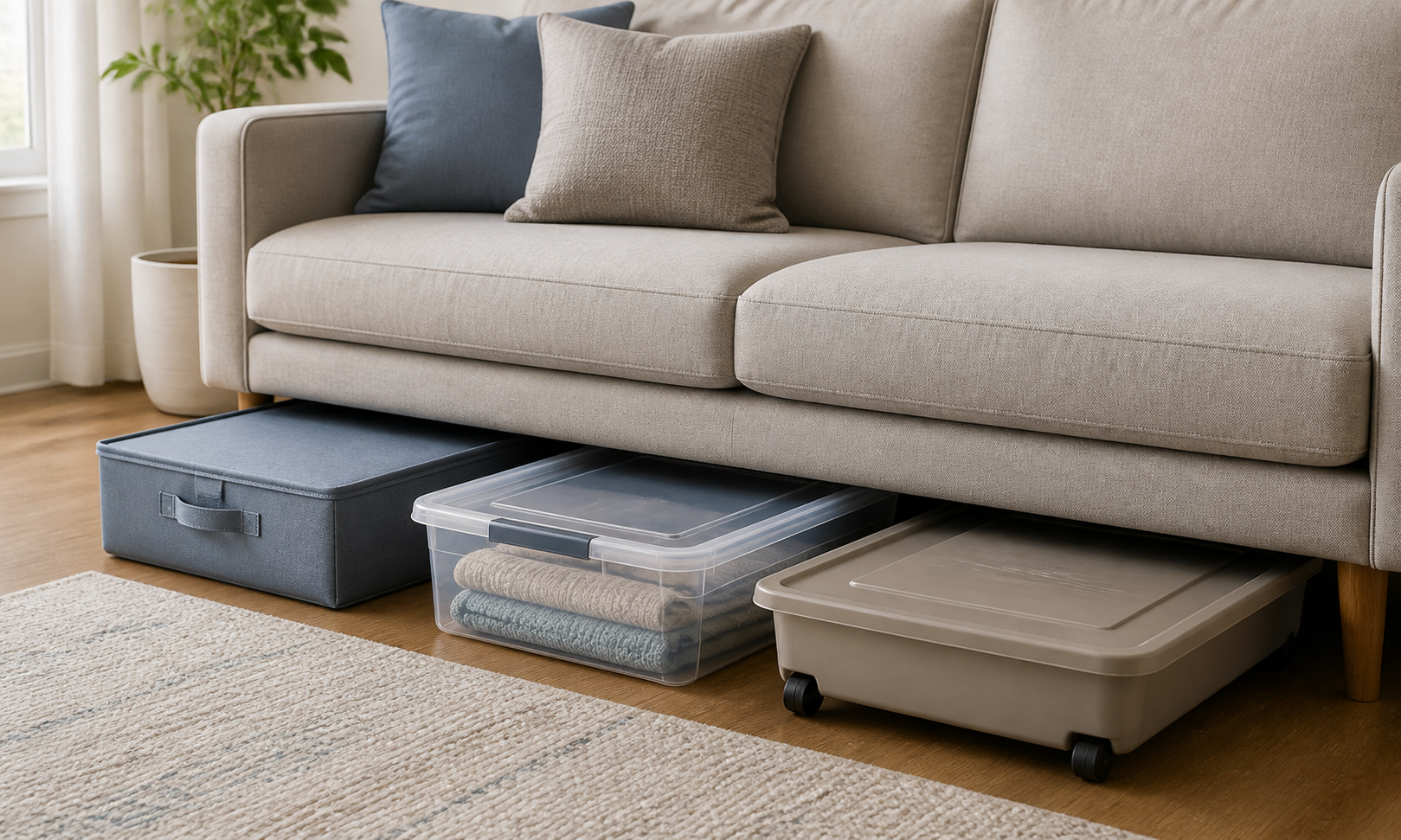
Product-category guide
Compare the bin around your sofa clearance and floor
Measure the lowest crossbar, center support, rug edge, and pull-out path before choosing a lidded fabric, rigid plastic, or wheeled format.
This is a category comparison, not a hands-on ranking. Dimensions, materials, wheel layouts, and stated capacities vary. Confirm the current external measurements and care instructions before buying.
Quick Picks by Living-Room Need
- Best for soft goods and a visible sofa edge: a structured fabric bin with a full lid and a handle that stays flat.
- Best for seeing small contents: a shallow clear rigid bin, provided its lid latches and its hard edges do not contact the floor.
- Best for frequent pull-out access: a low wheeled bin with wheels suited to the floor and stops or handles that prevent it rolling too far under.
- Best for a sofa over a rug edge: often no bin; the height change can snag low wheels and flexible sides.
Measure the Sofa, Not Just the Opening
Measure from the floor to the lowest obstruction at the front, middle, and back of the sofa. A front rail can hide a lower center support, reclining mechanism, sleeper frame, cable, or sagging dust cover. Subtract a little working clearance so a full lid, handle seam, or wheel does not rub.
Record usable width and depth between legs and supports. Then map the pull-out path: coffee-table clearance, rug thickness, floor transition, nearby chair legs, and the room needed to lift a lid. If the sofa reclines, converts to a bed, or has moving parts, follow its manual and keep the entire mechanism clearance zone empty.
Comparison Framework
Lidded Fabric Bins
Structured fabric bins are lighter and quieter than rigid tubs. They suit blankets, board games, craft supplies, and other dry items when the living-room-facing edge matters.
Compare: external height when full, lid closure, handle stitching, side structure, bottom panel, wipe-clean surfaces, and whether the bin collapses when half loaded.
Skip when: the floor is frequently damp, dust enters through gaps, pets can pull at fabric, or heavy contents bow the base and drag.
Clear Rigid Plastic Bins
Clear tubs make contents easy to identify and protect their shape when stacked elsewhere. Hard rims and lid latches can consume more height than the interior capacity suggests.
Compare: total height with lid, latch projection, smoothness of the bottom, internal taper, grip location, cleaning access, and plastic care guidance.
Skip when: the base can scratch the floor, the tub flexes when lifted, or a visible clear bin would make the room feel more cluttered.
Wheeled Low-Profile Bins
Wheels reduce dragging and can make frequent access easier on a smooth hard floor. Small wheels often struggle with rug edges, grout lines, and uneven transitions.
Compare: wheel height and material, axle position, loaded tracking, handle access, lid security, wheel cleaning, and whether replacement wheels are available.
Skip when: the route crosses a rug edge, wheels could mark soft flooring, or the bin can roll beyond easy reach.
Must-Have Features
- Verified external height: Include the lid, seams, handles, wheels, and a realistic load.
- Front-access handle: It should remain reachable without adding snagging height.
- Dust control: Use a fitted lid or full zipper for textiles and infrequently used items.
- Floor-safe contact: Confirm the base, glides, or wheels suit the flooring maker’s instructions.
- Cleanable construction: Choose smooth interiors or removable inserts that can be emptied and dried.
Nice-to-Have Features
A label pocket helps when bins are opaque. Interior dividers can keep game pieces or small supplies from shifting, but they reduce flexible capacity. Two smaller bins may be easier to pull around sofa legs than one wide container. A low stop tab can keep a bin from disappearing under the frame if it does not snag the upholstery or mechanism.
What Belongs Under a Sofa
Good candidates are dry, clean, lightweight items used occasionally: folded throws, games, puzzles, seasonal cushion covers, craft materials, or spare device accessories in their own cases. Keep the load light enough to pull out without twisting and organized enough that one item does not require emptying the bin.
Do not store food, liquids, household chemicals, damp textiles, candles exposed to heat, important documents, valuables, medication, batteries in poor condition, or anything needed urgently. Keep stored items away from heaters, outlets, power strips, ventilation openings, and moving sofa hardware.
Floor Protection and Cleaning
Check the flooring manufacturer’s guidance before adding felt, rubber, plastic glides, or wheels; a material that protects one floor can discolor or trap grit on another. Vacuum or sweep beneath the sofa before sliding bins into place, then clean the bin bottoms regularly. Grit trapped under a rigid tub can turn every pull into a scratch.
Leave enough access to inspect the floor and sofa underside. Wash or wipe the container according to its care label and let it dry fully before returning textiles. A closed bin is dust control, not moisture control.
Who Should Skip Under-Sofa Storage
Skip it if the sofa has moving hardware, very low or uneven clearance, a loose dust cover, a deep rug edge, floor vents, cables, or a pull-out route that blocks walking space. It is also a poor fit for heavy items or anything used daily when bending and reaching are difficult.
If dust visibility and deeper clearance matter more than living-room appearance, compare under-bed bins for seasonal clothes. If the goal is everyday living-room access, a shallow basket on a shelf or a small closed cabinet may be easier than floor-level storage.
Selection Checklist
- Inspect the full sofa underside, including supports and moving parts.
- Measure height, width, depth, and the complete pull-out path.
- Choose contents before choosing capacity.
- Match fabric, rigid, or wheeled construction to the load and floor.
- Verify external dimensions, lid and handle projections, care, and return policy.
- Keep vents, wiring, heat, and mechanism clearances unobstructed.
- Load lightly, test access, and inspect the floor after the first few uses.
Bottom Line
A lidded fabric bin is usually the calmest-looking fit for soft goods, a clear rigid bin makes small contents easier to find, and wheels help only on a compatible, level pull-out route. The best under-sofa bin is the one that clears every support, protects the floor, stays easy to retrieve, and stores a defined category without turning the sofa into an inaccessible overflow zone.