Best Vacuum Storage Bags for Bulky Bedding
Vacuum bags can make a spare comforter easier to fit on a shelf or under a bed, but the useful choice is not automatically the biggest pack. Start with the bedding volume, the storage space, the valve you can operate, and how long the bedding will stay compressed.
As an Amazon Associate, The Good Home Doc may earn from qualifying purchases.
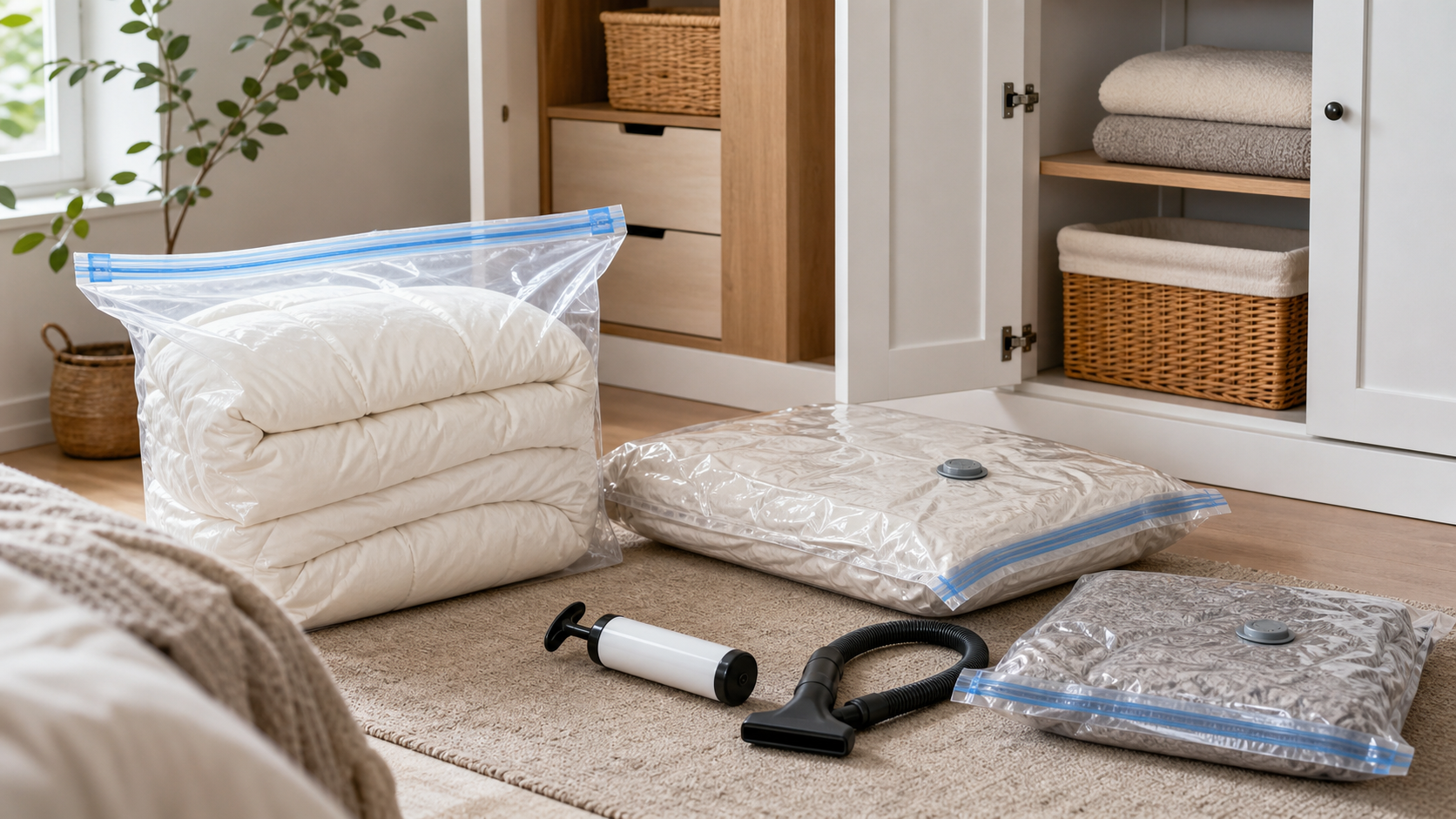
Product-category guide
Compare vacuum bags by bedding and storage space
Measure the final storage location first. Then compare bag dimensions, zipper and valve design, pump compatibility, plastic thickness, and reuse instructions.
This guide is a best-fit comparison framework, not a ranked review and not a claim that we tested individual bags. Product dimensions, material specifications, valve compatibility, and reuse instructions should be confirmed with the current manufacturer listing before buying.
Quick Picks by Storage Problem
- Best for one queen or king comforter: a jumbo bag with enough unsealed space to close the zipper without forcing the bedding into the seal.
- Best for mixed blankets: two medium or large bags, which are easier to lift and let you retrieve one group without opening everything.
- Best without a full-size vacuum: a bag set with a compatible hand pump, provided you are comfortable with the extra pumping time.
- Best for under-bed storage: a bag that fits inside a smooth-sided bin after compression; the bin protects it from bed hardware, shoes, and rough floors.
- Best for frequent rotation: a reusable bag with clear closing instructions and a zipper slider you can keep track of.
Measure the Bedding and the Final Space
Do not choose from labels such as “large” or “jumbo” alone. Record the bag's flat dimensions, then measure the shelf, bin, suitcase, or under-bed opening where the compressed bundle must fit. Compression changes thickness more reliably than length or width, so an overfilled bag can still be too broad for the target space.
Group bedding by the way you will use it: one guest-bed set, one seasonal comforter, or a pair of blankets. A single enormous bag may compress more at once, but it is harder to seal, move, inspect, and reopen than two manageable bags.
Comparison Framework
Jumbo Bags for Comforters and Duvets
Jumbo bags suit high-loft synthetic comforters and thick guest bedding when closet volume is the main constraint.
Choose this type if: the flat bag comfortably surrounds the folded item and the compressed footprint fits a protected shelf or bin.
Watch out for: strained seams, zipper channels packed with fabric, a bundle that is awkward to lift, and sharp closet hardware that can puncture the plastic.
Medium and Large Bags for Blankets
Smaller bags let you sort by room, season, or bed and reduce the amount of bedding exposed each time you open one.
Choose this type if: access and organization matter as much as maximum compression.
Watch out for: using more valves and shelf space, losing track of unlabeled contents, and buying a mixed pack with sizes that do not match your bedding.
Roll-Up Travel Bags
Roll-up bags push air out without a pump and can help with clothing or a light travel blanket. They usually are not the best tool for a full comforter.
Choose this type if: portability matters and the manufacturer lists the bag for the item and intended use.
Watch out for: limited capacity, effort, uneven compression, and confusing a travel organizer with a long-term bedding-storage solution.
Must-Have Features
- A zipper you can inspect: The tracks should align cleanly, and the maker should explain how to confirm a complete seal.
- A protected valve: Look for a cap or closure that stays secured after the vacuum or pump is removed.
- Compatible pump access: Confirm the valve works with your vacuum hose or that the included hand pump is meant for that bag.
- Enough border around the load: Bedding should not sit in the zipper channel or press sharply against corners.
- Clear reuse instructions: Cleaning, drying, closing, and storage directions matter if the bags will rotate seasonally.
Nice-to-Have Features
- Mixed useful sizes: Helpful only when each included size matches something you actually store.
- Included hand pump: Useful for travel or homes without a compatible hose, though it can be slower for bulky bedding.
- Write-on label area: Makes contents and storage dates easier to track without opening the bag.
- Spare zipper sliders: Convenient, but a slider does not compensate for damaged tracks or a punctured bag.
Seal, Valve, and Plastic Tradeoffs
A bag can regain some air because of an incomplete zipper closure, a valve that was not capped correctly, or a tiny puncture. Follow the maker's closing sequence, keep fabric away from the zipper, and inspect the bag after the first day before placing it in a hard-to-reach location. Do not assume any vacuum bag will remain at its smallest size indefinitely.
Thicker-feeling plastic may be easier to handle, but material thickness alone does not establish durability. Storage conditions matter: rough shelves, protruding screws, wire racks, pets, dragging, and repeated folding can all damage a bag. A smooth bin or shelf is better protection than relying on marketing language about toughness.
Moisture and Long-Term Storage Cautions
Only store bedding that is clean and completely dry. A vacuum bag does not correct existing dampness, and compression can make odors or unnoticed moisture harder to discover. Do not store bags against a damp wall, on a wet basement floor, or where recurring condensation is present.
Check the bedding maker's care guidance before extended compression. Down, feather, wool, foam-filled, antique, or delicate bedding may lose loft or be a poor candidate for prolonged compression. For valuable or specialty bedding, use the storage method recommended by its manufacturer or a qualified textile-care professional.
Who Should Skip Vacuum Storage Bags
Skip this category if the storage area is damp, pest-damaged, sharply edged, or exposed to heat beyond the product's stated limits. Solve the environmental problem first. Also skip compression when the bedding label warns against it or when preserving loft matters more than reducing volume.
If you need frequent weekly access, a lidded bin or breathable zippered bedding bag may be less frustrating. Vacuum bags make more sense for clean, dry bedding that will stay out of rotation for a season—not for items you repeatedly open and reseal.
Bottom Line
For most bulky bedding, the best vacuum storage bag is large enough to close without stressing the zipper, small enough to move after filling, compatible with your pump, and protected from rough storage surfaces. Measure the final space, divide bedding into useful groups, and expect to inspect the seal rather than treating compression as permanent.
For the broader decision about what belongs under a bed, in a closet, or in another storage zone, continue with the small-home organization systems guide.