Best Window Insulation Kits for Renters
For most renters with a drafty but otherwise sound window, an indoor shrink-film kit is the most practical seasonal choice: it is inexpensive, clear, and easy to size. Choose a removable seal strip instead when you must keep opening the window, and skip both when the window is an emergency exit, required for ventilation, wet, damaged, or prohibited by the lease.
As an Amazon Associate, The Good Home Doc may earn from qualifying purchases.
Start with your window and lease limits: These affiliate category links are shopping starting points, not tested rankings.
- Browse category: Indoor shrink-film window kitsBest for a clear seasonal air barrier when the window can stay closed.
- Browse category: Removable window weather-seal tapeCompare for small sash gaps when you still need access to the window.
- Browse category: Reusable interior window panelsWorth comparing for repeat seasonal use when the mounting method suits the frame.
Confirm covered dimensions, indoor-use instructions, frame-surface compatibility, removal method, included tape, heat-tool directions, window operability, and lease rules before buying.
A kit can reduce the cold-air movement you feel around a leaky window, but it cannot repair failed glazing, rot, water entry, or a damaged frame. For other reversible comfort improvements, see the renter-friendly home upgrades guide.
Quick Picks by Situation
- Best for most drafty rental windows: clear indoor shrink film sized with several inches of trimming allowance.
- Best when the window must still open: a removable weather-seal product applied only where its maker allows.
- Best for repeat seasonal use: a reusable interior panel with a mounting system approved for the frame surface.
- Best for old or delicate paint: no adhesive product until the landlord approves it and a hidden-area test lifts cleanly.
- Best for an egress window: no covering that delays opening; keep the required exit clear and operable.
Comparison Framework
Indoor Shrink-Film Kits
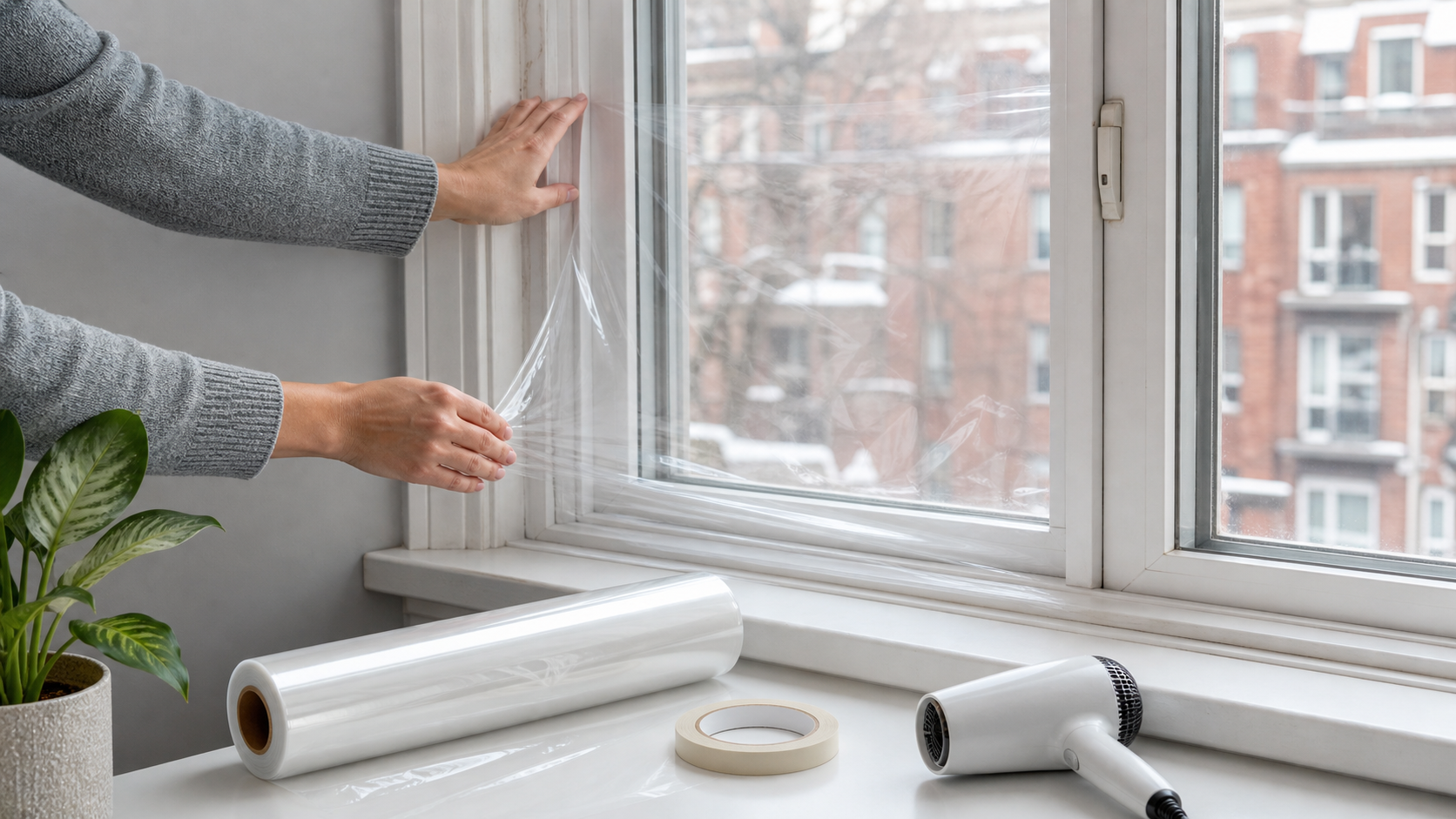
These kits use double-sided tape around the interior trim and clear plastic film that tightens with a household hair dryer. They provide broad coverage and stay visually unobtrusive when installed carefully.
Choose one if: the frame is clean, dry, compatible with the tape, and the window can remain closed for the season. Skip it if: you need daily window access, the trim paint is fragile, or the window is required for emergency escape or ventilation.
Removable Weather-Seal Tape
Seal tape targets specific moving-joint gaps instead of covering the entire opening. It can be less visually noticeable, but fit varies by sash design and poorly placed material can interfere with latches or drainage paths.
Choose it if: you can identify a small air gap and the product instructions list your surface and placement. Skip it if: the gap comes from damage, the window will not latch properly, or tape would cover weep holes or hardware.
Reusable Interior Panels
Rigid or flexible panels attach inside the window recess using magnetic strips, compression, or another removable mounting method. They cost more and need off-season storage, but may avoid buying new film every year.
Choose one if: you expect to reuse it and can store it flat. Skip it if: the mounting strip is unsuitable for the trim, the panel blocks required access, or the recess is too irregular for a reliable fit.
Measure Before You Shop
- Measure the outside width and height of the trim area where tape or a panel would actually attach—not only the glass.
- Check for handles, blinds, deep sills, locks, sensors, and uneven trim that interrupt a continuous seal.
- Compare those dimensions with the kit's stated covered area and leave the trimming allowance its instructions require.
- Count separate windows. A wide roll may cover several small openings, but tape length can become the limiting part of the kit.
- Photograph the clean, dry frame before installation and keep the instructions for removal at move-out.
Must-Have Selection Criteria
- Indoor-use fit: use a product intended for the side of the window where you plan to install it.
- Enough film and tape: compare both coverage figures, including waste for trimming and irregular frames.
- Named surface compatibility: painted wood, vinyl, metal, and finished trim can respond differently to adhesive.
- Clear removal directions: look for a stated removal method and temperature guidance rather than assuming “removable” means risk-free.
- Usable clarity: better transparency matters in a room where the window supplies most of the daylight.
- Safe access: the finished setup must not obstruct an emergency exit, required ventilation, locks, or landlord access.
Nice-to-Have Features
- Pre-cut sheets: reduce measuring and trimming for common window sizes.
- Extra tape: useful when a first strip wrinkles or the trim perimeter is larger than expected.
- Thicker film: may be easier to handle, though thickness alone does not establish performance.
- Reusable mounting components: helpful only if replacement adhesive remains available and storage is practical.
- Low-visibility seams: useful for a wide window that needs more than one sheet.
Installation and Removal Tradeoffs
Adhesive works best on a clean, dry, sound surface. Follow the kit's cleaning and temperature directions, test a hidden area when allowed, and do not apply tape over peeling paint, damp material, or loose trim. Renters should obtain approval when the lease restricts adhesive products or window coverings.
With shrink film, keep the hair dryer moving and use only the setting and distance specified by the kit maker. The goal is to remove wrinkles, not overheat the film, glass, trim, nearby blinds, or cord. Remove the kit using the maker's directions rather than pulling tape abruptly from painted trim.
Condensation, Ventilation, and Egress
Check the window periodically after covering it. Film can hide the frame edge, so look for trapped moisture, staining, soft trim, or recurring condensation. A kit does not solve a water leak or persistent moisture source. Report active water entry or building damage to the landlord promptly.
Do not cover a window that must open for emergency escape, combustion-air needs, or required ventilation. Building and lease requirements vary, and a product listing cannot determine whether an opening may be blocked. When the role of the window is unclear, ask the property manager or an appropriate qualified professional before installing anything.
Who Should Skip Window Insulation Kits
Skip the category if the draft is accompanied by water intrusion, cracked glass, a loose sash, rot, damaged locks, or a window that will not close. Those are repair issues, not shopping problems. Also skip adhesive kits on failing paint or valuable finishes unless the property owner approves the risk.
If the main discomfort comes from an exterior door, a renter-friendly door draft stopper may target the actual problem more directly. If you need darkness as well as seasonal coverage, compare the setup limits in the renter-friendly blackout curtain guide.
Bottom Line
Choose indoor shrink film for broad, clear seasonal coverage on a sound window that can stay closed. Choose removable seal tape for a small compatible gap, or a reusable panel when repeated use justifies the storage and mounting work. Measure the attachment area, protect the frame finish, preserve access and ventilation, and treat moisture or damage as a landlord or repair issue rather than something plastic film can fix.