How to Choose Motion-Sensor Night Lights for a Hallway
As an Amazon Associate, The Good Home Doc may earn from qualifying purchases.
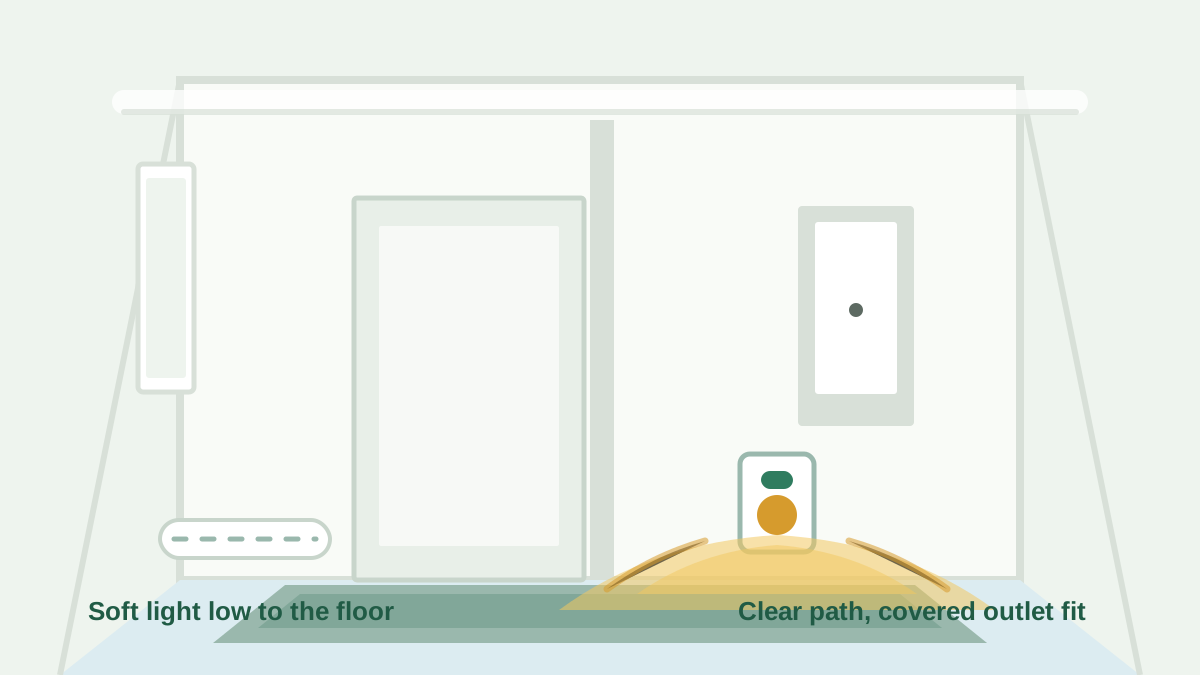
Product-first guide
Shop the products in this guide
Start with these affiliate product routes, then use the guide criteria to check measurements, renter limits, setup fit, and upkeep.
A dark hallway can make late-night trips feel clumsy, especially when the path includes door thresholds, laundry baskets, a dropped bag, or a bathroom turn. A good motion-sensor night light should add just enough low, predictable light to help you see the walkway without blasting the whole house awake.
This guide fits the home comfort and safety-adjacent upgrades pillar. If you are improving a bedroom or nighttime routine, the renter-friendly blackout curtain guide can help with the other side of the problem: keeping sleep spaces dark when you want them dark.
Start With the Hallway Problem
Before buying a pack of lights, walk the hallway at the time you actually need them. Notice where the dark spots are, where an outlet is available, and where a light might shine directly into a bedroom. The goal is not to make the hallway bright. The goal is to make the floor, door frames, and turns easy to read at night.
If the concern is a repeated fall, a medical issue, loose flooring, missing handrails, or a stair problem, treat lighting as only one small part of the answer. A qualified professional may be needed for electrical, flooring, stair, or accessibility work.
Choose the Right Power Type
Plug-in night lights are the simplest choice when outlets are in the right place. They are easy for renters, need no charging routine, and work well in hallways where the outlet is low and unobstructed.
Battery-powered lights help when the outlet is poorly placed or when you need light near a closet, landing, or bend in the hallway. The tradeoff is maintenance. Batteries or rechargeable packs need a schedule, and dimming batteries can make the light less useful over time.
Rechargeable stick-on lights can be convenient for renters, but check the mounting method carefully. Adhesive pads may pull paint or fail on textured walls. They also need a practical charging routine so the light is not dead when you need it.
Must-Have Features
- Warm, low brightness: Look for soft light that helps you see the floor without creating glare. Very bright white light can feel harsh at night.
- Reliable motion sensing: The sensor should trigger before you reach the darkest section, not after you are already past it.
- Dusk-to-dawn control: This keeps the light from switching on during the day and wasting power.
- A low-profile shape: Plug-in models should not block the second outlet, stick out into the walkway, or get knocked loose by vacuuming.
- Simple cleaning: Hallway lights collect dust. Smooth housings are easier to wipe than decorative ridges and deep seams.
Nice-to-Have Features
- Adjustable brightness: Useful when one hallway opens toward bedrooms and another needs a little more light.
- Adjustable color temperature: A warmer setting is usually better for nighttime comfort.
- Swivel or directional output: Helps point light toward the floor instead of into eyes.
- Manual off mode: Helpful in guest rooms, nurseries, or hallways where you sometimes want full darkness.
- Multi-pack consistency: Matching lights can make a long hallway feel calmer and easier to scan.
Placement Matters More Than Quantity
One well-placed light near a turn can be more useful than four bright lights in the wrong spots. Aim for floor-level guidance at transitions: bedroom doors, bathroom approaches, hallway corners, stair landings, and places where rugs or thresholds change the walking surface.
Avoid placing lights where they shine directly at pillow height through an open door. Also avoid mounting battery lights where someone might brush them with a shoulder, bag, or laundry basket. If a light becomes an obstacle, it is solving one problem by creating another.
Renter-Friendly Setup Checks
For renters, plug-in models are usually the cleanest option. If you use adhesive-mounted lights, test placement with painter's tape first so you know whether the sensor angle works. Read the adhesive instructions and your lease before putting anything on painted trim, wallpaper, or delicate surfaces.
Do not overload outlets or use damaged extension cords to force a light into position. If the only good location would require electrical changes, ask the property manager or a qualified electrician instead of improvising.
Who Should Skip Motion-Sensor Night Lights
Skip them if the hallway already has good switched lighting and the real issue is clutter, a loose rug, or a hard-to-reach switch. Fixing the walking path may matter more than adding another device. Also skip ultra-bright models for bedrooms or shared hallways where sudden light would wake people up.
A Quick Buying Checklist
- The light points toward the floor, not straight into eyes
- The sensor triggers before the darkest section of the hallway
- The shape does not block nearby plugs or stick into the walkway
- The brightness is warm and low enough for late-night use
- The power type fits your outlet layout or charging routine
- The setup is lease-safe if you rent
- The light can be wiped clean without fussy parts
Bottom Line
The best hallway motion-sensor night light is quiet, warm, low, and predictable. Start with the dark spots, choose the simplest power type that fits the hallway, and place the light where it clarifies the walking path without becoming glare or clutter. For safety-sensitive problems, treat night lights as helpful support, not a substitute for fixing the underlying hazard.