Do You Need a Moisture Meter at Home?
You may need a basic moisture meter when you have one suspicious stain or damp-looking area, the surface is accessible, and comparing it with a nearby dry area would help you decide what to do next. Skip the tool and get qualified help when water is active, damage is spreading, or the situation involves electricity, a ceiling, a wall cavity, recurring moisture, or an unclear source.
As an Amazon Associate, The Good Home Doc may earn from qualifying purchases.
Compare meters only after deciding you need one: Browse category: Shop home moisture meters on Amazon.
This is a category shopping route, not a tested ranking. Check the manufacturer's supported materials, pin or pinless method, material modes, stated scanning depth, calibration instructions, and return policy.
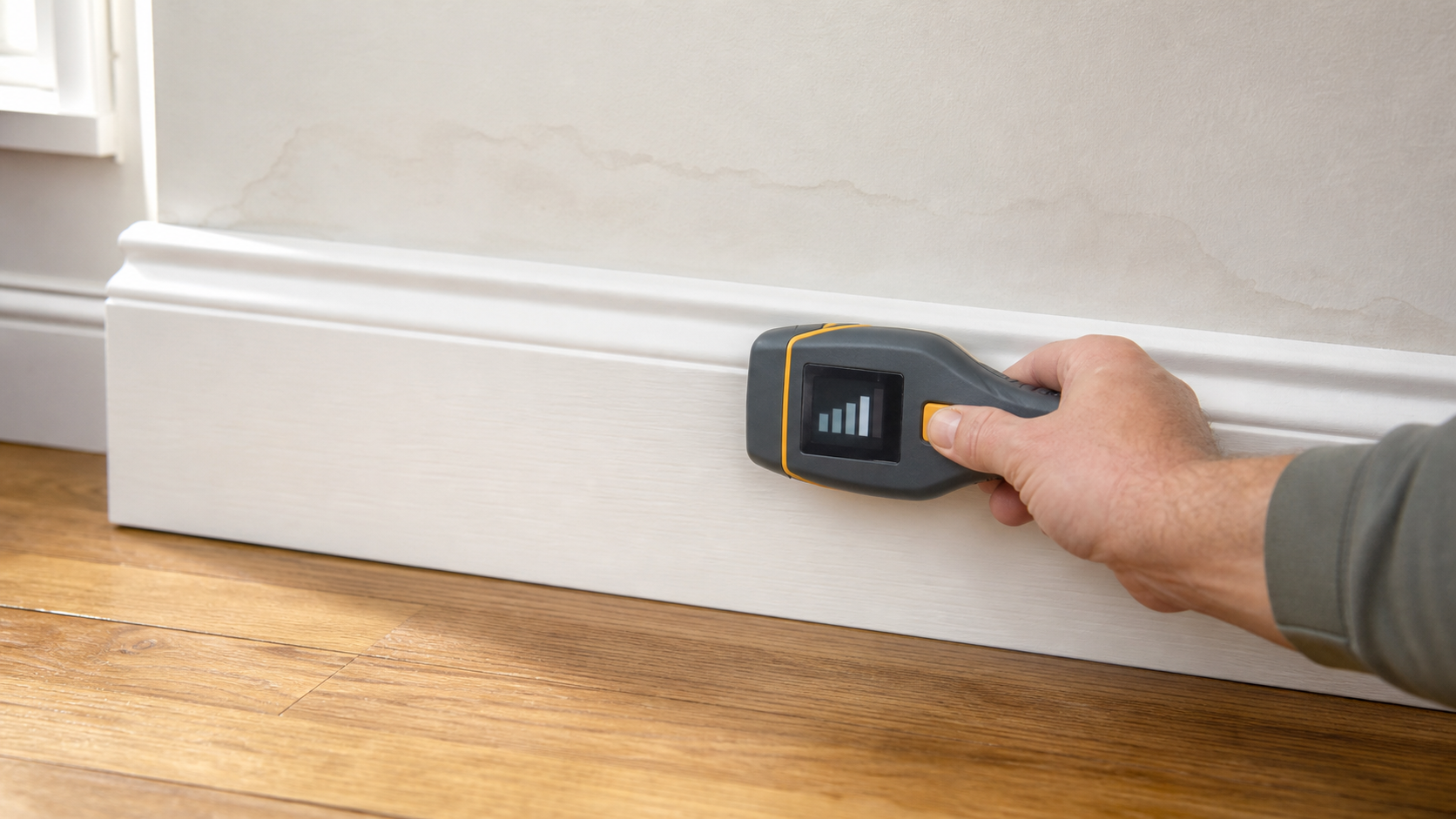
A consumer moisture meter is a screening and comparison tool. It can show that one accessible spot responds differently from a known dry comparison area when the device, material mode, and technique are appropriate. It cannot prove that mold is present, identify a leak source, measure every material accurately, reveal hidden damage, or replace an inspection.
Quick Decision: Buy, Skip, Delay, or Escalate
- Buy: you have a small, accessible suspect area; the meter supports that material; you can take comparison readings; and the result will change your next step.
- Skip: you are only curious, the surface is dry with no history or visible warning sign, or you would treat one reading as a diagnosis.
- Delay: first photograph the area, check whether a spill or recent cleaning explains it, and read the meter manual before choosing pin or pinless.
- Choose an alternative: a basic humidity monitor is more useful for tracking room air, while a simple leak alarm is better for early warning under a sink or appliance.
- Escalate: call the landlord, property manager, plumber, roofer, restoration provider, electrician, or other appropriately qualified professional when water is active, recurring, widespread, near electricity, or associated with soft, swollen, sagging, or deteriorating material.
When a Meter Is Worth Buying
The best use is a limited first check that helps you document a pattern. For example, you may notice a faint mark on baseboard after a resolved spill, discoloration near a window after a storm, or a patch that feels different from nearby trim. A meter can help you compare the suspect spot with several similar-looking, known dry areas made from the same material.
It is also useful for follow-up after the known source has been addressed, provided a qualified professional has not given different instructions. Repeated comparisons taken in the same locations with the same device and settings can be more informative than chasing a universal “safe” number from the internet.
Buy only if you are willing to read the manual, choose the correct material mode, keep notes, and accept an uncertain result. If you have already decided to buy, our home moisture meter guide explains the category choices without claiming diagnostic certainty.
Pin or Pinless: Choose the Limitation You Can Live With
Pin meters use probes that contact or enter the material. They can make a focused comparison in accessible wood or other manufacturer-supported materials, but the pins leave small marks and only sample around their contact points. They are a poor fit where puncturing a finish, membrane, hidden cable area, or rented surface is unacceptable.
Pinless meters scan without probe holes and can help compare a broader finished surface. Their readings can be influenced by material thickness, metal fasteners, pipes, wiring, corners, surface shape, or construction layers. Check the maker's stated scanning depth and supported uses; “pinless” does not mean it can see through every assembly or locate the cause.
Combination units cost more but may be worthwhile when you expect to check both finished surfaces and exposed wood. They do not remove the need to interpret each mode according to its instructions.
Cost, Setup, and Maintenance Tradeoffs
- Purchase cost: a simple consumer meter can be enough for occasional comparisons. Paying for extra modes is wasteful if you will not understand or use them.
- Setup time: allow time to read the manual, identify the material, select the right mode, test batteries, and choose dry comparison spots.
- Surface cost: pin models can leave holes. Pinless models avoid holes but may produce confusing responses around hidden metal or layered materials.
- Upkeep: replace weak batteries, protect pins and the sensing surface, keep the device dry, and follow any calibration or check procedure in the manual.
- Interpretation: one high or low response is not a diagnosis. Repeat the check, compare like with like, and document the location and setting.
A Practical First-Check Method
- Look first. Photograph stains, peeling paint, lifted flooring, swollen trim, or other changes before touching the area.
- Stop if water is active or near electricity, the ceiling is sagging, the floor feels unstable, or the material may be unsafe to disturb.
- Confirm that the manufacturer lists the surface material and read its mode, depth, and interference guidance.
- Check several known dry places made from the same material and of similar thickness. Do not compare drywall directly with wood trim.
- Take several readings around—not only on—the suspect spot, using consistent pressure and orientation.
- Record the pattern, date, device mode, and recent conditions. Treat an unexpected or recurring pattern as a reason to investigate further, not proof of a cause.
Do not drive pins into a location that may contain wiring, plumbing, a waterproofing layer, or another concealed component. Renters should avoid puncturing finishes without permission and should report suspected building leaks according to their lease or local process.
Red Flags That Make Shopping the Wrong Next Step
- Water is dripping, pooling, or returning after cleanup.
- A ceiling bulges or sags, flooring lifts, or wall material feels soft or unstable.
- Moisture is near an outlet, switch, appliance connection, panel, or visible wiring.
- Staining spreads after rain, appliance use, bathing, or running plumbing.
- There is persistent musty odor, visible growth, or an unknown material that should not be disturbed.
- The affected area is inside a wall, below flooring, above a ceiling, or otherwise inaccessible.
Keep clear of wet electrical equipment and unstable materials. A meter should never delay urgent shutoff, property-management contact, or qualified evaluation. The leaks and moisture prevention hub explains other monitoring and containment tools, but none replaces repair of an active source.
Who Should Skip a Moisture Meter
Skip it if you need certainty about mold, structural condition, indoor air quality, the source of a leak, or whether a repair is complete. Those questions require suitable professional evaluation, not a consumer meter reading. Also skip it when the suspect area is inaccessible or unsafe to approach.
A meter may also be unnecessary when the cause is obvious and the correct action does not depend on a reading—for example, a visible pipe is dripping or a landlord has already scheduled a repair. Spend the time documenting the condition and addressing the source instead.
Bottom Line
A home moisture meter is worth it for a cautious person who has a small, accessible suspect area and wants to compare it with similar dry material. Buy one as a screening tool, not a verdict. Delay the purchase until you know the material and method you need. Skip it when the result will not change your action, and escalate active, recurring, widespread, unsafe, or unexplained moisture rather than relying on a gadget.