Is Peel-and-Stick Backsplash Worth It for Renters?
Peel-and-stick backsplash can be worth it when you have landlord approval, a smooth and sound compatible wall, and a low-heat, manageable splash zone. Skip it when the paint is weak, the wall is textured or damp, appliance clearances are uncertain, or move-out damage would cost more than the visual upgrade is worth.
As an Amazon Associate, The Good Home Doc may earn from qualifying purchases.
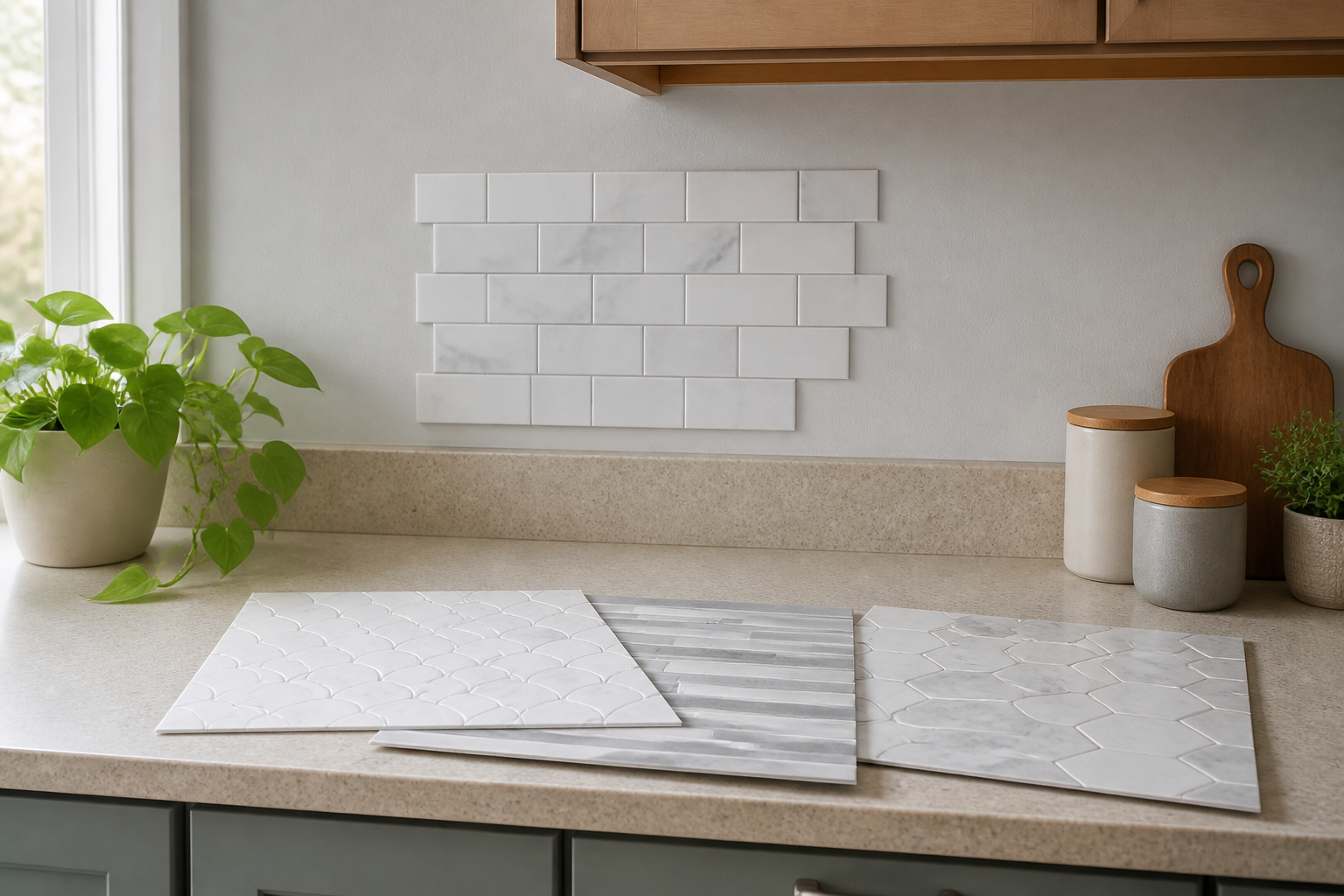
Compare samples only after checking the wall and lease: Browse category: Shop peel-and-stick backsplash samples on Amazon.
This is a category shortcut, not a tested ranking. Confirm the maker's surface, temperature, moisture, cleaning, installation, and removal instructions for the exact product and kitchen location.
Quick Decision: Buy, Skip, Delay, Choose an Alternative, or Escalate
- Buy: the lease or landlord allows it, the exact product names your wall surface as compatible, and the planned zone stays within the manufacturer's heat and moisture limits.
- Skip: the wall is textured, peeling, soft, damp, greasy, recently painted, or otherwise excluded by the product instructions—or you cannot accept possible paint or residue damage.
- Delay and sample-test: request approval, buy a small sample, document the wall condition, and follow the product's test and removal directions before covering a visible area.
- Choose an alternative: use a freestanding wipeable splash guard, a removable panel system that does not bond directly to the wall, or focus on counter organization and cleaning instead.
- Escalate: report loose outlets, damaged wall material, recurring water, stains, soft drywall, failed caulk, or other maintenance concerns rather than covering them.
When the Upgrade Is Worth the Risk
The strongest case is a small, low-splatter section of smooth, clean wall where the product instructions clearly allow installation. A coffee station or prep counter can be a lower-commitment starting point than a full sink or cooking wall. A sample lets you judge color, sheen, seam visibility, adhesion, and removal behavior before spending on a full layout.
It also helps when you value easier wiping and a visual refresh enough to handle careful measuring, trimming, cleaning, and later removal. Treat “removable” as a product instruction to verify, not a guarantee that every paint layer will survive.
Check These Five Things Before Buying
- Permission: read the lease and get written landlord or property-manager approval when required. Save that approval with the product instructions.
- Wall condition: check for sound paint, a smooth surface, dryness, and freedom from grease. Do not cover damage or moisture.
- Exact kitchen zone: map sinks, seams, corners, outlets, appliance vents, and hot surfaces. General “kitchen safe” language is not a substitute for the maker's placement limits.
- Removal tolerance: decide whether you can accept residue, paint color differences, touch-up work, or withheld deposit risk if removal goes poorly.
- Full cost: include samples, extra sheets for pattern matching and mistakes, edge finishing where approved, cleaning supplies, and possible wall restoration.
Heat and Appliance-Clearance Tradeoffs
There is no universal safe clearance for all peel-and-stick materials or kitchens. Vinyl, foam, gel, and rigid panels can have different temperature and placement limits. Follow the exact product instructions plus appliance and building requirements. If those directions conflict or are unclear, do not install in that zone.
Avoid assuming a decorative sheet is a fire barrier or a substitute for a required noncombustible surface. Areas near burners, open flames, oven vents, toaster ovens, kettles, and other concentrated heat deserve particular caution. Ask the landlord or an appropriate qualified professional when the existing wall treatment or required clearance is uncertain.
Water, Cleaning, and Maintenance Tradeoffs
A wipeable face does not make every installation waterproof. Water and grease can work into seams, cut edges, counter joints, and outlet openings. If the sink area routinely stays wet, a removable splash guard or landlord-approved repair may be more sensible than bonded sheets.
Check which cleaners the finish tolerates. Deep embossing and many seams can hold residue, while abrasive tools or strong degreasers may dull or lift some materials. Keep leftover matching pieces for a damaged section, but do not layer a patch over a wet or failing wall.
Setup Difficulty Is Easy to Underestimate
Measure the wall height and length, cabinet underside, corners, counter line, and every obstruction. Sketch where seams will land before ordering. Uneven walls and counters make rigid patterns harder to align, and a row that starts slightly crooked becomes more obvious across a long run.
Cleaning and drying the approved surface, acclimating material if required, planning pattern repeats, trimming cleanly, and pressing edges according to directions all take time. Do not loosen or modify electrical devices to make a decorative product fit; bring outlet or wiring concerns to the landlord or a qualified electrician.
Red Flags
- “Renter-friendly” claims without specific compatible surfaces and removal instructions.
- No temperature guidance, especially when the product is marketed for cooking areas.
- Promises of waterproofing, wall repair, fire resistance, or damage-free removal without applicable documentation.
- A planned installation over cracked, bubbling, stained, soft, damp, or flaking material.
- A layout that requires material inside electrical boxes, across vents, or closer to appliances than their instructions allow.
- Buying the full quantity before testing color, adhesion, cleaning, and removal on the actual wall.
Who Should Skip Peel-and-Stick Backsplash
Skip it if you have a short lease, strict alteration rules, weak or specialty paint, a textured wall, recurring condensation, or a deposit you cannot risk. It is also a poor fit when you dislike visible seams, do not have time for careful prep, or need the surface to tolerate heavy scrubbing.
Skip direct-adhesive material in any zone where the maker, appliance instructions, landlord, or building requirements do not clearly support it. A bare but clean wall is better than an uncertain installation near heat, water, damaged finishes, or electrical components.
Lower-Risk Alternatives
- Freestanding splash guard: useful behind a coffee maker or sink if stable, cleanable, and kept within all appliance clearances.
- Small sample-sized accent: limits cost and removal exposure while showing whether the look works in the room.
- Landlord-installed finish: appropriate when the existing wall is damaged or genuinely needs a durable backsplash.
- No wall covering: better cleaning tools, a sink caddy, or improved counter layout may solve the practical problem without altering the rental.
Bottom Line
Peel-and-stick backsplash is worth it for some renters, but only after permission, surface compatibility, placement limits, and removal risk are clear. Start with one sample in a low-risk zone and delay the full purchase until it passes the exact product's test process. Choose a non-bonded alternative or landlord repair when heat, water, wall condition, or deposit risk makes the upgrade a poor trade.