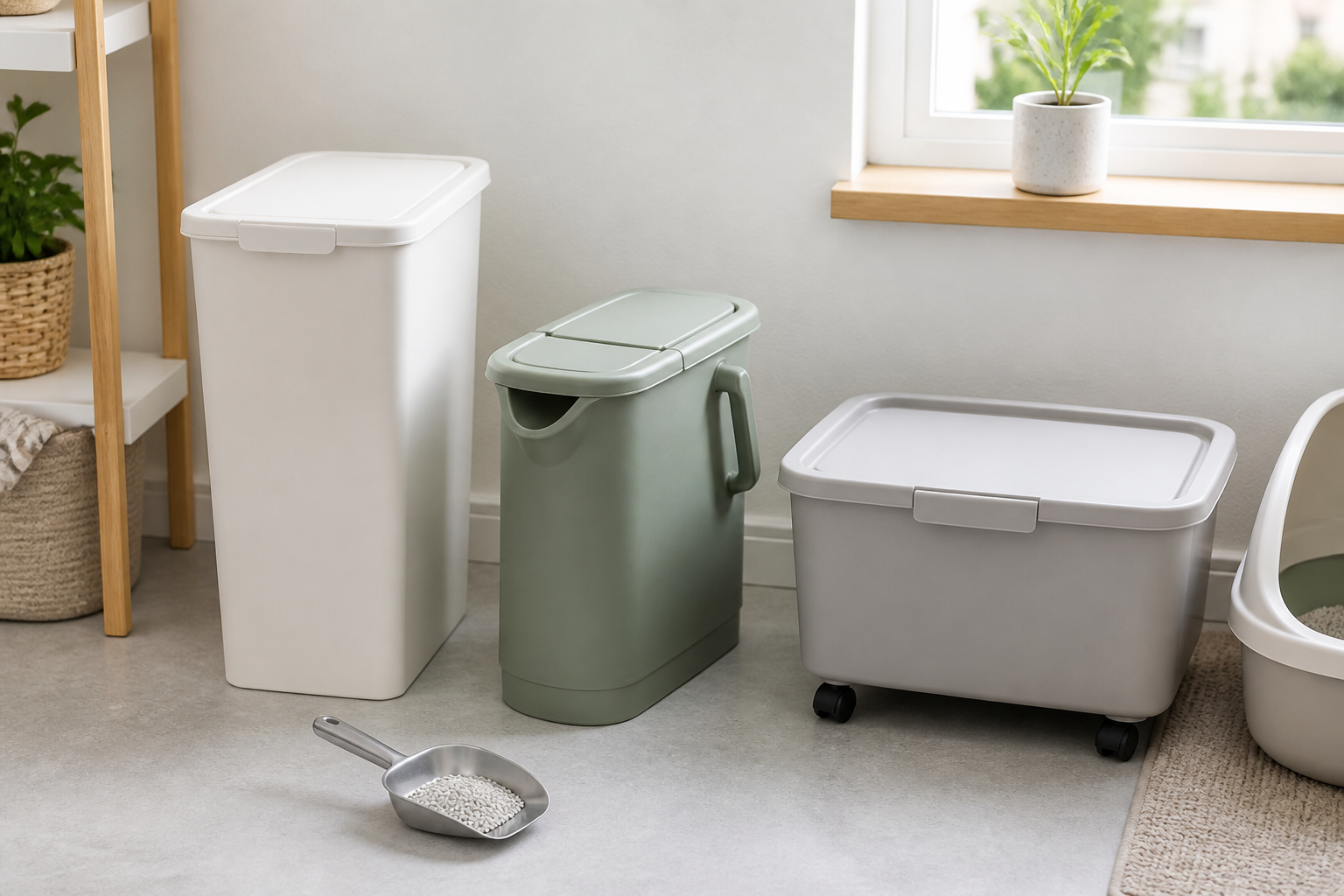
This guide covers storage for clean, unused litter only. It is separate from waste-disposal systems, which hold soiled litter after scooping. A storage container is an organization convenience; it does not make litter healthier, prevent litter-box problems, or replace the product label and your veterinarian's advice.
Best for a Narrow Footprint: A Slim Lidded Bin
A tall, narrow bin can use the gap beside a litter box, inside a closet, or under a utility shelf more efficiently than a wide tub. It works best when the base stays stable as the fill level drops and the lid opens without hitting a wall, shelf, or plumbing.
The tradeoff is reach. Deep bins can be awkward to scoop from, and tipping a large filled bin may be unsafe or messy. Compare internal depth as carefully as floor dimensions, and skip a shape that requires leaning, lifting, or twisting beyond what is comfortable.
Best for Controlled Refills: A Handled Pour Container
A smaller handled container suits owners who transfer only a manageable amount from the original bag. A shaped spout may guide litter into the box with less overshoot, provided the cap closes securely and the filled container remains comfortable to hold with two hands when needed.
Do not assume a narrow opening is easy to clean. Check whether the lid or spout removes and whether your hand or cleaning tool can reach every interior surface. Let the container dry fully before adding clean litter.
Best for Moving Heavier Litter: A Compact Wheeled Bin
A wheeled bin can move a larger supply from a closet to the litter area without carrying the full weight. It is most useful on a smooth, level path with enough turning room and no stair, thick rug, or tall threshold between storage and use.
Casters add height and can roll while you scoop. Look for a stable stance, a handle that does not create a trip point, and wheels suited to the floor. Park the container away from doors and walking routes, and do not let a curious pet climb on it.
Selection Criteria That Matter
- Usable capacity: Compare the litter package volume or weight with the maker's stated container capacity, while remembering that different litter materials pack differently.
- External footprint: Measure width, depth, and height at the actual storage spot, including baseboards, pipes, shelves, doors, and room for the lid to open.
- Filled handling: Estimate whether you can lift, tilt, roll, or scoop from the container comfortably when full. A smaller refill container may be more practical than one large bin.
- Opening and pour control: Wide openings simplify scooping and cleaning; spouts can guide pouring but add seams and narrow channels.
- Lid and closure: Choose a closure that stays on during ordinary use and remains easy for the owner to open. Do not treat an unverified seal as airtight or odor-proof.
- Material and cleaning: Follow the maker's directions and verify any material claims on the current listing. Favor smooth interiors that can be emptied, reached, washed, rinsed, and dried.
- Wheels and stability: Check wheel direction, locks if offered, thresholds, carpet performance, and whether the bin shifts during scooping.
- Original information: Keep the product name, type, lot code, instructions, and other useful package details available even after transferring litter.
A Practical Comparison Framework
First, decide whether the whole litter package must fit or whether you will transfer a smaller working amount. Measure the storage spot and the route to the box. Remove any option whose lid cannot open fully, whose bottom is difficult to reach, or whose filled weight would make the daily motion awkward.
Next, match access to frequency. A slim lidded bin prioritizes footprint, a pour container prioritizes controlled refills, and a wheeled bin prioritizes movement. Finally, imagine emptying the last litter, cleaning every corner, drying the container, and retaining the original label. If that cycle looks cumbersome, choose a simpler or smaller format.
Keep the Original Package Information
If you transfer litter, save the original bag or photograph the front, product type, lot code, and instructions. Those details help you buy the same variety again, follow disposal and care guidance, and identify the product if the maker posts a notice. Do not mix new litter into an unidentified remainder if doing so would make the contents unclear.
Keep the container dry and away from food, pet food, medication, children's items, and cleaning chemicals. Use a dedicated scoop if you scoop from bulk litter, and do not reuse the container for food or water.
Who Should Skip a Separate Container
Skip one if the original bag already closes securely, fits the storage spot, and is easy for you to pour or scoop from. Keeping litter in its package avoids a transfer step and keeps all identification and instructions attached.
Also skip a tall or wheeled bin if your pet can knock it over, the lid blocks a walkway, wheels make it unstable, or you cannot clean and dry the interior. A small shelf, bag clip, or lidded secondary tray beneath the original bag may solve the space problem with less equipment.
Connect Storage to the Litter Routine
Storage handles the unused supply; the rest of the litter area needs separate decisions. Compare clumping and non-clumping litter by the cleanup routine, then use the litter scoop guide for basket and slot fit. A litter mat addresses tracked granules, while a disposal system holds waste rather than clean litter.
A container cannot fix a cat's sudden change in litter-box use. Contact a licensed veterinarian promptly about straining, pain, blood, frequent unsuccessful trips, or abrupt urine or stool changes.
The Bottom Line
Choose a slim lidded bin when floor width is the main constraint, a handled pour container for a smaller working supply, or a compact wheeled bin when a smooth route makes rolling easier than carrying. Measure the full setup, keep package information, and favor a container you can safely handle, completely empty, clean, and dry.