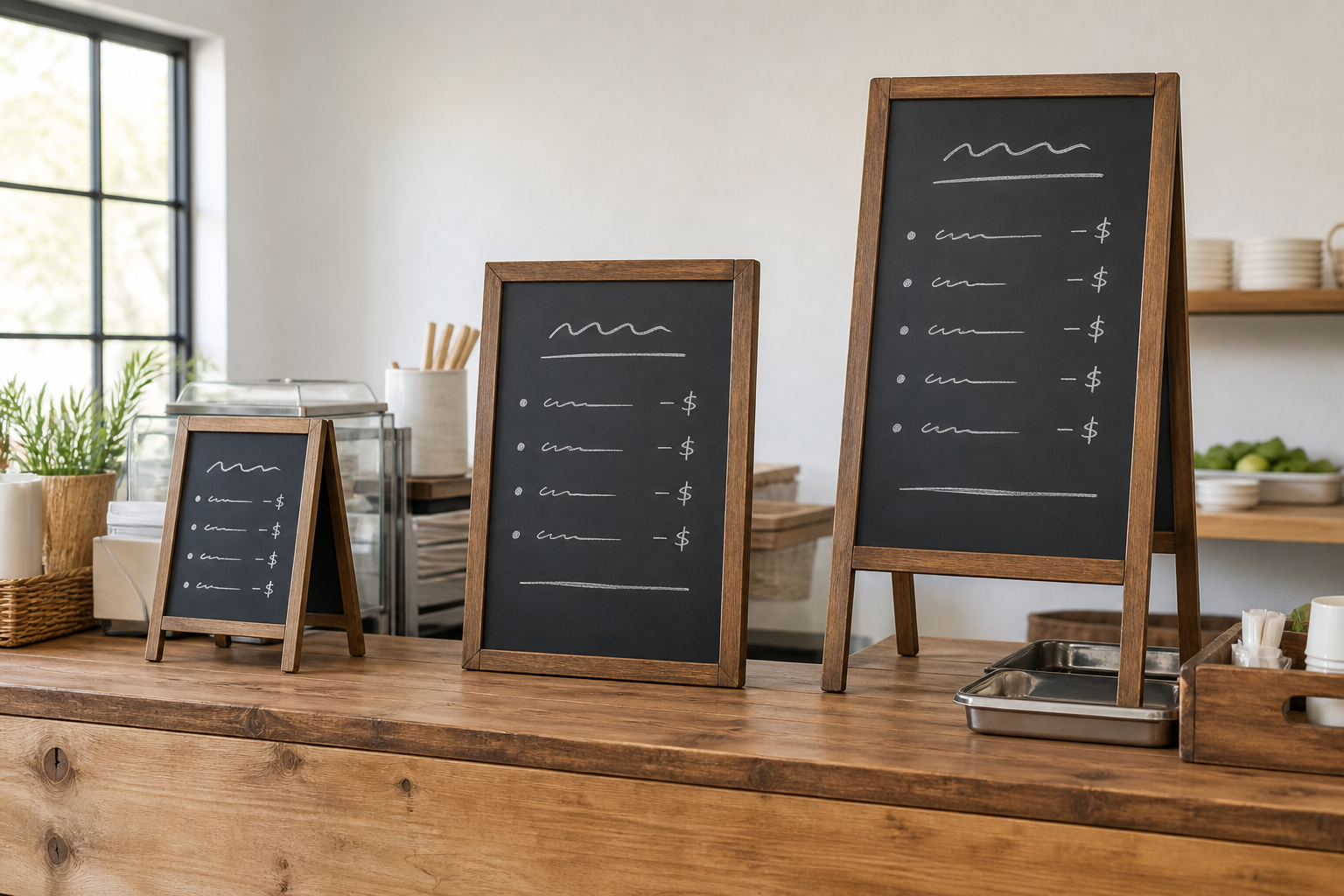
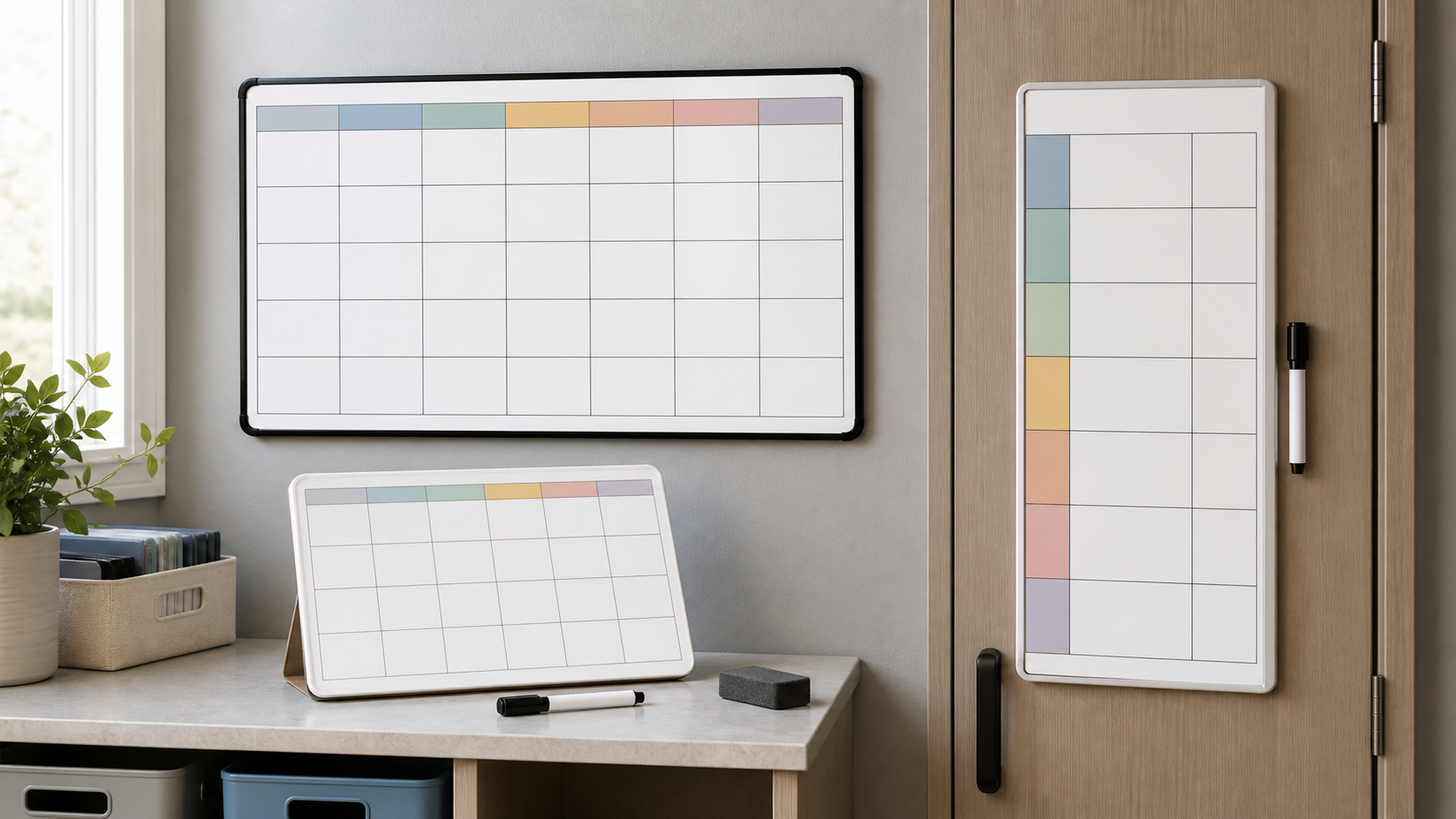
Chalkboard sign vs dry-erase sign: which is easier to keep useful?
A chalkboard sign usually suits a styled, short message where hand lettering is part of the presentation. A dry-erase sign usually suits schedules, status notes, and frequent practical updates. The better choice depends on the actual writing surface, compatible marker or chalk, glare, viewing distance, cleanup instructions, and where the sign will stand or hang.
Reusable signs differ in readable area, writing angle, footprint, and visual tone. Test the real message at the intended viewing distance before choosing a surface.
Disclosure: As an Amazon Associate, we may earn from qualifying purchases and approved partner referrals.
Start here for a short menu, special, welcome message, price, or styled counter display. Verify the listed surface, compatible writing tools, open footprint, and cleaning directions.
Start here for a schedule, check-in note, room status, task list, or message that changes often. Verify the usable writing area, marker guidance, mounting method, and care instructions.
Choose chalkboard when the handwritten look supports the setting and the message is short enough to rewrite carefully.
Choose dry-erase when update speed, structured information, and an easy-to-scan practical layout matter more than a crafted visual style.
Pause before buying when the seller does not identify compatible writing tools, surface dimensions, care directions, mounting or stand details, and intended location.
Who each option fits
A chalkboard sign fits when
A cafe, market booth, event table, kitchen, or home display benefits from informal or decorative lettering.
The message is a short special, greeting, category, price, or instruction rather than a dense schedule.
Someone has time to letter, proof, and clean the board as part of setup.
The maker identifies writing tools that create useful contrast and can be removed using its stated care method.
A dry-erase sign fits when
A studio, office, classroom, household, or counter needs frequent practical updates.
A grid, list, status field, name, time, or short instruction needs to be rewritten quickly.
Several people may update the message and consistency matters more than decorative lettering.
Markers, eraser, and cleaning supplies can stay near the board so maintenance becomes routine.
Tradeoffs that change the decision
Visual style and message density
Dark chalkboard surfaces can make pale lettering feel deliberate and menu-like, but ornate lettering consumes space quickly. Dry-erase boards often support denser grids and operational notes, though a glossy pale face can look utilitarian. Mock up the longest normal message inside the listed writing area—not the outside frame dimensions.
Readability and glare
Contrast depends on the exact surface and writing tool. A dark board with faint chalk is not automatically readable, and a bright dry-erase board can reflect windows or overhead lights. Put a paper mockup at the intended angle, then view it from the customer, visitor, or staff approach. For longer viewing distances, reduce the message before increasing decorative detail.
Writing tools and cleanup
Do not assume every black writing surface accepts both traditional chalk and liquid chalk markers, or that every white coated surface accepts the same marker and cleaner. Follow the product maker's compatibility and care directions. Claims about staining, ghosting, or complete erasure should be treated as product-specific rather than guaranteed by the format.
Placement, portability, and storage
Both formats can be wall-mounted, tabletop, freestanding, or panel-based. Compare the full open footprint, viewing angle, listed weight, stand or mounting method, marker storage, packed dimensions, and protection for the writing face. A portable sign is only useful when it fits the transport kit and remains stable in its intended position.
Setup and maintenance issues
Write the longest realistic message on paper at the candidate surface dimensions.
Place the mockup at the proposed height and angle, then check it from the normal approach.
Confirm the product's compatible chalk or markers, cleaning method, mounting instructions, and intended setting.
Decide where writing tools, eraser, and approved cleaning supplies will live.
Assign an update routine so an old special, schedule, price, or status does not stay visible by mistake.
Clean only as the maker directs, and test a new writing tool on a small area when the instructions recommend it. Protect the face during transport and storage. For tabletop formats, wipe the base and check joints or hinges as directed; for wall formats, keep the mounting points and surrounding wall visible during routine checks.
Skip criteria
Skip chalkboard when frequent rewriting would slow opening, handwriting varies too much, or the message needs a rigid grid and detailed entries.
Skip dry-erase when glare blocks the main sightline, the utilitarian face conflicts with the setting, or the smallest layout cell cannot fit a normal entry.
Skip either rewriteable format when the message rarely changes; a printed insert in a reusable frame may look more consistent and take less upkeep.
Skip a tabletop board when its open base crowds the counter or normal activity could knock it over.
Skip a wall-mounted board when its listed hardware, weight, or writing height does not suit the wall and user.
Pause the purchase when the surface type, compatible tools, care instructions, or setup details are unclear.
Choose the next step
For a changing menu or pop-up counter, use the chalkboard sign guide to compare tabletop, upright, and easel formats. For schedules and shared updates, the dry-erase schedule guide covers grids, writing area, marker storage, and placement.
Choose chalkboard for a concise message where hand lettering and a darker, styled face add to the presentation. Choose dry-erase for operational information that needs quick, repeatable updates. In either case, the exact surface, compatible writing tool, usable area, viewing angle, setup, and care routine matter more than the category name.
 The Good Sign Company