 The Good Sign Company
Small-business sign comparison
Custom logo sign vs printed banner: choose for permanence or portability.
A rigid custom logo sign can anchor a reception wall or recurring brand backdrop. A printed banner can cover more visual area, travel compactly, and adapt to temporary displays. The right format depends on where the sign works, how often it moves, how stable the message is, and what the setup can safely support.
Disclosure: As an Amazon Associate, we may earn from qualifying purchases and approved partner referrals.
The short answer
Choose a custom logo sign when the location and brand identity are settled, the display should look integrated with the room, and the mounting plan can support a rigid piece. Choose a printed banner when the display must travel, store compactly, fill a temporary backdrop, or make a message easier to replace. Neither format is automatically more professional: a well-scaled banner with a clean support can outperform an undersized wall sign, while a permanent reception wall usually benefits from the depth and fixed alignment of a rigid sign.
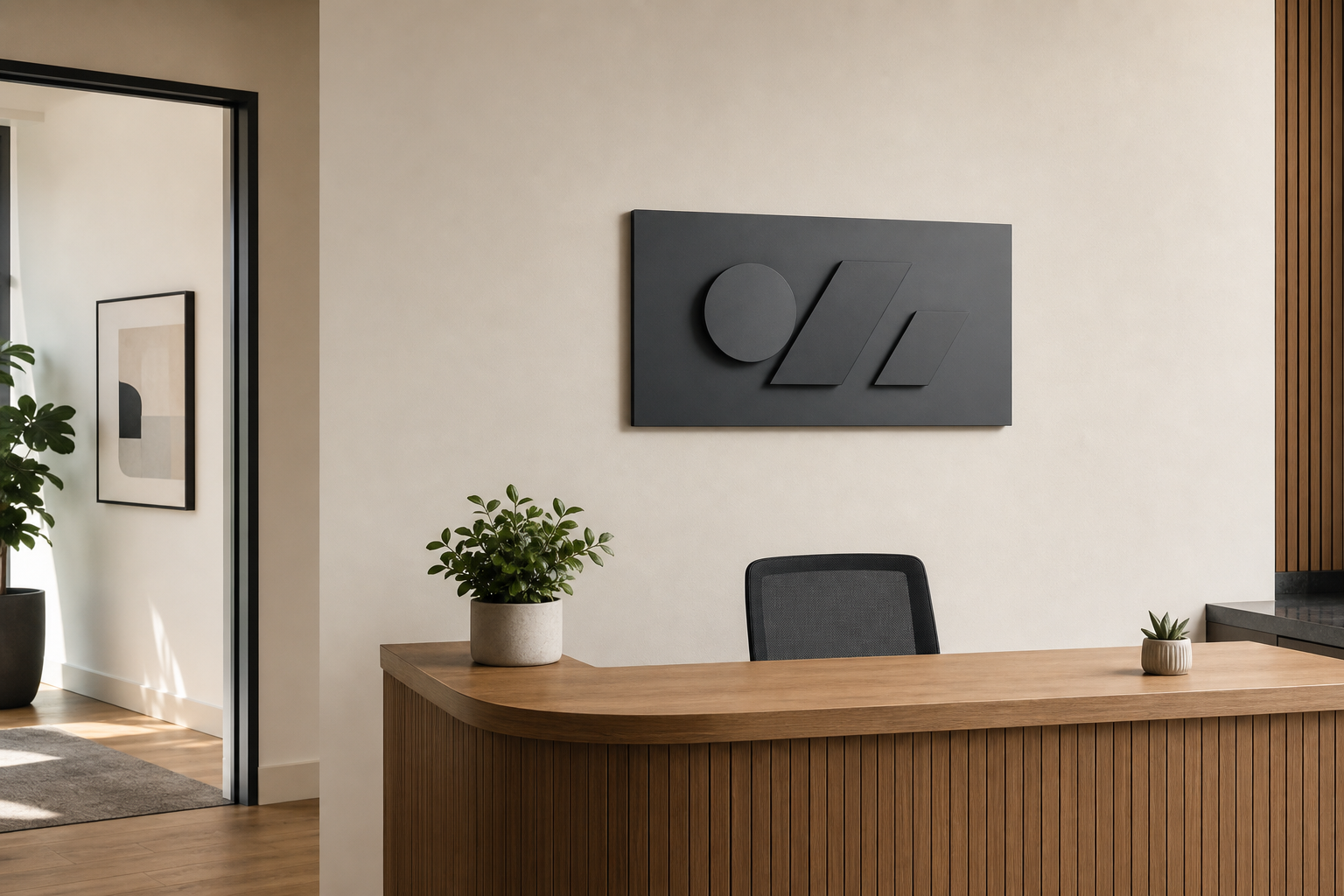
Custom logo sign
Best fit for a reception area, office wall, counter backdrop, or other location where the brand and placement will remain stable.
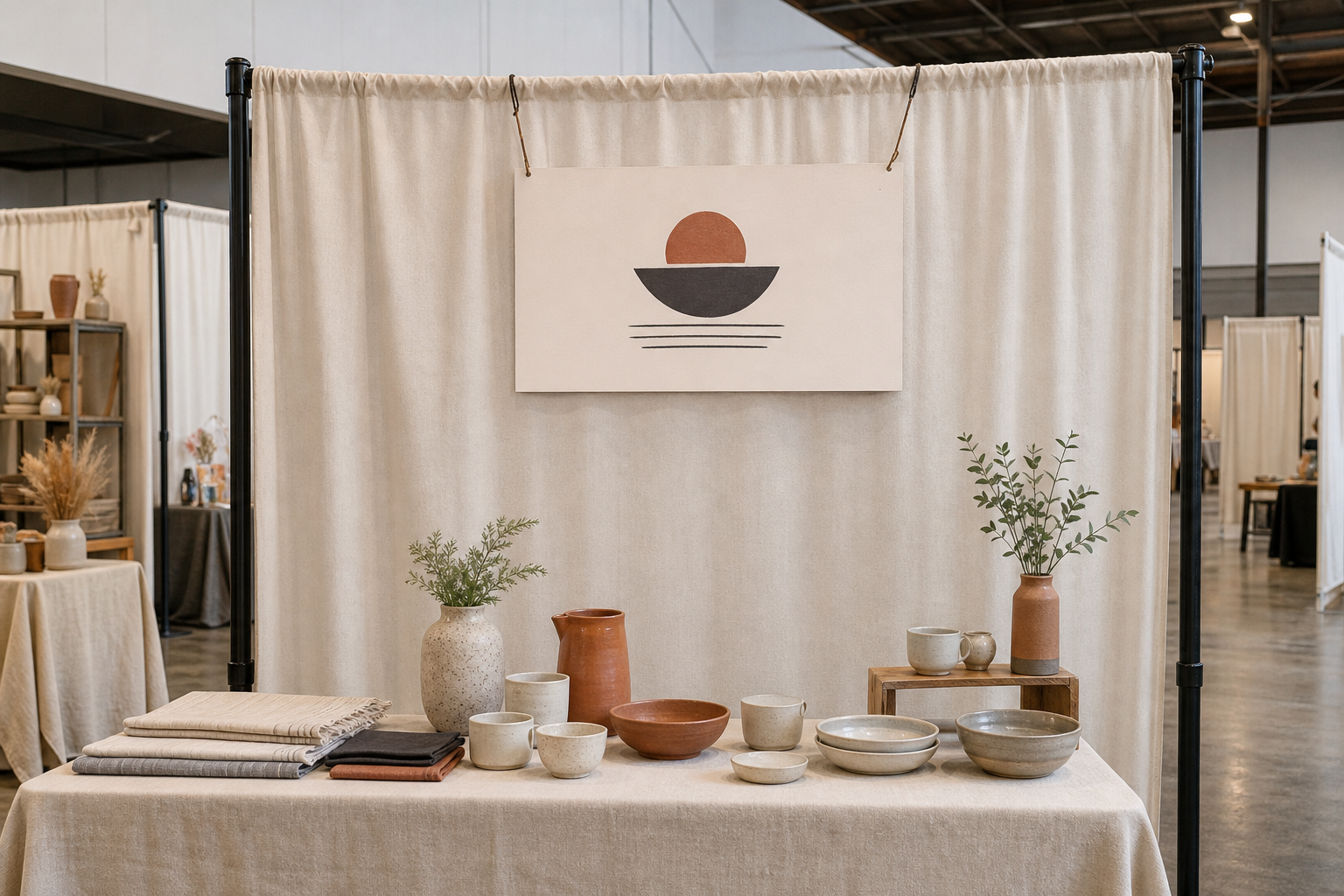
Printed banner
Best fit for booths, recurring events, temporary interiors, and displays that must pack down or change with a campaign.
Who each format fits
A custom logo sign fits when
- The same logo or business name will stay in the same place for a long time.
- The wall is part of the customer experience, such as a reception desk, meeting backdrop, studio check-in, or office entry.
- Depth, edge detail, wall shadow, or a precisely fitted shape matters to the visual result.
- You have reliable measurements, usable artwork, and permission to make the intended installation.
A printed banner fits when
- The display travels to markets, conferences, pop-ups, sponsor events, or temporary indoor locations.
- The message, offer, date, or campaign may change before the core brand does.
- Storage volume and packed weight matter more than wall depth.
- A backdrop, stand, or approved hanging point already defines the setup.
Compare the tradeoffs that change the decision
Presentation and viewing distance
A rigid logo sign can create physical depth and a deliberate relationship with the wall. That makes it useful where visitors approach from a consistent direction and the sign becomes part of the room. A banner presents the brand on one printed plane. Its larger field can work well across an aisle, but wrinkles, curled edges, loose tension, and a busy layout can reduce clarity.
For either option, identify the farthest useful viewing point, then simplify the message until the business name or core mark is clear from there. Small contact details belong on a close-view handout, QR sign, or counter card rather than being squeezed into a distance sign.
Portability, storage, and repeat use
A banner can roll or fold according to the printer's care instructions and may fit into a compact event kit. The support still counts: poles, bases, clamps, cords, and protective packaging can take more room than the printed piece. A rigid sign usually needs more protective storage and is less forgiving of impacts during transport, so it makes more sense when moves are infrequent.
List every component before calling a setup portable. If one person cannot carry, assemble, level, and repack it within the actual event routine, the format may be portable only on paper.
Message life and change frequency
A permanent logo sign works best for identity elements that are unlikely to change. Do not build temporary hours, event dates, pricing, social handles, or rotating offers into the main sign unless replacing the whole piece is acceptable. A banner is easier to dedicate to a campaign or season, but repeated reprints can become wasteful when the only changing information could live on a smaller insert or tabletop sign.
Finish, glare, and the background
Judge the finish in the real light. A dimensional sign needs enough contrast from the wall for its shapes and letters to remain distinct. A banner needs a background or support that does not show through, distort the print, or compete with it. Ask each provider about the specified finish and care guidance; do not assume that every rigid sign is low-glare or every fabric print hangs without wrinkles.
Setup and maintenance
For a custom logo sign
Measure the usable wall, not the full wall. Record switches, trim, furniture, door swing, sightlines, and known wall details. Confirm the finished dimensions, weight, mounting points, standoff or wall-clearance needs, and included hardware with the provider. Match the installation plan to the actual surface and project requirements. The custom business sign brief lists the photos and measurements worth gathering first.
For routine care, follow the maker's instructions for the specific face, print, finish, and edges. Dust-catching depth and raised elements may take longer to clean than a flat banner, while aggressive cleaners can damage an unfamiliar finish.
For a printed banner
Confirm the finished size, edge construction, attachment points, stand or support, packed dimensions, and care instructions. Test the full setup before the event. The print should be tensioned as intended without improvising an attachment, blocking an aisle, or relying on a venue structure that has not been approved. The market-booth hanging sign guide covers support, sightline, and packed-size questions.
Clean and store the banner according to the printer's instructions. Give it time to dry before packing, protect the printed face from sharp hardware, and keep every pole, base, and fastener together so the next setup is complete.
Skip criteria
- Skip the custom logo sign if the logo, location, lease decision, wall dimensions, or approval path is still changing.
- Skip the banner if the display needs to look permanently integrated with a reception wall or the setup cannot keep the print flat and stable.
- Pause either purchase if the logo file is only a small screenshot, the primary message is unclear, or nobody has measured the real sightline.
- Choose a tabletop format instead when the message is meant for people already at a counter or booth and floor or wall space is limited. Compare wall-mounted and tabletop signs.
- Use a changeable sign when staff must update the message often. The changeable letter-board guide explains close-view options.
Prepare the next step
For a fixed interior logo sign, gather the vector artwork if available, exact wall measurements, straight-on and approach photos, viewing distance, wall color, known surface details, and the desired installation outcome. Then ask the sign provider to confirm project fit, construction, dimensions, mounting approach, care, and required approvals rather than assuming those details.
For a banner, send the printer the final artwork, intended finished size, normal viewing distance, support type, attachment method, indoor or event setting, transport plan, and message-change expectation. Ask for the current product specifications and artwork requirements for the exact banner format being considered.
Verdict
A custom logo sign is the stronger fit for a stable identity in a stable interior location. A printed banner is the stronger fit for movement, compact storage, temporary displays, and messages that may change. Make the choice only after counting the complete setup: wall preparation and mounting for the rigid sign, or support, tension, transport, and storage for the banner. For the broader sequence of message, placement, measurement, artwork, and provider questions, return to the small-business sign planning pillar.
This comparison does not determine outdoor suitability, installation, property approval, accessibility, electrical, permit, or code requirements. Confirm those project-specific questions with the appropriate provider, property contact, or authority.