 The Good Sign Company
Storefront sign comparison
Wall sign or window vinyl? Choose by the message job.
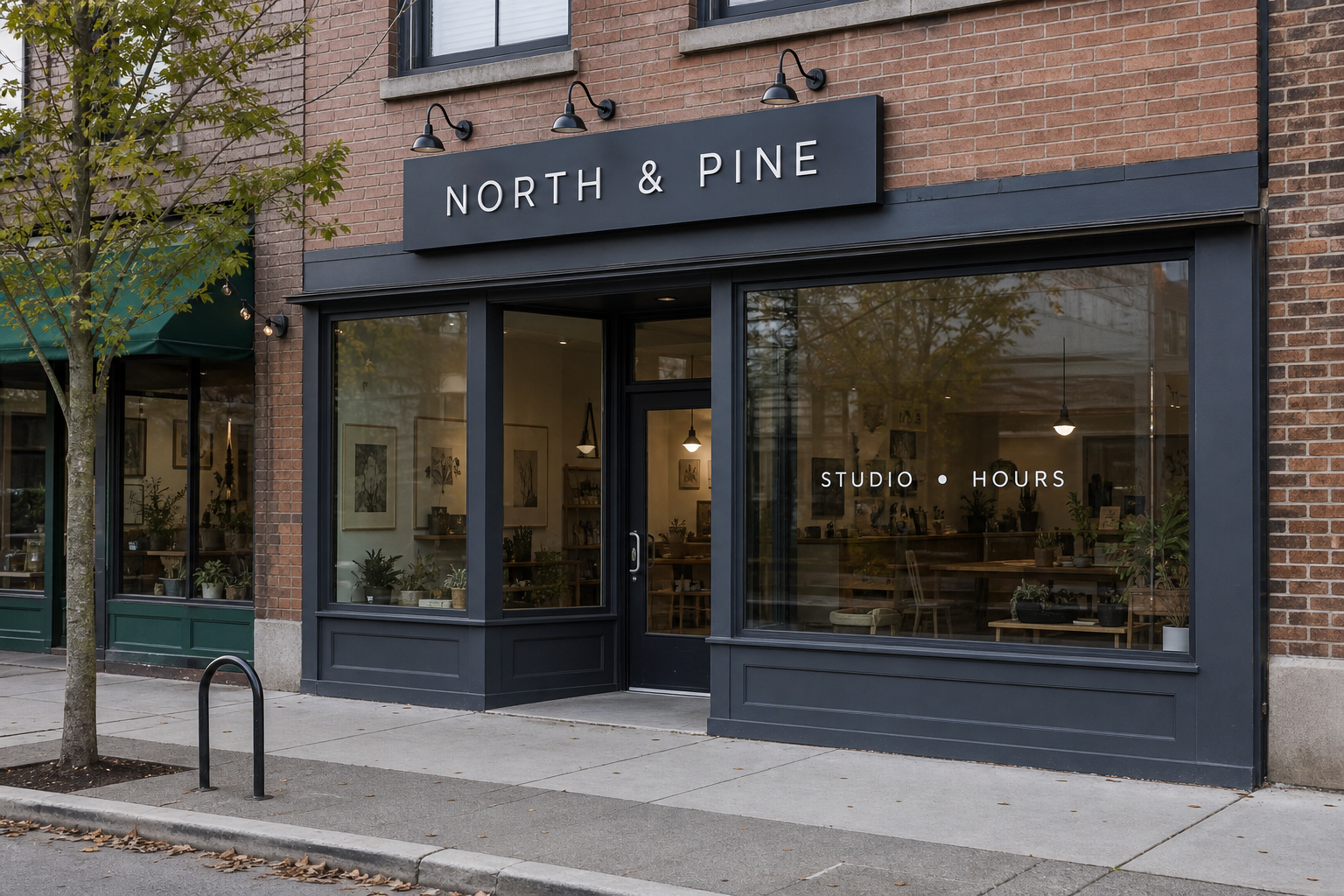
A wall sign is usually the stronger candidate for stable business identification at a longer view. Window vinyl is usually better for information people read closer to the glass. The right choice starts with where the customer is standing and what they need to learn there.
Disclosure: As an Amazon Associate, we may earn from qualifying purchases and approved partner referrals.
Use a wall sign for identification, not a full information sheet
A wall-mounted sign can occupy a more prominent part of the facade and may remain visible before a customer reaches the door. That makes it a logical place for a business name or concise identity mark. It is less useful when the message changes frequently or needs several lines of detail.
Test the proposed name or mark in a wide storefront photo. If a passerby cannot tell what should register first, simplify it with the business-sign message-length guide. If customers mainly approach along the sidewalk instead of facing the wall, also compare a projecting blade sign.
Use window vinyl for close-range, glass-specific information
Window vinyl can place hours, an entrance cue, a short service description, or another close-view message where someone naturally pauses. It uses the glass rather than adding a separate freestanding display, but reflections, displays behind the window, mullions, blinds, and interior lighting can compete with the lettering.
Window space is not free just because it is already there. Vinyl can reduce the clear view into or out of the business and can crowd merchandise or displays. Photograph the glass during the hours the message matters, then mark the areas that must remain clear before choosing a layout.
Compare the two routes
| Decision | Wall sign | Window vinyl |
|---|---|---|
| Best message job | Stable business identity | Short, closer-view information |
| Typical viewing moment | Before the customer reaches the entrance | Near the window or door |
| Visual competition | Facade details, neighboring signs, awnings, and trees | Reflections, interior displays, mullions, blinds, and glare |
| Change planning | Favor content expected to remain useful | Better candidate for information likely to need updates, subject to the chosen product and removal plan |
| Site information needed | Facade photos, proposed area, viewing approaches, and building details | Glass dimensions, panel divisions, reflections, clear-view needs, and inside/outside placement questions |
Using both can be clearer than forcing one sign to do everything
A small storefront may use a wall sign for the durable identity and restrained window vinyl for hours or a closer-view cue. The messages should support each other rather than repeat every word. First decide what someone must understand from farther away, then what becomes useful only after they arrive.
For hours specifically, use the store-hours window vinyl guide to plan hierarchy, contrast, glass placement, reflections, and updates. If the facade identity may use individual illuminated letters, continue with the channel-letter planning guide.
Know when to skip each option
- Skip or delay a wall sign when the brand, business name, entrance, tenancy, or proposed facade location is still likely to change.
- Skip window vinyl when an unobstructed view through the glass matters more than the additional message.
- Skip detail-heavy wall copy when customers will not have enough viewing time to read it.
- Skip low-contrast window lettering when reflections and the changing interior background make it disappear.
- Pause either route until the property contact and project-specific approval questions are identified.
This comparison is a planning framework, not advice about property rules, installation, accessibility, electrical work, or local requirements. Those questions depend on the site and should be confirmed with the appropriate property contacts, sign professionals, and authorities.
Prepare one brief before requesting options
- Wide facade photos plus customer approach photos from the actual viewing directions
- Straight-on photos and approximate dimensions of the proposed wall and glass areas
- The exact identity message and each closer-view message, separated by priority
- Day and evening photos showing reflections, interior displays, and existing lighting
- Expected message-change frequency and any clear-view areas the glass must preserve
- Known property contacts, existing sign information, and unresolved constraints
DaNite Sign Company's current public site says it provides custom sign design, fabrication, installation, and repair for Columbus businesses, and specifically lists simple window vinyl with store hours among its project range. That makes it a relevant next step for an actual Columbus-area storefront project. Confirm service fit, design, materials, installation, approvals, schedule, and cost directly for the site.