Are Door Draft Stoppers Worth It for Apartments?
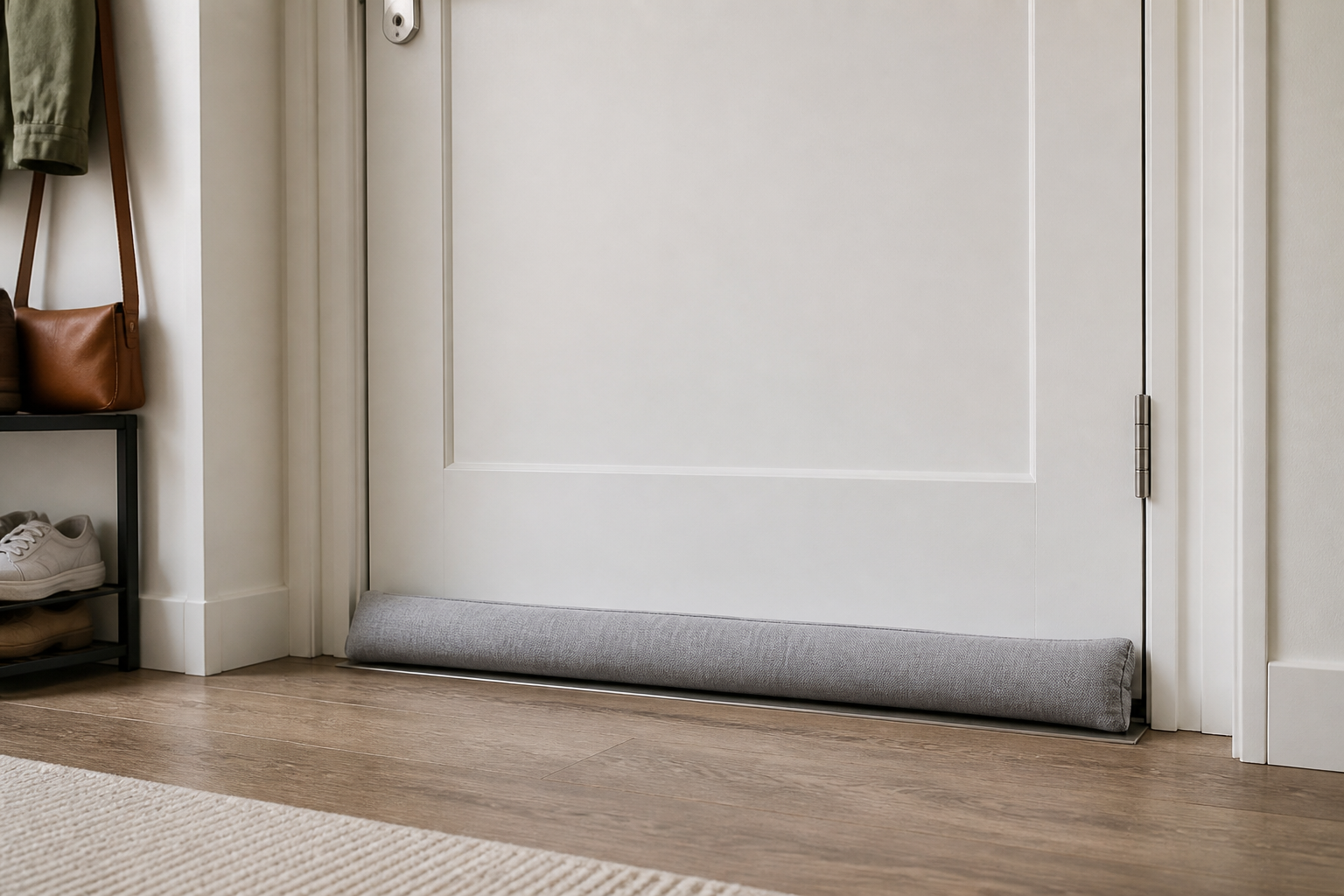
A door draft stopper is worth it when a modest, measurable gap under an apartment door is causing a noticeable draft or light leak and the product will not interfere with opening, latching, or safe passage. Skip the gadget when the gap is elsewhere, the door is damaged or misaligned, or the building needs to repair a threshold, frame, or seal.
As an Amazon Associate, The Good Home Doc may earn from qualifying purchases.
Shop only after checking the gap and door swing: Browse category: Compare apartment door draft stoppers on Amazon.
This is a category shortcut, not a tested ranking. Confirm the product length, supported gap, door thickness if applicable, floor and threshold compatibility, cleaning directions, and installation limits.
Quick Decision: Buy, Skip, Delay, Choose an Alternative, or Escalate
- Buy: the unwanted airflow or light clearly comes through a small bottom gap, the door works normally, and a measured low-profile stopper can fit without dragging or becoming a trip hazard.
- Skip: the product would block required clearance, ventilation, egress, latching, or daily access; or you mainly want soundproofing, pest control, or odor control that a simple stopper cannot reliably provide.
- Delay: you have not located the gap, measured it in several places, checked the door swing over rugs and thresholds, or reviewed the lease and building rules.
- Choose an alternative: use a temporary perimeter seal for frame gaps, curtains or window treatments for a drafty window, or a non-attached fabric stopper when adhesive and door modifications are not acceptable.
- Escalate: report a door that is warped, loose, difficult to latch, visibly damaged, admitting water, or surrounded by a failed threshold or seal. Shared-building and fire-rated entry doors should not be altered without property-manager approval.
When a Draft Stopper Is a Sensible Buy
The clearest use case is a straight, limited gap at the bottom of a normally operating door. A full-width stopper can reduce the open path for moving air and make a visible light line less noticeable. The purchase is easier to justify when the entry floor is clear, the product can be removed for cleaning, and the door is not opened so often that a loose stopper becomes irritating.
Keep expectations modest. A stopper addresses one opening at floor level. It does not insulate the whole door, correct frame gaps, repair weatherstripping, or stop sound moving through walls and the door itself. It may soften some sound or odor passing through the open gap, but meaningful soundproofing and source control are different jobs.
Find the Real Gap Before Shopping
With the door closed and latched normally, look for a light line and feel for airflow without using a flame. Check the bottom, both sides, and the top. If the problem follows the frame rather than the floor, a bottom stopper is the wrong format. The temporary seal guide explains less-permanent frame options.
Measure the door width and the bottom clearance at the left, center, and right. Then open the door through its full swing and note carpet, mats, raised thresholds, floor transitions, and uneven spots. A slide-on or attached product needs enough clearance everywhere it travels, not only when the door is closed.
Cost, Setup, and Maintenance Tradeoffs
A loose weighted fabric stopper is usually the simplest commitment: it needs no adhesive and can be moved, washed, and packed. Its tradeoff is daily repositioning. A double-sided or slide-on design travels with the door, but it has to fit the door thickness and may drag, bunch, or make closing harder. An adhesive sweep can look tidy, yet residue and finish damage make it a higher-risk rental choice.
The purchase price is not the only cost. Door-bottom products collect dust, grit, hair, and moisture. Check whether the cover is removable or the whole product is washable, how it must be dried, and whether cleaning it will be realistic. Replace a product that tears, sheds filling, stays damp, or begins interfering with the door.
Setup should not require forcing the door or compressing an oversized product into place. After installation, open, close, latch, and unlock the door several times. Confirm that nobody has to step over a loose cylinder in a narrow or dark entry.
What Matters Most
- Correct location: the actual gap is under the door, not along the frame or at a window.
- Full-width fit: the product covers the opening without projecting far into the walking path.
- Clearance: attached styles pass over every threshold, rug, and uneven section of floor.
- Normal operation: the door still opens, closes, latches, and locks without extra force.
- Renter-safe setup: the installation follows the lease, property rules, door instructions, and product directions.
- Cleanability: the material can be maintained in a dusty, high-traffic location.
Red Flags That Make the Product a Bad Fit
- The door already rubs, sticks, fails to latch cleanly, or shows damage at the hinges, frame, threshold, or lock.
- The product would cover a vent, alter a shared-building entry door, or conflict with fire-door, accessibility, or emergency-egress requirements.
- Product claims imply that a fabric tube will soundproof a room, stop pests, or solve strong smoke, gas, sewage-like, or unexplained odors.
- An adhesive product lacks clear surface, temperature, cure-time, and removal instructions.
- The stopper becomes wet from exterior moisture or water intrusion; that calls for maintenance follow-up, not a fabric cover-up.
- The entry is already tight enough that a loose item increases the chance of a trip or obstructs mobility equipment.
Who Should Skip a Door Draft Stopper
Skip a loose fabric style if the door opens constantly, the entry is narrow, or anyone in the household could trip over it. Skip slide-on and double-sided styles when floor clearance is uneven or the door barely clears a mat. Skip adhesive sweeps when the finish is old, damaged, textured, or protected by lease terms you have not clarified.
Also skip the purchase when the problem is not truly the bottom gap. Window drafts need a window solution; widespread cold surfaces need a broader comfort assessment; and a damaged exterior or corridor door belongs on a landlord or property-manager maintenance request.
When to Ask the Landlord or a Qualified Professional
Contact the property manager when the threshold is broken, weatherstripping is missing, the door is misaligned, water enters, the lock does not work normally, or the door may be a regulated shared-building or fire-rated assembly. Do not plane, drill, cut, or permanently alter a rental entry door without explicit authorization.
Strong or persistent smoke, combustion, gas, sewage-like, or unexplained odors are not ordinary draft-stopper decisions. Follow building procedures and seek the appropriate emergency, utility, maintenance, or qualified professional help for the source.
Bottom Line
A door draft stopper is worth it for a modest, measured bottom gap when the door is otherwise sound and the product stays out of the way. Buy the least permanent format that fits the floor and routine. Delay if you have not measured the full swing. Choose a frame seal for perimeter gaps, and escalate door defects or building-door questions instead of hiding them behind a product.