Best Temporary Door Draft Seals for Renters
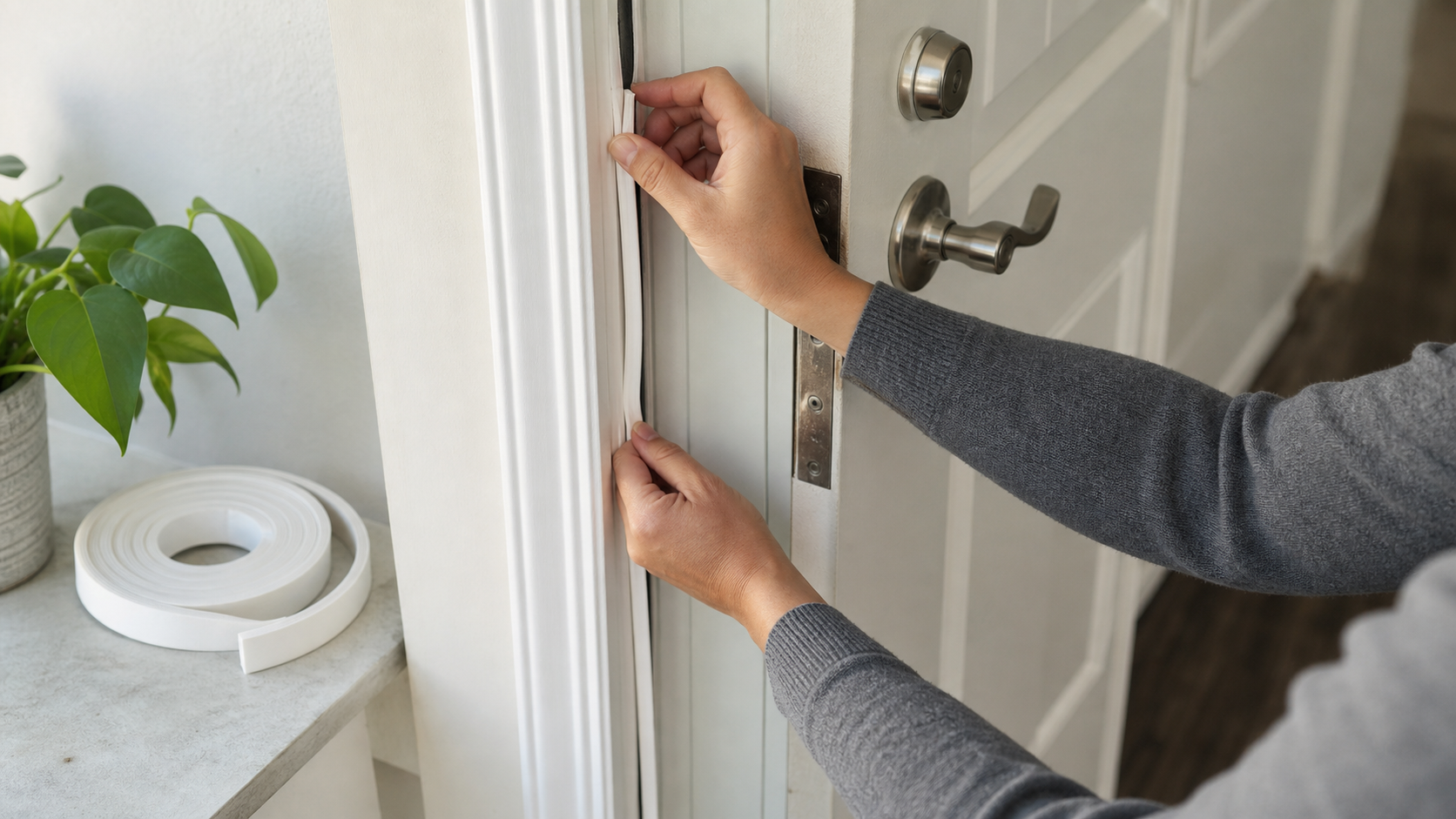
A removable door seal can help with a narrow air gap around the top and sides of a rental door, but only when its profile fits the gap and the door still closes and latches normally. Measure the frame first, then choose the least aggressive adhesive that suits the surface.
As an Amazon Associate, The Good Home Doc may earn from qualifying purchases.
Compare the right seal profile: These affiliate searches are starting points, not tested rankings. Match the listed gap range and material to your door before choosing.
- Browse category: Removable foam door weatherstrippingBest starting category for irregular narrow gaps when gentle compression is useful.
- Browse category: Self-adhesive silicone door-frame sealsUseful where a thinner, wipe-clean profile fits the frame and closure.
- Browse category: Removable compression weather sealsCompare stated gap ranges and shapes before committing to a full roll.
Confirm the manufacturer’s gap range, surface instructions, temperature limits, roll length, removal method, and fire-door restrictions. Do not cover hinges, strike plates, latches, closers, labels, or required clearances.
This page covers temporary foam, silicone, and compression seals applied around the door perimeter. It does not rank brands, and it does not cover loose fabric stoppers or sweeps meant for the bottom edge. That distinction matters: frame seals must compress enough to slow airflow without making the latch difficult to engage.
Quick Picks by Door and Gap
- Best for small, uneven frame gaps: soft open- or closed-cell foam with a clearly stated gap range and a width that stays clear of the latch hardware.
- Best for a slim, wipe-clean profile: flexible silicone or rubber when its shape matches the frame and does not fold into the closing path.
- Best when paint removal is the main concern: a short trial strip with manufacturer removal instructions—or no adhesive product at all if the finish is weak or the lease is unclear.
- Best for a frequently used entry door: a low-profile compression seal that lets the door close and latch with normal effort after installation.
Comparison Framework
Adhesive Foam Tape
Foam compresses easily and can accommodate slight changes in gap width. Closed-cell foam generally absorbs less moisture than open-cell foam, while softer foam is more forgiving when the frame is imperfect.
Choose it when: the gap is narrow but uneven and the frame is smooth, clean, sound, and permitted by the lease.
Watch for: foam that is thicker than the gap, tears during removal, collects grime, or takes a permanent compression set and stops rebounding.
Silicone or Rubber Profiles
Flexible silicone and rubber profiles can be thinner and easier to wipe clean. Shapes vary—flat, D, E, and P-style profiles do not fit the same gap—so the product’s stated compression range matters more than the letter on the listing.
Choose them when: you can identify a consistent gap and want a durable, low-bulk edge.
Watch for: a stiff profile that pushes the door back, interferes with the latch, or lifts at corners because the frame was not clean and dry.
Temporary Compression Seals
Some products use a thicker compressible bulb or kerf-like shape. They may close a wider opening, but many are intended for a specific channel or permanent installation rather than a rental-friendly surface.
Choose them when: the manufacturer explicitly supports surface mounting, removable adhesive, and your measured gap.
Watch for: products that require cutting the frame, removing existing weatherstripping, or forcing material into a channel you do not own.
Measure Before Buying
- Find the actual air gap. Check the top, hinge side, and latch side with the door fully closed. Do not assume the whole perimeter needs new material.
- Measure width in several places. Use the product maker’s measurement method and choose a profile whose working range includes the smallest and largest readings.
- Measure the required length. Add the top and both sides you plan to seal, then allow a modest trimming margin without stretching the material.
- Inspect the closing path. Note hinges, latch bolt, strike plate, deadbolt, closer arm, existing seals, labels, and any spot where added thickness could bind.
- Trial a short section. Install a small piece away from hardware, then close, latch, and reopen the door several times before applying the rest.
Must-Have Buying Criteria
- Published gap range: avoid vague “universal” seals that do not state the opening they are designed to compress into.
- Surface compatibility: painted wood, metal, vinyl, and finished trim can react differently to adhesive and removal.
- Normal door operation: the door must close, latch, lock, and open without unusual force.
- Clear removal directions: heat, solvent, or scraping may be unsuitable for a rental finish even if the product is called removable.
- Replaceable length: buy enough to redo a failed short section without mixing incompatible profiles.
Nice-to-Have Features
Split backing can make long runs easier to align. A light-colored seal is less conspicuous on white trim, while darker material may hide dirt on dark frames. A sample or short roll is useful when the paint condition or closing clearance is uncertain. These conveniences matter less than correct gap fit and safe door operation.
Renter, Fire-Door, and Maintenance Limits
Ask the landlord or property manager before adding material to an entry door when the lease is unclear. Many apartment entry doors are part of a rated assembly. Do not remove an existing seal, alter the frame, cover certification labels, obstruct a door closer, or assume an aftermarket strip is compatible with a fire-rated door. Building management should handle damaged seals, visible frame gaps, failed closers, and doors that do not latch on their own.
A temporary seal is for a modest comfort gap, not water intrusion, smoke, gas, pests, a warped frame, a loose lock, or a door that is difficult to open. Report those conditions rather than layering on more material.
Who Should Skip Temporary Door Seals
Skip adhesive seals when the paint is peeling, chalky, damp, recently painted, textured, or already damaged. Skip them if closing the door requires extra pressure, if the gap changes dramatically around the frame, or if you cannot keep the material clear of hinges and latch hardware.
Also skip this category when the draft is only at floor level. An under-door draft stopper is usually easier to remove and creates less risk for the painted frame. If several windows and doors feel drafty, the broader renter window-insulation guide can help separate product fixes from building maintenance.
Bottom Line
For most renters, the best temporary perimeter seal is a modest foam or flexible silicone profile whose published gap range matches several measurements around the door. Start with a short trial, verify normal closing and latching, and stop if the finish, lease, or door rating makes adhesive a bad bet.