Are No-Drill Curtain Rods Worth It for Renters?
A no-drill curtain rod is worth it when a correctly sized tension or compression rod can sit on sound, parallel surfaces and carry lightweight curtains. Skip it when the window has shallow or uneven returns, the curtains are heavy, a fall could hurt someone, or the lease and surface condition make damage too risky.
As an Amazon Associate, The Good Home Doc may earn from qualifying purchases.
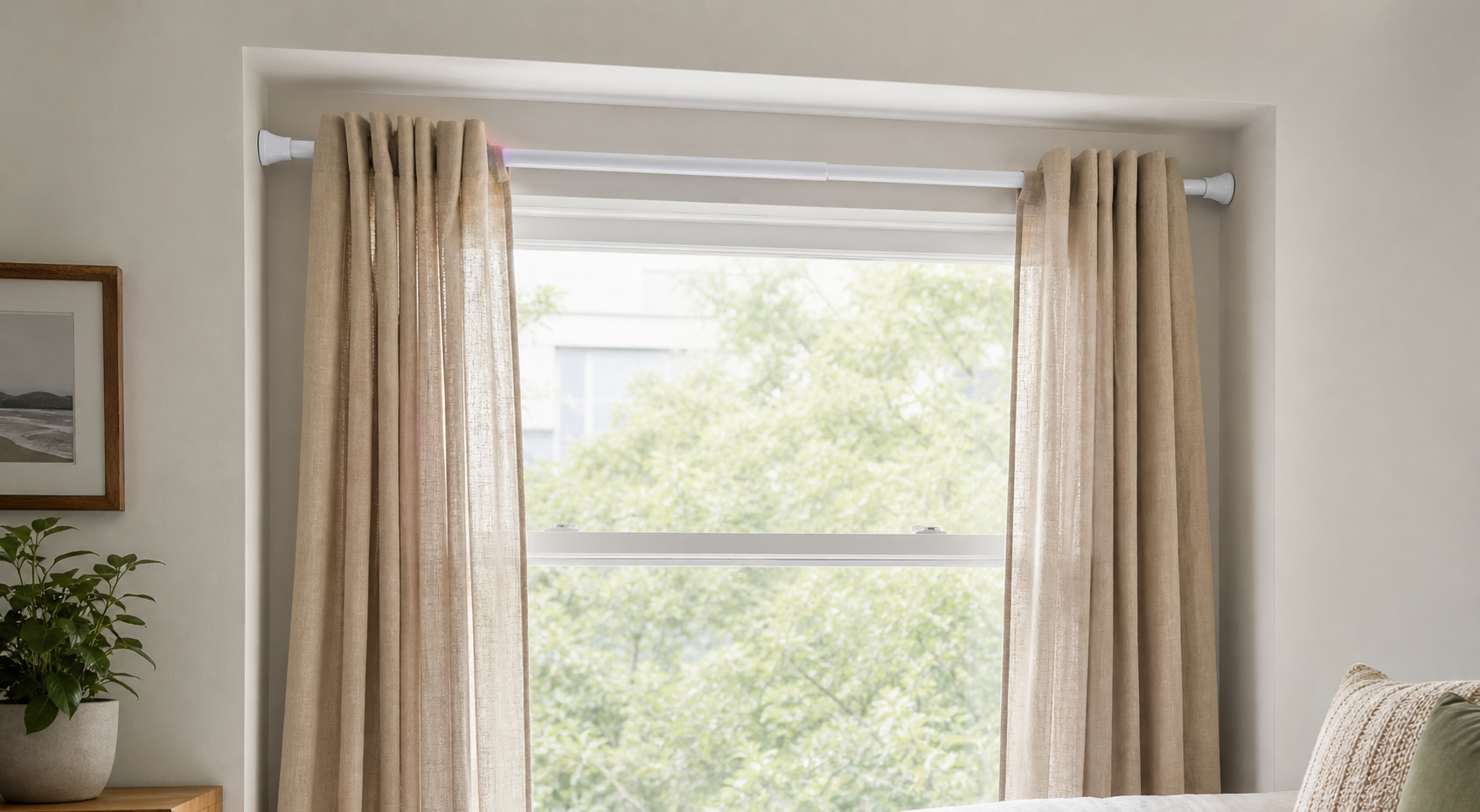
Compare the category after measuring: Browse category: Shop no-drill tension curtain rods on Amazon.
This is a shopping starting point, not a tested ranking. Confirm the stated span, required contact area, curtain-load instructions, end-cap material, installation directions, and return policy.
This page helps you decide whether temporary curtain hardware makes sense at all. If the answer is yes, use the no-drill curtain rod buying guide to compare formats and the broader renter-friendly upgrades guide to plan the room without overcommitting.
Quick Decision: Buy, Skip, Delay, Choose an Alternative, or Escalate
- Buy: the recess has two firm, parallel contact surfaces; the rod's listed span covers your measured opening; and you are hanging lightweight panels where an occasional slip would not create a serious hazard.
- Skip: the surface is flaky, freshly painted, textured, damp, angled, or too narrow for the end caps, or you need a long span and heavy blackout or lined curtains.
- Delay: you have not measured the opening in several places, weighed or checked the curtain package, read the rod instructions, or confirmed the lease rules.
- Choose an alternative: consider a portable blackout shade, a landlord-approved mounted rod, existing blind hardware, or a lighter privacy panel when a tension setup is a poor fit.
- Escalate: ask the landlord or property manager when the window, trim, wall, or existing hardware is damaged; when drilling permission is unclear; or when the setup could interfere with required window access or emergency egress.
When a No-Drill Rod Earns Its Keep
The best case is a modest-width recessed window with solid side returns and lightweight curtains. A tension rod can go up with limited tools, come down when you move, and avoid permanent holes. It is especially useful for privacy sheers, café curtains, and light room-darkening panels that stay within the hardware maker's fit and load instructions.
It also earns its cost when you expect to move soon or cannot obtain permission to drill. The tradeoff is lower confidence and capacity than correctly installed permanent hardware. “No drill” does not mean “no risk”: pressure pads can mark paint, adhesive systems can pull finish, and any rod can fall if it is overloaded or installed on unsuitable surfaces.
Fit Checks That Matter More Than Marketing
- Usable span: measure the inside width at the top, middle, and bottom. Use the exact mounting height, and make sure the measurement sits comfortably inside the product's stated range.
- Contact area: both end caps need flat, firm surfaces wide enough for full contact. Decorative trim, beveled edges, tile joints, loose paint, and uneven returns reduce stability.
- Window operation: confirm the rod and fabric will not block locks, handles, vents, blinds, or the window path.
- Curtain load: include the curtain panels, rings or clips, and any pull force from daily use. Follow the maker's instructions instead of treating a broad “heavy duty” label as proof of fit.
- Fall zone: avoid a marginal setup above a crib, bed, desk, fragile items, or a route people use frequently.
Cost, Setup, and Maintenance Tradeoffs
A basic tension rod can be the least expensive path, but a cheap rod that slips, bows, or damages paint is not a bargain. Longer spans and heavier fabrics generally demand more from the hardware. If you must buy a stronger specialty system plus new lightweight curtains, compare that total with portable shades or approved permanent hardware.
Setup is usually simple but not carefree. Clean and dry only as the surface and product instructions allow, extend the rod evenly, keep it level, and test it cautiously before hanging the panels. Do not add improvised screws, glue, or high-pressure tightening that conflicts with the instructions.
Recheck the rod after installation and periodically during use, particularly after curtains are pulled, washed, or rehung. Dust the contact points, watch for creeping or bowing, and remove the setup if paint begins to lift or the rod repeatedly shifts. Curtains also need their normal washing or vacuuming, which means the hardware must tolerate careful removal and rehanging.
Red Flags That Mean “Do Not Hang It Yet”
- The rod is near its maximum extension and visibly bows before the curtains are added.
- An end cap sits partly on trim, a corner, a grout line, loose paint, or a sloped surface.
- The window frame shows dampness, rot, softness, cracking, or other damage.
- The curtain package or hardware instructions do not provide enough information to confirm a suitable load and span.
- The fabric catches on a heater, vent, door, window latch, or frequently opened sash.
- The window may be needed for emergency exit or required access, and the curtain setup would slow or obstruct it.
Who Should Skip a No-Drill Curtain Rod
Skip this category if you want floor-length, lined, or heavy blackout curtains across a wide opening and the only support would be pressure at the two ends. Also skip it if children or pets are likely to pull the fabric, or if a falling rod would land on a sleeper or valuable equipment.
Renters with fragile paint, wallpaper, crumbling plaster, shallow trim, or ambiguous lease terms should not assume temporary hardware is damage-free. A portable blackout shade may solve light control with less load, while an existing blind plus privacy film may suit privacy needs. Get written permission before any permanent mounting if the lease requires it.
Tension Rod, Adhesive Bracket, or Another Route?
A tension rod is usually the cleaner choice when a sound recess exists and curtains are light. Adhesive brackets can work where there is no usable recess, but surface compatibility, cure time, load, humidity, and removal become central. The tension rod vs adhesive bracket guide breaks down that choice.
Choose portable shades when darkness matters more than a traditional curtain look. Ask about permanent hardware when you need reliable support for heavier panels or a wide window. Delay the purchase entirely when the real problem is a damaged window, broken blind, or maintenance issue the property owner should address.
Bottom Line
No-drill curtain rods are worth it for renters when the window geometry, surface condition, span, and lightweight curtain load all suit the product's instructions. Buy after measuring and checking the fall zone. Skip a marginal or overloaded setup, use a shade or approved mounted rod when it fits the problem better, and involve the property manager when damage, lease limits, or window access make the decision unclear.