Best Closet Shelf Dividers for Stacks and Handbags
A shelf divider is useful when folded clothes spread sideways or handbags slump into one another, but only if it fits the actual shelf and stays put when you remove an item. Start with shelf construction and thickness, then match the divider height and attachment to what you want to separate.
As an Amazon Associate, The Good Home Doc may earn from qualifying purchases.
Product-category guide
Match the divider to the shelf first
Clip-on dividers need a compatible shelf edge, acrylic dividers favor smooth solid shelves, and freestanding units trade easy placement for more shelf space. Measure before comparing materials or appearance.
This is a best-fit category comparison, not a hands-on test or a ranking of specific brands. Verify each maker's shelf-thickness range, dimensions, material, installation directions, and care guidance against your closet.
Quick Picks by Shelf and Item
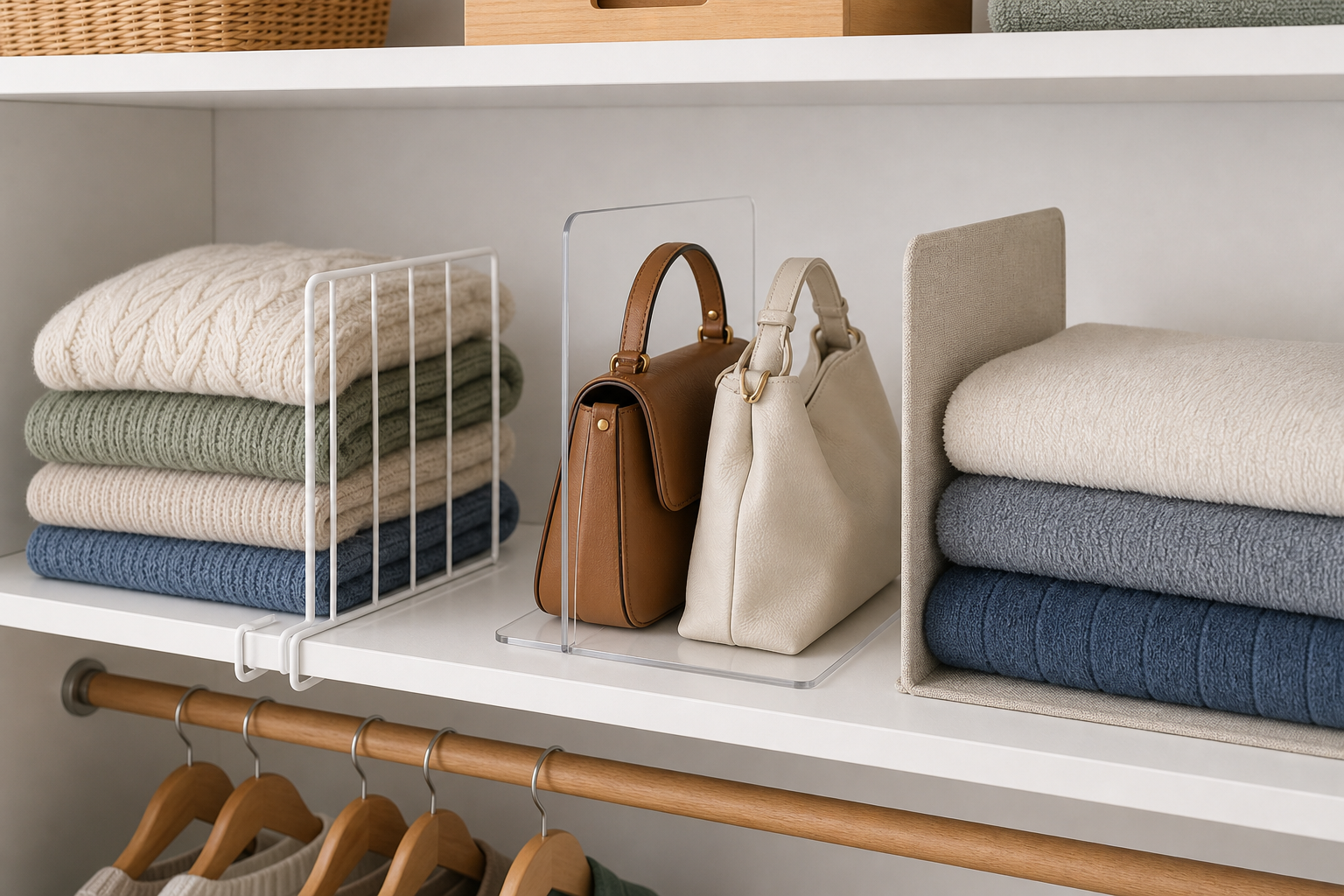
- Best for folded clothes on a solid shelf: slim clip-on wire dividers that fit the measured shelf thickness and extend far enough back to steady the stack.
- Best for handbags you want to see: tall clear acrylic dividers with smooth finished edges and a clip that fits without stressing the shelf finish.
- Best for a rental or delicate shelf finish: a padded freestanding divider or compartment unit that does not clamp to the shelf.
- Best for wire shelving: dividers made specifically for the wire grid spacing and shelf-lip shape—not generic solid-shelf clips.
- Best for deep, heavy stacks: fewer, shorter stacks or bins rather than asking a narrow divider to hold a leaning load.
Measure These Four Things Before Shopping
- Shelf thickness: Measure the front edge and any thicker trim separately. Compare the actual attachment point with the listed clip range.
- Shelf depth: A divider that reaches only halfway back may let sweaters or towels fan out behind it.
- Clear height: Measure to the shelf or hanging rod above, then leave room to lift a bag or folded stack out normally.
- Usable width: Mark proposed compartments with painter's tape and make sure each one fits the item without squeezing it.
Also note whether the shelf is solid wood, laminate, painted composite, glass, or wire. A product described as “universal” can still be incompatible with a rounded lip, thick face frame, delicate finish, or open wire grid.
Comparison Framework
Coated-Wire Clip-On Dividers
Wire dividers use a spring clip or bent base to grip a solid shelf. They are visually light, allow airflow, and usually consume little horizontal space, making them practical for everyday folded clothes.
Choose this type if: the listed clip range matches a sturdy solid shelf and you want several adjustable divisions for sweaters, jeans, or towels.
Watch out for: exposed wire ends, a clip that is too tight, shallow depth, wobble, and pressure marks on paint or laminate.
Clear Acrylic Clip-On Dividers
Acrylic creates a broad smooth wall that supports soft handbags and keeps colors visible. It is easy to wipe, but broad panels show dust and can put more leverage on the attachment when a bag leans against them.
Choose this type if: visibility matters and the shelf has a smooth, compatible edge within the maker's stated fit range.
Watch out for: sharp or poorly finished edges, cracking near the clip, scratches, excessive pressure on a thin shelf, and panels too short for tall bags.
Freestanding Fabric or Board Dividers
These sit on the shelf as compartments or bookend-like panels. They avoid clamping and work on more shelf materials, though their bases take up room and may slide when a stack is removed.
Choose this type if: you cannot attach a clip, want softer contact around knitwear or bags, or need a reversible rental setup.
Watch out for: lost shelf width, sagging fabric, dust collection, weak bases, and compartments whose fixed width does not match your items.
Wire-Shelf-Specific Dividers
These attach through or around the wire grid rather than clamping a flat board. Correct grid spacing matters more than overall shelf thickness.
Choose this type if: the divider explicitly matches the shelf's wire orientation, spacing, lip, and depth.
Watch out for: clips that cannot pass the front lip, feet that land between wires, snag points, and an attachment that lifts when you pull out clothing.
Must-Have Features
- A stated fit range: Look for actual clip-opening or grid-spacing dimensions, not only “fits most shelves.”
- Enough divider height: The panel should support the middle of the intended stack or bag without colliding with the shelf above.
- Useful depth: Deep shelves and large folded items need support beyond the front few inches.
- Smooth contact points: Covered wire ends, rounded acrylic edges, and padded clips reduce snags and surface marks.
- Stable removal: The divider should stay aligned when you pull one sweater, towel, or bag out of the compartment.
Nice-to-Have Features
- Tool-free repositioning: Useful when clothing changes by season or bags vary in width.
- Label holder: Helpful on opaque freestanding compartments, but unnecessary when contents are already visible.
- Washable cover: Practical for fabric units that hold towels or frequently handled clothing.
- Low-profile base: Preserves more usable width and reduces wobble beneath soft stacks.
- Neutral finish: Makes it easier to notice dust, rust, cracks, or transferred color during routine cleaning.
How Many Dividers Do You Need?
Use the fewest dividers that create stable, easy-to-lift groups. A long shelf filled with narrow compartments can make every stack harder to remove. Folded clothing usually works better in modest stacks grouped by item type; handbags need enough space to sit upright without compressing handles or hardware.
Leave a small amount of side clearance so items lift out instead of scraping along the panels. If the shelf bows, the load is too heavy, or a divider repeatedly leans, reorganize the contents rather than tightening or adding more clips. Follow the closet system's load guidance.
Setup, Marks, and Maintenance
Clean and dry the shelf before installation. Test a clip at an inconspicuous point and stop if it requires force, opens a laminate seam, dents the edge, or lifts paint. Renters should avoid attachments that leave marks their lease does not permit. Do not add adhesive pads unless both the shelf finish and divider maker allow them.
Every few months, remove the dividers, wipe dust from panels and contact points, and inspect the shelf. Replace a divider with cracks, rust, exposed sharp edges, or a distorted clip. Fabric units should be cleaned only as directed so stiff inserts do not warp.
Who Should Skip Shelf Dividers
Skip clip-on dividers when the shelf edge is glass, thin, rounded, freshly painted, damaged, or outside the stated fit range. Skip tall panels when the upper shelf or hanging clothes leave too little room to lift items out. If the shelf already bows or feels loose, reduce the load and address the shelf support instead of using dividers to disguise the problem.
Bins may be better for small loose accessories, slippery fabrics, or items that need dust protection. A full hanging organizer may suit a closet with little shelf area, while stackable bins for linen closets are more useful when contained storage and labels matter more than open access.
Bottom Line
For most solid closet shelves, a slim coated-wire clip-on divider is the practical starting point for folded clothes. Clear acrylic works well for visible handbag storage, while freestanding padded units suit delicate finishes and no-clamp setups. The best divider is the one whose attachment, height, and depth fit your shelf without marks—and whose compartments are wide enough to use every day.
For a larger reset, use the renter-friendly closet organizer guide to decide whether dividers, hanging storage, bins, or a broader system best solves the space problem.