Best Stackable Storage Bins for Linen Closets
A useful linen closet lets you pull out one towel, sheet set, or backup toiletry without unloading a whole shelf. The best stackable bins make narrow shelves easier to use while keeping daily supplies visible, dry, and reachable.
As an Amazon Associate, The Good Home Doc may earn from qualifying purchases.
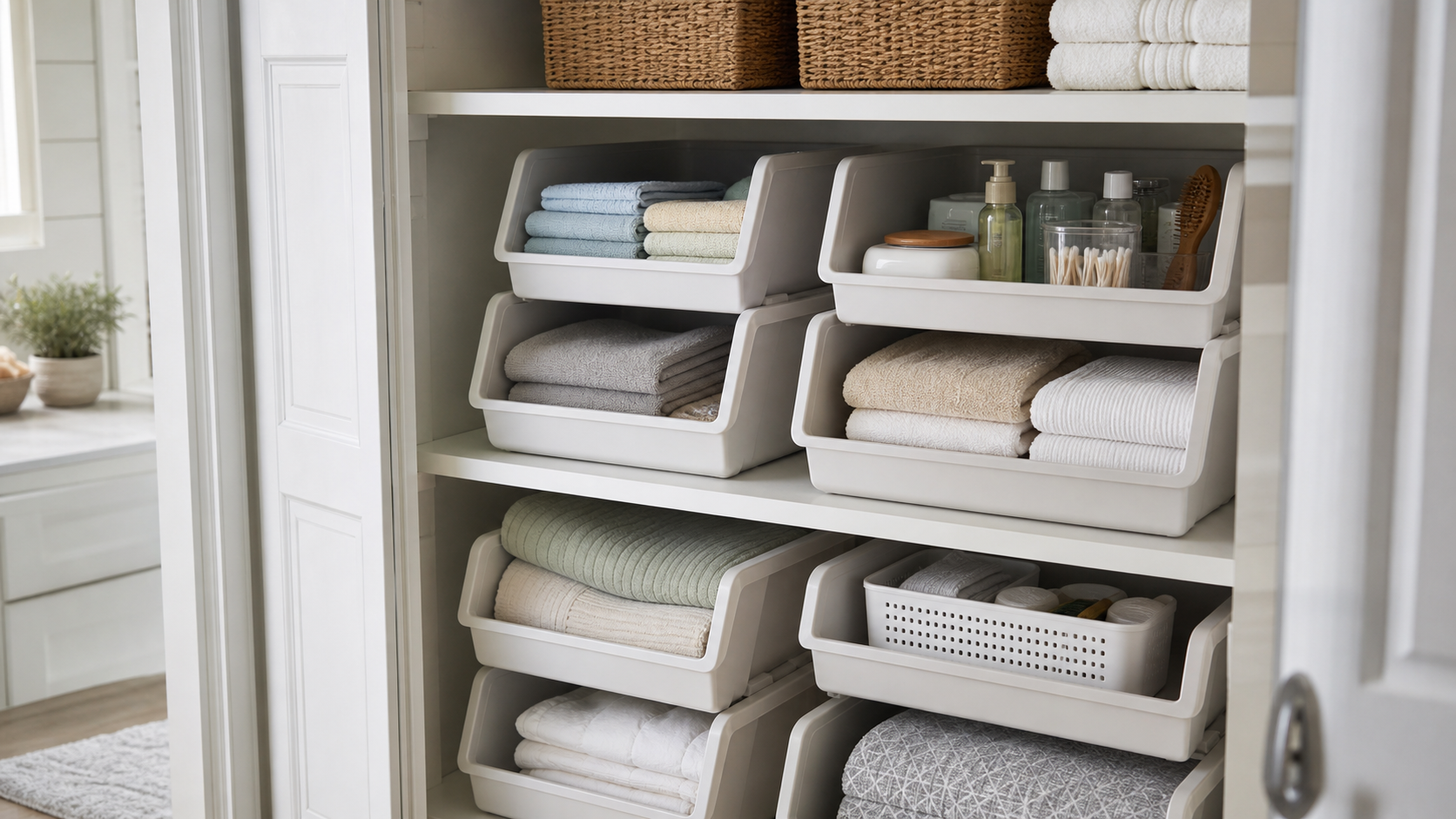
Product-category guide
Compare stackable linen closet bins
Start with the product category, then check your shelf depth, usable stack height, access pattern, and moisture conditions before buying.
This is a best-fit framework, not a tested ranking. It compares bin styles by the way they work on real linen closet shelves. For the broader plan, use the small-home organization systems guide. If the whole closet needs a reset, measure first with the closet organizer measurement guide.
Quick Picks by Linen Closet Problem
- Best for daily towels: open-front bins or low-sided shelf baskets that let you pull a towel without unstacking containers.
- Best for sheet sets: medium lidded bins with straight sides, a front label, and enough width for folded bundles.
- Best for toiletries: wipe-clean plastic bins with handles and a shallow enough profile to see small backup items.
- Best for high shelves: lightweight handled baskets used in a single layer, not a tall stack that is awkward to lift down.
- Best for deep shelves: pull-out bins with front handles, or two clearly labeled zones rather than several hidden rows.
Measure the Shelf Before Choosing a Bin
Measure shelf width, depth, and the clear height to the shelf above. Subtract space for hinges, door trim, shelf supports, pipes, or a light fixture. Leave finger room above a bin and pulling room in front; a container that technically fits can still be irritating to use.
For a stack, add the actual heights of every bin and lid rather than multiplying the advertised body height. Tapered walls, raised rims, handles, and lids can waste usable space. Confirm that the loaded lower bin is designed to carry the bins above it.
Comparison Framework
Open-Front Stackable Bins
These bins keep contents reachable while stacked. They work well for rolled washcloths, hand towels, toilet paper, and frequently used toiletries.
Choose them when: access matters more than dust protection and the front opening is large enough for the stored item.
Watch for: items tumbling forward, limited capacity for wide towels, and frames that bow under a loaded upper bin.
Lidded Plastic Bins
Lidded bins contain less-used sheet sets, seasonal linens, and backup supplies. Straight-sided clear bins make inventory easier, while opaque bins look calmer but need labels.
Choose them when: you want dust control and access is occasional.
Watch for: needing to remove every upper bin to open the bottom one. A tall stack is a poor fit for anything used weekly.
Open Shelf Baskets
Handled baskets are simple and forgiving for towels and mixed soft goods. They pull out like drawers and make existing fixed shelves more useful without installation.
Choose them when: you want one bin per shelf zone rather than a vertical stack.
Watch for: woven textures that catch fabric, collect dust, or are difficult to wipe after a toiletry spill.
Fabric Storage Cubes
Fabric cubes are light and quiet, but many are sized for cube furniture rather than shallow linen shelves. They suit bulky, dry textiles better than liquids or small toiletries.
Choose them when: shelf depth matches and you store only clean, fully dry linens.
Watch for: sagging sides, weak handles, hidden contents, and fabric that holds dust or bathroom humidity.
Must-Have Features
- Shelf-sized footprint: Use the closet's usable dimensions, not the dimensions of an empty room.
- Stable stacking: Look for matching rims or feet and follow the maker's stacking and load guidance.
- Front access: Handles, open fronts, or clear labels keep deep shelves from becoming forgotten storage.
- Easy-clean surfaces: Wipeable bins are the practical choice for toiletries, cleaning cloths, and bathroom-adjacent closets.
- Useful interior shape: Straight walls waste less space than strongly tapered bins, especially for folded sheets and towels.
- Manageable loaded weight: A bin still needs to be safe and comfortable to pull down when full.
Nice-to-Have Features
- Clear fronts: Useful for backup toiletries and guest supplies that are easy to forget.
- Label holders: Better than remembering which identical opaque bin contains twin sheets.
- Ventilation: Helpful for dry towels in a closet with ordinary airflow, but it does not fix dampness.
- Removable dividers: Useful for washcloths and small supplies when fixed compartments would be too limiting.
- Rounded handholds: More comfortable when a bin sits above shoulder height.
Match the Bin to What You Store
Towels: Use open baskets or open-front bins, and avoid compressing so many towels that pulling one disrupts the stack. Keep daily towels between waist and shoulder height.
Sheet sets: Fold each set together or place it inside one pillowcase, then use a labeled lidded bin for guest or seasonal sizes. Keep the set visible from the front.
Toiletries: Use shallow wipe-clean bins and group by job—soap, paper goods, travel items—so expiration dates and leaks are easier to notice. Do not store medicines in a humid bathroom closet unless their labels permit those conditions.
Cleaning supplies: Keep chemicals in their original containers and follow label storage directions. Use a separate contained zone away from children, pets, linens, and incompatible products; a bin is organization, not child-resistant storage.
Moisture and Cleaning Cautions
Only store fully dry linens. Leave some airflow around bins and check bathroom-adjacent closets for condensation, musty odors, staining, or recurring dampness. Moisture absorbers and ventilated bins do not repair a leak or solve persistent humidity.
If materials stay damp, there is visible growth, or water staining returns, stop packing the area tightly. Renters should document and report the condition to the property manager; homeowners should investigate the moisture source and use a qualified professional when needed.
Who Should Skip Stackable Bins
Skip stacking if you need the lower contents every day, cannot comfortably lift loaded bins, or have shelves that bow or feel unstable. One handled basket per shelf, shelf dividers, or a narrow drawer unit may be easier.
Also skip sealed storage in a closet with unresolved dampness. And if the shelves are unusually deep, do not solve the problem by building multiple hidden rows; pull-out baskets or fewer, longer bins will make inventory easier.
A Practical Linen Closet Layout
- Put daily towels and washcloths on the easiest shelves in open bins or simple stacks.
- Place sheet sets and guest linens in labeled bins at eye level or just above.
- Keep small backup toiletries in shallow wipe-clean bins where labels remain visible.
- Reserve the top shelf for light, infrequently used goods—not heavy stacks.
- Leave a little empty capacity so every restock does not become a full closet reset.
Bottom Line
For most linen closets, the best system mixes open handled bins for daily towels with one or two labeled lidded bins for less-used sheets and backups. Measure the shelf, keep frequently used items out of the bottom of a stack, and treat easy access and dry storage as more important than matching containers.